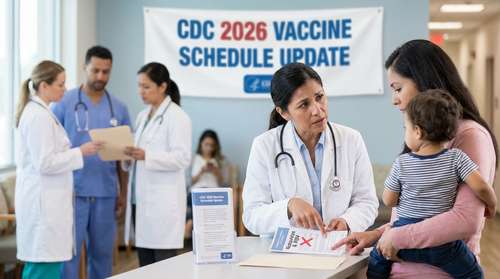
In an unprecedented shift that has sent shockwaves through the American medical community, the Centers for Disease Control and Prevention (CDC) has officially implemented a sweeping revision to the CDC childhood vaccine schedule 2026. As of late January, the agency has reduced the number of universally recommended routine immunizations for babies and children from 17 to just 11, removing standard recommendations for vaccines targeting rotavirus, RSV, influenza, and hepatitis A, among others. This move, spearheaded by the Department of Health and Human Services (HHS), marks the most significant divergence in federal health policy in decades, prompting immediate and fierce backlash from major medical organizations.
The New Pediatric Vaccine Recommendations: What Changed?
The updated guidance, which Acting CDC Director Jim O'Neill signed into effect earlier this month, fundamentally alters the landscape of routine immunizations for babies. Under the new framework, vaccines that were previously standard for every healthy child—specifically those for rotavirus, respiratory syncytial virus (RSV), COVID-19, influenza, and hepatitis A—have been reclassified. They are no longer on the universal "routine" list but are instead categorized under "Shared Clinical Decision-Making" or reserved for high-risk groups.
For parents, the most visible change involves the rotavirus vaccine removal from the universal mandate. Previously given to infants at 2, 4, and sometimes 6 months to prevent severe dehydration and hospitalization from diarrheal illness, this vaccine is now optional based on parental preference and doctor consultation. Similarly, the hepatitis B vaccine, long administered within 24 hours of birth, is now recommended for delay until later infancy unless the mother tests positive for the virus.
Rationale Behind the Shift
HHS officials state that these child health policy updates are designed to align the United States with international standards, specifically citing Denmark’s streamlined vaccine schedule. Administration officials argue that the previous schedule was "coercive" and that a leaner schedule aims to rebuild public trust by focusing only on diseases with high mortality rates in the U.S., such as measles, polio, and tetanus.
AAP vs. CDC: A Historic Split in Guidance
The response from the pediatric community has been swift and blistering. The American Academy of Pediatrics guidance 2026 explicitly contradicts the new federal rules. In a rare move, the AAP, along with the American Academy of Family Physicians (AAFP), is urging its 67,000 members to ignore the CDC's new limitations and continue administering vaccines according to the 2025 evidence-based schedule.
"This decision abandons decades of rigorous science and puts infants at risk for preventable suffering," stated AAP leadership in a press release. The organization emphasizes that while diseases like rotavirus may rarely be fatal in the U.S. due to advanced medical care, they still cause tens of thousands of hospitalizations annually—hospitalizations that the vaccine effectively prevented.
State health departments are also taking sides. A coalition of states, including California, New York, and Oregon, has announced they will reject the CDC's new tiered approach and continue to enforce the broader 2025 standards for state-level public health programs.
Mandatory Childhood Vaccines 2026: School and Insurance Impact
The confusion extends beyond the doctor's office to schools and insurance plans. Parents are rightfully confused about mandatory childhood vaccines 2026 for school entry. It is crucial to understand that school immunization requirements are determined by state laws, not the CDC. Consequently, in many states, vaccines now removed from the federal routine list (like Hepatitis A or Meningococcal) may still be required for daycare or school enrollment.
Insurance coverage remains another point of contention. HHS has assured the public that the Affordable Care Act (ACA) provisions requiring full coverage for vaccines will arguably still apply to these shots, even under the "shared decision-making" label. However, experts warn that without a universal recommendation, some insurers might attempt to introduce copays or denial of coverage for what are now deemed "optional" preventatives, though no major gaps have been confirmed as of this week.
What Parents Should Do Now
Navigating this split-screen reality—where federal advice says "less" and pediatricians say "business as usual"—is challenging. If you have a newborn or young child, here are actionable steps:
- Consult Your Pediatrician: Most doctors are sticking to the AAP schedule. Have an open conversation about the risks of diseases like RSV and Rotavirus in your specific community.
- Check State Laws: verify your state's specific school entry requirements, which likely haven't changed despite the federal overhaul.
- Review Insurance: Call your provider to confirm that reclassified vaccines are still covered at zero cost to avoid surprise bills.
As lawsuits filed by medical groups against the CDC work their way through the courts, the CDC childhood vaccine schedule 2026 remains in a state of flux. For now, the safest course for most families is to rely on the personalized medical advice of their trusted pediatricians, who continue to advocate for comprehensive protection against preventable childhood illnesses.