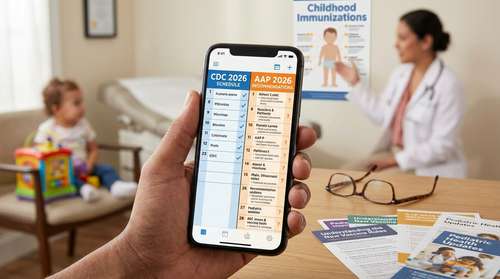
For the first time in American history, parents taking their toddlers to the pediatrician this February are facing a confusing reality: two conflicting sets of rules for keeping their children healthy. The release of the CDC 2026 childhood vaccine schedule has sparked an unprecedented healthcare divide, pitting federal guidance against the trusted advice of the American Academy of Pediatrics (AAP). As of this week, families are caught in the middle of a historic split that has left many scrambling for answers about which shots are truly essential.
The Great Divide: Streamlined vs. Comprehensive
The confusion stems from a radical departure in federal health policy announced last month and currently taking effect in exam rooms nationwide. Under the direction of the new HHS administration, the CDC has implemented a "streamlined" immunization schedule that dramatically reduces the number of universally recommended vaccines from 17 down to just 11. This new framework aligns, according to officials, with "international norms" seen in countries like Denmark.
However, the AAP vs CDC vaccine schedule conflict intensified this week as pediatricians overwhelmingly rejected the federal changes. The AAP, backed by 12 major medical organizations including the American Medical Association, is holding firm to its comprehensive 2026 recommendation list. They continue to advise routine vaccination against all 18 preventable diseases, arguing that the science on safety and efficacy has not changed.
The core of the disagreement lies in which vaccines are considered "routine." While the CDC still mandates shots for diseases like measles, polio, and tetanus, it has reclassified several major immunizations—including Hepatitis A, Hepatitis B, Rotavirus, and the annual Flu shot—moving them out of the universal recommendation category.
"Shared Clinical Decision-Making": A New Burden for Parents?
At the heart of the new vaccine rules for toddlers is a concept that is causing significant anxiety for families: "shared clinical decision-making." Under the new CDC guidelines, vaccines for influenza, COVID-19, and even Hepatitis B are no longer automatically recommended for all healthy children. Instead, the decision is left to a discussion between parents and providers.
For many parents, this shift feels less like freedom and more like a heavy burden. "It feels like they are passing the buck to us for medical decisions we aren't qualified to make," says Sarah Jenkins, a mother of two in Ohio, reflecting a sentiment growing across online parenting forums this week. With childhood immunization updates 2026 shifting responsibility, parents are unsure if skipping these shots exposes their children to unnecessary risk or if they are simply following federal advice.
Federal officials, including CMS Administrator Dr. Mehmet Oz, have tried to reassure the public that this change empowers families. They emphasize that despite the downgrade in recommendation status, insurance companies are still required to cover these vaccines without cost-sharing. However, the ambiguity of "optional" vs. "recommended" has created a patchwork of practices that varies from clinic to clinic.
The Federal-State Split Widens
The fallout from the new schedule has moved beyond the exam room and into state capitols. In a developing story that broke just days ago, a widening "federal-state split" is complicating the landscape further. As of February 5, reports indicate that at least 28 states have formally announced they will reject the CDC's new streamlined guidance, opting instead to enforce state-level mandates that align with the AAP's comprehensive schedule.
This wave of resistance means that a family's vaccination requirements for school entry could now depend entirely on their zip code. This health news for families is particularly critical for those moving across state lines, as they may find themselves non-compliant with local school laws despite following federal CDC guidance.
AAP President Dr. Andrew Racine has praised these state-level decisions, stating earlier this week that the CDC's streamlined approach "no longer offers the optimal way to prevent illnesses in children." The Academy argues that removing broad recommendations for diseases like the flu and rotavirus will inevitably lead to outbreaks and increased hospitalizations.
What Doctors Are Recommending Now
Despite the noise at the federal level, the message from the pediatric community remains unified. If you visit a board-certified pediatrician today, they will likely recommend the same shared clinical decision-making for parents that they always have—which, in their view, means getting all 18 vaccines.
Doctors are urging parents to look past the political headlines and focus on the medical evidence. The AAP's 2026 schedule includes protections that the CDC has sidelined, such as:
- Hepatitis A & B: Now "risk-based" per CDC, but routine per AAP.
- Rotavirus: A common cause of severe diarrhea in infants, now optional under federal rules.
- Influenza: The annual flu shot is no longer universally pushed by the CDC but remains a top priority for pediatricians.
For parents navigating pediatric health news, the best course of action is an open conversation with your child's doctor. While the federal schedule has changed, the commitment of pediatricians to preventing serious illness has not. Most providers are continuing to administer the full suite of vaccines, viewing the AAP guidelines as the gold standard for child health safety.