Dementia and age-related memory loss affect millions globally, creating a pressing need for viable therapeutic solutions. For decades, the slow decline of cognitive faculties has been viewed as an inevitable part of growing older. But a landmark study published in the Journal of Extracellular Vesicles in mid-April 2026 is rewriting that narrative. Researchers at the Texas A&M University Naresh K. Vashisht College of Medicine have successfully demonstrated a biological brain aging reversal in aging models using a non-invasive method. This innovative nasal spray for memory bypasses traditional biological roadblocks, directly treating the chronic inflammation that triggers cognitive decline.
By delivering microscopic biological parcels straight to the brain's immune cells, this therapy effectively reboots the mind's natural repair systems. The result is a profound improvement in cognitive function, offering immense hope for cognitive health for seniors and setting the stage for what many experts consider a definitive dementia breakthrough 2026.
Targeting the Root Cause: Neuroinflammaging
As the human body ages, low-grade, chronic inflammation slowly accumulates in the brain's memory centers. Scientists call this phenomenon "neuroinflammaging." It is essentially a persistent biological alarm state that damages tissue and impairs learning. Over time, this smoldering inflammatory response creates the brain fog associated with getting older and significantly raises the risk of severe neurodegenerative conditions like Alzheimer's disease.
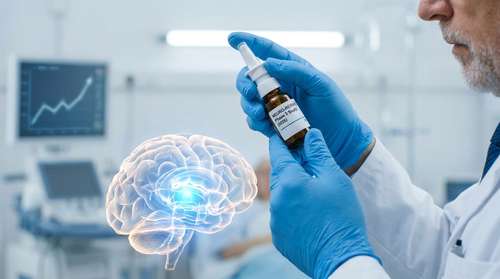
To combat this, Dr. Ashok Shetty and his research team developed a highly targeted mitochondrial repair treatment. The challenge with most neurological drugs is the blood-brain barrier, a strict cellular filtration system that prevents foreign substances from entering brain tissue. The Texas A&M team bypassed this hurdle entirely through intranasal delivery. When administered, the active components travel directly along olfactory nerve pathways into the brain, reaching the affected areas without the need for invasive surgeries.
The Role of Extracellular Vesicles
The core of this therapy relies on extracellular vesicles (EVs) derived from human neural stem cells. Think of these vesicles as microscopic delivery pods. They are packed with microRNAs—tiny fragments of genetic code that act as master switches for cellular behavior.
Once these pods reach the microglia (the brain's resident immune cells), they release their microRNA payload. This genetic material immediately goes to work suppressing the NLRP3 inflammasome and the cGAS-STING signaling pathways, two major biochemical drivers of chronic neuroinflammation. Simultaneously, the treatment restores the function of mitochondria, the biological power plants inside every cell.
As Dr. Madhu Leelavathi Narayana, a senior research scientist on the project, explained, the microRNAs help modulate gene pathways, effectively "giving neurons their spark back by reducing oxidative stress and reactivating the brain's mitochondria".
A Defining Dementia Breakthrough 2026
The empirical results observed during the preclinical trials have sent shockwaves through the medical community. The research team tested the nasal spray on 18-month-old animal models—the biological equivalent of humans in their late 50s to early 60s. The subjects received just two doses, spaced two weeks apart.
Within mere weeks, the subjects demonstrated remarkable behavioral recovery. They performed significantly better on spatial memory assessments and easily identified new objects in their environment compared to the untreated control group. Perhaps most astonishingly, these cognitive improvements were not fleeting; the benefits persisted for months after the initial two doses.
The study highlighted several groundbreaking advantages:
- Universal Efficacy: Unlike many experimental neurological treatments that show a sex bias, this therapy yielded highly consistent, positive results across both male and female subjects.
- Rapid Action: Biomarkers for inflammation in the hippocampus dropped precipitously shortly after treatment administration.
- Long-lasting Defense: The therapy didn't just mask symptoms; it rewired the cellular environment to maintain long-term metabolic homeostasis.
Transforming Cognitive Health for Seniors
Supported by the National Institute on Aging (NIA), this development is a massive leap forward in geroscience research. For millions of older adults, the current standard of care for cognitive decline involves managing symptoms rather than addressing the root biological decay. This new approach shifts the paradigm toward genuine restoration.
Dr. Shetty noted that as this therapy scales, a simple two-dose regimen could eventually replace highly risky medical procedures or the need for lifelong daily medications. The university has already filed a U.S. patent for the technology, signaling a major push to move the research from the laboratory to real-world applications.
What's Next in Healthy Aging News?
While the current data stems from preclinical models, the implications for human medicine are vast. Beyond standard age-related cognitive decline, researchers are investigating whether this nasal delivery system could be adapted to accelerate recovery in stroke survivors or halt the progression of early-stage Alzheimer's disease.
With new dementia cases projected to skyrocket in the coming decades, this targeted intervention arrives at a critical time for global healthcare. The path to pharmacy shelves requires rigorous human clinical trials to ensure comprehensive safety and efficacy. However, the foundational science established by the Texas A&M team proves that the biological clock governing our mental faculties is not entirely fixed. The ability to switch off neuroinflammaging and reboot cellular energy marks a pivotal moment in medicine, promising a future where growing older doesn't have to mean losing the memories that define us.