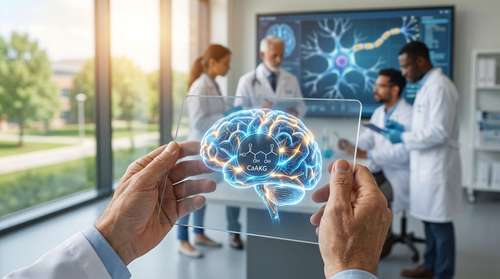
In a monumental leap for cognitive health, researchers at the National University of Singapore (NUS) have announced a historic discovery on February 25, 2026: a natural aging-related molecule capable of restoring broken communication lines between brain cells. The breakthrough centers on Calcium Alpha-Ketoglutarate (CaAKG), a compound naturally produced by the body, which has been proven to repair synaptic plasticity and reverse memory deficits associated with Alzheimer's disease. This finding marks a turning point in Alzheimer's memory repair molecule research, offering a safe, non-invasive path to recovering lost cognitive function.
The Science Behind the Memory Repair Breakthrough
The study, led by Professor Brian K. Kennedy at the NUS Yong Loo Lin School of Medicine, reveals that CaAKG does more than just slow aging—it actively rebuilds the neural bridges necessary for memory formation. As we age, our brains lose the ability to perform "synaptic tagging and capture," a critical process where neurons encode long-term memories. In Alzheimer's patients, this mechanism fails early on, leading to the familiar symptoms of forgetfulness and confusion.
Using advanced brain cell communication research, the team demonstrated that CaAKG restores this vital signaling pathway. By activating specific L-type calcium channels and AMPA receptors, the molecule effectively reboots the brain's ability to "save" new memories. "We found that restoring energy levels helps neurons regain this critical cleanup function," researchers noted, highlighting that the treatment reversed age-related cellular deficits in preclinical models.
A Natural Approach to Reversing Memory Loss in Seniors
Unlike controversial pharmaceutical interventions that often come with severe side effects, CaAKG is a metabolite already present in the human body. Its levels naturally decline as we get older, which correlates with the onset of cognitive decline. This discovery positions CaAKG as a frontrunner among natural aging treatments, suggesting that simply replenishing this molecule could protect the brain against neurodegeneration.
"Because AKG is already present in our bodies, targeting these pathways may offer fewer risks and broader accessibility," Professor Kennedy explained during the announcement. This aligns with the growing demand for non-invasive Alzheimer's therapy options that support healthy aging neuroplasticity without requiring invasive procedures or synthetic drugs.
From Lab to Life: What This Means for Patients
The implications for reversing memory loss in seniors are profound. The study showed that treated subjects regained "associative memory"—the ability to link unrelated items (like a name and a face)—which is typically one of the first functions to vanish in Alzheimer's. By targeting the biology of aging itself rather than just the symptoms of the disease, CaAKG represents a paradigm shift in how we approach dementia care.
Cognitive Health Breakthroughs 2026 and Beyond
This announcement joins a wave of cognitive health breakthroughs 2026 has already witnessed, but it stands out for its immediate potential. Since CaAKG is available as a dietary supplement, the timeline for translation to human therapies could be significantly shorter than for novel synthetic drugs. However, experts caution that clinical trials are still needed to determine the precise dosage and protocols for treating Alzheimer's patients specifically.
As the global population ages, the race to find effective treatments has never been more urgent. This discovery offers not just hope, but a tangible, biological mechanism to turn back the clock on brain aging. With further validation, CaAKG could become a cornerstone of preventative neurology, allowing seniors to maintain their identity, independence, and cherished memories well into their golden years.