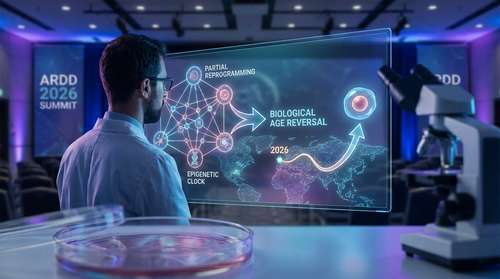
For decades, the scientific consensus held that aging was an immutable, one-way street—a slow accumulation of cellular damage that could only be managed, never reversed. That paradigm shattered this week with the publication of a landmark consensus report detailing the Age-Reversal Roadmap, synthesized from the highly anticipated 12th Aging Research and Drug Discovery (ARDD) meeting. Released on April 20, 2026, the comprehensive framework outlines a decisive transition from theoretical life extension to an actionable blueprint for human trials. At the core of this transformative strategy is partial cellular reprogramming, a breakthrough technique that safely resets the biological age of human tissues to restore youthful function without altering their core cellular identity.
Biological Age Reversal: From Theory to Actionable Reality
The latest publication by global longevity thought leaders marks a fundamental shift in how the medical and scientific communities approach human aging. Historically, research in this space focused heavily on descriptive, correlational studies that merely observed the aging process. The newly unveiled framework details how the field has officially transitioned to engineering personalized therapeutic interventions. This represents a monumental leap for biological age reversal, moving highly experimental treatments out of isolated laboratories and directly into the clinical drug pipeline.
Among the most significant ARDD 2026 breakthroughs is the coordinated industry push for rigorous human trials. Leading biotechnology firms and academic institutions are no longer just focused on extending the lifespans of animal models. Instead, they are actively targeting human degenerative conditions driven by epigenetic drift. This shift underscores a broader, systemic movement within the biotech industry to treat cellular aging itself as a root cause of chronic disease, rather than merely playing whack-a-mole with individual symptoms as they arise in older populations.
The Mechanics of Partial Cellular Reprogramming
The science of resetting a cell's biological clock revolves around the Yamanaka factors—a specific group of transcription proteins capable of reverting mature cells into pluripotent stem cells. While fully reprogramming cells erases their specific identity (a process that carries significant risks, such as tumor formation, in living tissue), the new ARDD roadmap emphatically champions partial cellular reprogramming. By briefly activating a carefully selected subset of these proteins—most commonly Oct4, Sox2, and Klf4, known as OSK—researchers can rewind a cell's epigenetic clock just enough to rejuvenate it.
We are already witnessing these human aging interventions enter the clinical stage with unprecedented momentum. The U.S. Food and Drug Administration has authorized early-stage human trials utilizing epigenetic reprogramming techniques. For example, Life Biosciences is advancing its Phase 1 dosing for an AAV gene therapy designed to rejuvenate retinal cells and restore vision in patients suffering from glaucoma and optic neuropathy. Concurrently, firms like Turn Biotechnologies are utilizing mRNA delivery systems to target dermatology and osteoarthritis, proving that transient, highly controllable drug delivery mechanisms are both safe and viable for human use.
Organ-Specific Multi-Omic Clocks
You cannot effectively treat a biological process that you cannot accurately measure. To that end, a major pillar of the new roadmap is the rapid refinement of epigenetic clock research. The ARDD scientists detailed the successful rollout of next-generation, organ-specific multi-omic clocks. Unlike earlier diagnostic models that provided a generalized, whole-body estimate of biological age based on DNA methylation alone, these advanced systems combine transcriptomics, proteomics, and metabolomics into a single predictive model.
These ultra-precise molecular clocks allow researchers to pinpoint the exact biological age of specific human tissues—whether that is the liver, heart muscle, or optic nerve. More importantly, they enable scientists to measure exactly how effectively partial reprogramming resets those specific markers in real-time. This level of granular precision is absolutely crucial for ensuring the safety, tolerability, and efficacy of rejuvenation therapies during human clinical trials.
Defining New Longevity Medicine Trends
The medical implications of this newly published roadmap extend far beyond treating isolated, age-related diseases. The therapeutic strategies outlined by the ARDD experts aim for systemic healthspan extension—maximizing the years we live in optimal physical and mental health, free from the burden of degenerative decline. The seamless integration of artificial intelligence for rapid drug target identification, combined with novel delivery methods like mRNA platforms, is drastically accelerating development timelines across the board.
As we analyze the current longevity medicine trends shaping the landscape in 2026, the clinical focus has unmistakably shifted toward regenerative repair. Instead of waiting for a tissue or organ to fail and attempting to replace it, physicians may soon possess the verified tools to refresh our cellular machinery at the molecular level. The unified roadmap published this week provides the clearest evidence yet that reversing the cellular markers of aging is no longer just biologically possible—it is rapidly becoming an impending clinical reality.