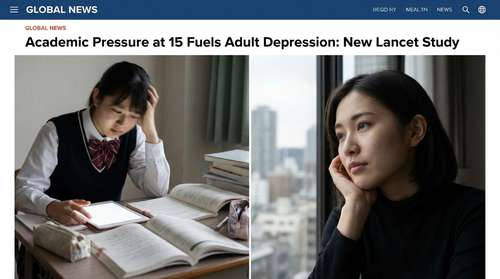
A groundbreaking study published this week has delivered a stark warning to educators and policymakers: the intense academic pressure and teen depression experienced in secondary school doesn't just end after graduation—it scars students well into adulthood. The research, led by University College London (UCL) and published in The Lancet Child & Adolescent Health, provides the strongest evidence to date that the stress to succeed at age 15 is a direct predictor of depression and self-harm throughout a person's 20s.
The High Cost of High Grades: Landmark Findings
The Lancet mental health study 2026, released on Thursday, challenges the long-held assumption that exam stress is a temporary hurdle. Instead, researchers found a clear "dose-response" relationship: as academic pressure increases, so does the long-term risk to mental health.
According to the findings, for every single-point increase on a scale of academic pressure at age 15, teenagers were 25% more likely to suffer from depression by age 16. More alarmingly, this heightened risk doesn't fade. The study revealed that these same students faced an 8% higher risk of self-harm that persisted years later. By the time these individuals reached age 24, those who had reported high school stress were significantly more likely to have attempted suicide.
"Young people report that academic pressure is one of their biggest sources of stress," said Professor Gemma Lewis, the study's lead author from UCL Psychiatry. "A certain amount of pressure to succeed in school can be motivating, but too much pressure can be overwhelming and may be detrimental to mental health."
Long-Term Effects of School Stress on Early Adulthood
The study drew data from the "Children of the 90s" cohort (ALSPAC), tracking nearly 5,000 participants from adolescence into adulthood. This longitudinal approach allowed researchers to isolate the long-term effects of school stress from other factors. The results paint a worrying picture of the teen mental health crisis 2026, suggesting that the current educational model is planting seeds of psychological distress that blossom years later.
Unlike previous research which often relied on snapshots of time, this study connects the dots between the classroom environment and adult psychiatric outcomes. It suggests that the impact of school environment on depression is structural and pervasive. The pressure to achieve top grades in high-stakes exams like GCSEs appears to alter a young person's stress response system, potentially making them more vulnerable to mental health struggles as they navigate the transition to independence, employment, and adult relationships.
The Silent Epidemic of Self-Harm
One of the most distressing aspects of the report is its focus on adolescent self-harm risk factors. The correlation between academic strain and self-injury remained significant even after adjusting for other variables such as family history and socioeconomic status. The data indicates that 24-year-olds who experienced high academic pressure at 15 were 16% more likely to report a suicide attempt than their less-pressured peers. This finding highlights a critical window for intervention that schools and parents are currently missing.
Calls for Educational Reform for Mental Health
The publication of these findings has sparked an urgent national debate regarding educational reform for mental health. Mental health charities and education experts are arguing that the relentless focus on testing is creating a public health emergency. Paul Noblet, from the charity YoungMinds, noted that the evidence is now undeniable: "Academic pressures harm young people's mental health."
Experts are now calling for a systemic shift. Recommendations include:
- Reducing the volume of high-stakes testing: Moving towards continuous assessment rather than "all-or-nothing" final exams.
- Whole-school interventions: Implementing stress-management curriculums that are as prioritized as core academic subjects.
- Cultural shifts: Redefining success beyond grades to include emotional resilience and well-being.
Breaking the Cycle: What Can Be Done Now?
While systemic change takes time, the study offers immediate takeaways for parents and educators. Recognizing the signs of academic burnout early is crucial. The research suggests that the impact of school environment on depression can be mitigated if pressure is managed effectively at home and in the classroom.
Parents are encouraged to have open conversations about exam stress, ensuring children understand that their worth is not defined by their grades. Schools, meanwhile, are urged to review their homework policies and exam preparation strategies to ensure they are not inadvertently contributing to this long-tail of mental ill-health. As the Lancet mental health study 2026 concludes, protecting the mental future of our youth requires us to rethink the pressure we place on them today.