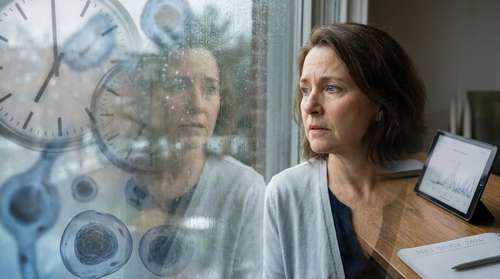
Worrying about getting older might actually be making you age faster. It sounds like a cruel irony, but a groundbreaking NYU aging study 2026 reveals that the fear of declining health directly influences how quickly your cells deteriorate. Published recently in the journal Psychoneuroendocrinology, the research demonstrates that aging anxiety isn't just a fleeting psychological burden—it leaves a measurable, physical mark on your DNA.
For decades, medical professionals have treated mental and physical well-being as largely separate domains. However, researchers at the NYU School of Global Public Health have found that subjective experiences can drive objective biological changes. Women who experience severe anxiety about their future health show concrete signs of accelerated aging at the cellular level.
The Hidden Biological Cost of Aging Anxiety
The comprehensive study analyzed data from 726 women participating in the Midlife in the United States (MIDUS) project. Researchers wanted to understand how different facets of getting older—losing attractiveness, facing health problems, or reaching the end of reproductive years—affected biological markers. What they discovered fundamentally shifts how we view the mind-body connection.
Mariana Rodrigues, the study's lead author and a PhD student at NYU, noted that while women face immense cultural pressure regarding youth and beauty, the biological toll doesn't actually stem from cosmetic concerns. Stressing over wrinkles or gray hair showed no significant link to accelerated cellular decay. Instead, it was the specific, persistent fear of physical decline, illness, and losing independence that caused the measurable damage.
The Midlife Squeeze
Women in their middle years often find themselves caught in a multifaceted caregiving trap. They are frequently managing careers and raising children while simultaneously caring for aging parents. Watching older relatives face severe illness can trigger profound stress about their own future vulnerabilities. This chronic psychological distress alters hormone levels, increases systemic inflammation, and ultimately changes how genes are expressed over time.
Decoding the Body With Epigenetic Clocks
To quantify these physiological changes, the researchers utilized advanced tools that analyze chemical tags on DNA, specifically focusing on methylation patterns. While chronological age simply counts the years you've been alive, your biological age reflects the true, internal condition of your cells. Through modern biological age testing, scientists can now accurately track how fast a person is deteriorating internally.
The NYU team employed two highly sensitive epigenetic clocks using blood samples gathered from the participants. The first tool, known as DunedinPACE, functions much like a biological speedometer, measuring the current, active pace of aging. The second, GrimAge2, estimates cumulative biological damage and predicts long-term mortality risk.
The results were striking. Women reporting the highest levels of health-related aging anxiety had significantly higher scores on the DunedinPACE clock. Simply put, their bodies were aging at a vastly accelerated rate compared to peers who held a more neutral or positive outlook on their later years. When psychological distress becomes a baseline state, the body pays the price.
Shifting to a Longevity Mindset
If fearing age makes you older, can embracing it keep you young? According to Adolfo Cuevas, the study's senior author and an associate professor of social and behavioral sciences, these findings identify psychological outlook as a measurable and modifiable determinant of biology. This means you have the power to intervene before the cellular damage becomes irreversible.
Cultivating a longevity mindset involves shifting your focus from the inevitable decline to what you can actively control. Chronic worry keeps the nervous system in a constant state of hyperarousal, fueling the exact health problems people fear. By transitioning from anxious dread to proactive health management, you can potentially slow this biological speedometer and protect your future self.
Actionable Steps for Healthspan Optimization
The modern medical goal is no longer just living a long time, but maintaining vitality and independence throughout those years—a concept known as healthspan optimization. Interventions that reduce stress and improve mental resilience are just as critical to this mission as a balanced diet and regular exercise.
- Reframe your narrative: View aging as a privilege rather than a disease. Focus on the wisdom, emotional stability, and self-assurance that often accompany getting older.
- Prioritize stress management: Chronic anxiety drives inflammation. Techniques like mindfulness, cognitive behavioral therapy, and community engagement actively suppress the stress response, creating an environment ripe for cellular rejuvenation.
- Focus on what you can control: Build a foundation of regular physical activity, deep sleep, and strong social connections. These are proven, actionable pillars that reinforce your body against decay.
Mental and physical health are intimately connected across our entire lifespan. The latest research makes it clear: making peace with the aging process is one of the most effective anti-aging strategies available. When you stop fighting the calendar and start investing in your present well-being, your cells will undoubtedly thank you.