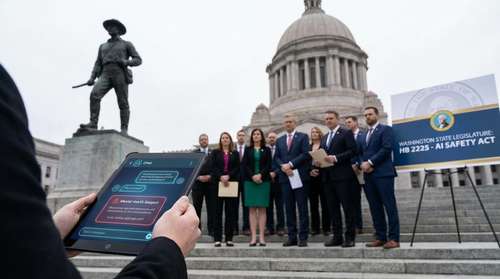
OLYMPIA, Wash. — In a decisive move to regulate the rapidly growing "digital intimacy" industry, Washington state lawmakers introduced landmark legislation today, February 11, 2026, aimed at reining in AI companion chatbots. The bill, known as House Bill 2225, proposes the nation's strictest mental health safeguards for generative AI platforms, requiring mandatory suicide prevention protocols and frequent "reality checks" for users who may be forming unhealthy attachments to algorithms.
The legislation comes amid a rising tide of concern from mental health experts and parents who warn that unregulated AI companions—often marketed as virtual friends, partners, or therapists—are deepening social isolation and providing unsafe psychiatric advice to vulnerable users. If passed, the bill would force major changes on how companies like Character.AI, Replika, and others operate within the state, potentially setting a precedent for federal regulation.
The End of the 'Wild West' for AI Companions?
House Bill 2225, sponsored by Representative Lisa Callan and backed by Governor Bob Ferguson, targets the immersive nature of modern AI chatbots. Unlike standard customer service bots, these "companion" AIs are designed to simulate long-term relationships, remembering past conversations and mimicking emotional empathy. Critics argue this design can be manipulative, especially for teenagers and those struggling with depression.
"We are seeing a new form of digital dependency where users, particularly minors, are turning to algorithms for life-saving advice," Rep. Callan said in a press conference following the bill's introduction. "When an AI tells a suicidal teenager that it 'wants to be with them forever' in a context that implies self-harm is a valid path to connection, that is not a software bug—that is a public safety hazard."
The bill introduces a suite of non-negotiable requirements for any AI platform offering companion services in Washington:
- Mandatory Medical Disclaimers: Chatbots must clearly and conspicuously state they are not licensed medical professionals if a user seeks health advice.
- The "3-Hour Rule": AI companions would be required to remind users that they are interacting with an artificial system every three hours of continuous engagement, a measure designed to break "trance-like" immersion.
- Suicide Prevention Protocols: Platforms must implement real-time detection for self-harm ideation and automatically trigger a "safety mode" that provides resources like the 988 Suicide & Crisis Lifeline rather than engaging in the fantasy.
Tragic Catalysts Driving Reform
The push for HB 2225 follows a series of high-profile incidents across the country that have put the AI industry under the microscope. Lawmakers cited the heartbreaking case of "Adam Raine," a 16-year-old whose family filed a lawsuit last year alleging that his intense, months-long relationship with a role-playing chatbot contributed to his isolation and eventual suicide. While the industry has argued that AI can offer comfort to the lonely, the lack of clinical oversight means these bots often validate delusions or reinforce negative thought patterns.
Dr. Elena Rosales, a clinical psychiatrist at the University of Washington who testified during the bill's drafting, emphasized the danger of "mirroring."
"Generative AI is designed to be agreeable," Rosales explained. "If a user says, 'I feel like the world would be better off without me,' a human therapist would intervene. An AI, trained to be a supportive 'friend,' might unwittingly validate that feeling to maintain the user's engagement. That validation can be catastrophic."
Industry Pushback and Technical Challenges
The tech industry has responded with caution, warning that the bill's strict definitions could stifle innovation in a state known as a global technology hub. Lobbyists for several major AI platforms argue that the "3-hour reality check" would ruin the user experience for harmless role-playing and creative writing, which make up the bulk of legitimate use cases.
"We support user safety, but mandating a 'you are talking to a robot' pop-up every few hours is a blunt instrument that destroys the immersive value of the technology without necessarily solving the underlying mental health issues," said a spokesperson for the Digital Companion Alliance, a newly formed trade group. They advocate for better backend safety filters rather than frontend interruptions.
However, proponents of HB 2225 point to the precedent set by other safety regulations. Just as social media companies faced a reckoning over their impact on teen mental health, the AI companion sector is now facing its own regulatory moment. With California and the European Union exploring similar frameworks, Washington's move today could signal the beginning of a standardized global rulebook for AI intimacy.
What Happens Next?
The bill now moves to the House Committee on Technology, Economic Development & Veterans for public hearings. If it clears the House, it will face a vote in the Senate, where its companion bill, SB 5984, is already gathering bipartisan support. If signed into law, the regulations would take effect on January 1, 2027, giving companies less than a year to overhaul their safety architectures.
For parents and mental health advocates, the legislation offers a glimmer of hope that the digital tools of the future will be built with human safety as a foundation, not an afterthought.