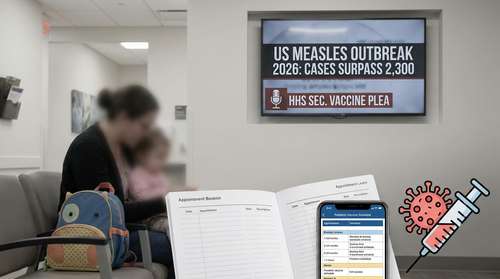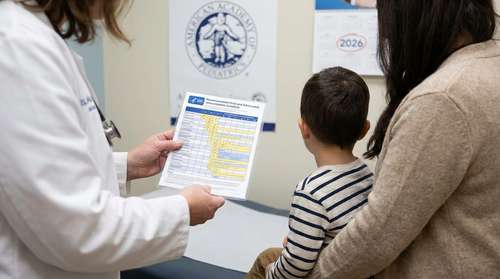
American families are currently experiencing unprecedented "vaccine whiplash" as they schedule their children's pediatric checkups this spring. At the center of this confusion is the childhood vaccine schedule 2026, which has sparked a historic medical and legal clash between federal health officials and the nation's top pediatricians. The Centers for Disease Control and Prevention (CDC) recently attempted to significantly reduce its universal immunization recommendations, a move the American Academy of Pediatrics (AAP) forcefully rejected by issuing its own independent schedule. As of early April 2026, a federal judge has temporarily blocked the CDC's changes, leaving parents to navigate a dizzying landscape of conflicting medical advice and ongoing litigation.
The Origin of the CDC vs AAP Vaccines Debate
The controversy began in January 2026 when the Department of Health and Human Services (HHS), acting under a presidential memorandum, overhauled the federal immunization framework. The CDC reduced its list of universally recommended vaccines from 17 down to just 11. Routine, protective shots for diseases like hepatitis A, hepatitis B, rotavirus, and influenza were removed from the universal list.
In an immediate response, the AAP broke a decades-long tradition of harmonized guidelines with the CDC. On January 26, the pediatric organization released its own independent schedule, maintaining that 18 immunizations remain necessary for optimal child health. This profound CDC vs AAP vaccines divide has essentially forced parents and doctors to choose between a streamlined federal approach and the broader, traditional consensus held by medical professionals.
Understanding 'Shared Clinical Decision Making'
Rather than eliminating the demoted vaccines entirely, the CDC shifted several of them into specialized high-risk categories or under a framework termed shared clinical decision making. In practice, this means a shot is no longer automatically administered during a routine well-child visit. Instead, the pediatrician and the parent must engage in a detailed discussion about the individual risks, clinical benefits, and epidemiological factors before proceeding with the vaccination.
Federal officials argued that this tiered approach aligns more closely with the practices of peer nations like Denmark, Germany, and Japan, thereby offering families more personalized healthcare choices. However, the AAP and other medical experts warn that adding this consultation barrier for proven immunizations will inevitably lead to lower vaccination rates. Critics fear that treating these standard preventative measures as optional could trigger widespread outbreaks of easily preventable respiratory and gastrointestinal illnesses.
Recent Legal Battles and the Current Status
The dispute quickly moved from local clinics to federal courtrooms. In a major piece of family health news, U.S. District Court Judge Brian E. Murphy issued a preliminary injunction on March 16, 2026, temporarily halting the CDC's updated schedule. The sweeping ruling stated that HHS leadership bypassed required scientific review processes and unlawfully reconstituted the Advisory Committee on Immunization Practices (ACIP). The judge noted that the government had disregarded decades of established procedural requirements.
For the time being, the federal court order effectively reinstates the previous, more comprehensive immunization schedule. While the Trump administration is widely expected to appeal the injunction, the current legal pause means the government's pared-down list is formally suspended. This rolling, high-stakes litigation has only amplified the deep uncertainty in doctors' offices nationwide, as public health officials await the next appellate ruling.
Pediatric Immunization Guidelines in the Exam Room
Despite the high-level legal maneuvering, the medical community remains largely unified. Twelve major medical organizations—including the American Medical Association and the American Academy of Family Physicians—have publicly endorsed the AAP's schedule. For practitioners, these independent pediatric immunization guidelines provide a stable, evidence-based roadmap during a period of intense federal volatility.
What This Means for Routine Vaccines for Children
If you are taking your child to the doctor this month, you can expect your pediatrician to recommend the broader set of shots. Providers are actively encouraging parents to maintain the traditional regimen of routine vaccines for children to ensure robust protection against illnesses like RSV and measles, both of which have seen localized surges recently. Families are still entirely free to request the full slate of 17 or 18 vaccines that were standard practice prior to this year.
Will There Be Changes to Vaccine Insurance Coverage 2026?
One of the most pressing questions for families caught in this policy battle is whether they will suddenly face out-of-pocket costs for immunizations that the federal government no longer universally recommends. Fortunately, vaccine insurance coverage 2026 remains completely intact.
Under the Affordable Care Act, insurers are required to cover vaccines without cost-sharing as long as they are recommended by ACIP—even those recently placed in the shared decision-making category. Industry representatives and federal officials have confirmed that private health plans, Medicaid, and the Vaccines for Children program will continue to fully cover the comprehensive list of shots through at least the end of the year. Parents do not need to worry about being billed for choosing the wider protection recommended by their pediatrician.