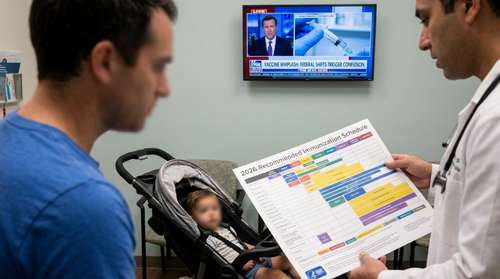
The first week of April 2026 has brought unprecedented challenges for families trying to protect their children's health. A dizzying series of rapid-fire alterations to federal immunization policies has triggered widespread "vaccine whiplash" across the country. With competing legal rulings over the vaccine schedule 2026 making daily headlines, parents are caught in a tug-of-war between shifting government directives and established medical consensus. This volatility is not just a bureaucratic headache; it has become an active public health crisis. Recent childhood immunization news points to a direct correlation between this policy instability and a dramatic surge in infectious illnesses nationwide.
Understanding the CDC Vaccine Guidelines 2026 Controversy
To grasp the current crisis, families must look at the sweeping structural changes initiated earlier this year. In January, the Centers for Disease Control and Prevention, under the direction of then-acting Director Jim O'Neill, issued a highly controversial decision memorandum. This directive sought to drastically limit routine childhood immunizations, effectively reducing the number of universally recommended vaccines from 17 down to 11.
The proposal shifted several core immunizations—including the hepatitis B birth dose—to a "shared clinical decision-making" model, a vague categorization that immediately generated friction between public health officials and practicing pediatricians. Following these moves, Health and Human Services Secretary Robert F. Kennedy Jr. dismissed nearly all members of the Advisory Committee on Immunization Practices (ACIP) and reconstituted the panel. For parents seeking definitive CDC vaccine guidelines 2026, the conflicting messaging created a landscape of total uncertainty.
The Legal Injunction and Committee Shakeup
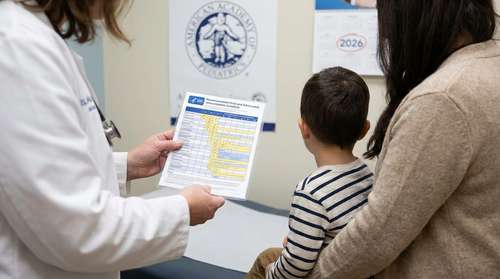
The situation escalated significantly in mid-March when the American Academy of Pediatrics (AAP) and other medical organizations pushed back in federal court. On March 16, 2026, a federal judge granted a preliminary injunction, ruling that the government provided no valid explanation for abandoning decades of established ACIP protocols.
This ruling officially stayed the January 2026 memo, halting the appointments of the new ACIP members and reverting the federal recommendations back to the comprehensive June 2024 framework. However, with the administration expected to appeal the ruling, families are left navigating a fractured system where the legal status of routine preventative care changes weekly.
A Dangerous Surge in Vaccine-Preventable Diseases US
The ongoing legal dispute over the vaccine schedule 2026 is actively manifesting in clinic waiting rooms across the nation. As routine coverage rates fluctuate under the weight of misinformation and policy delays, public health officials are documenting an alarming resurgence of previously contained pathogens.
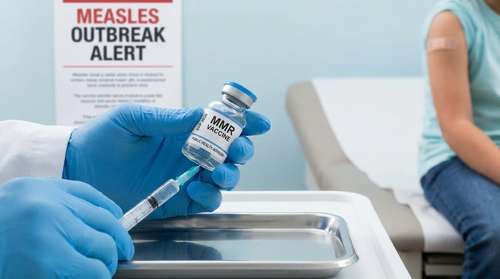
Measles has emerged as the most visible and immediate threat to community health. By the first week of April 2026, public health departments recorded more than 1,670 confirmed measles cases nationwide, with 94% of those cases directly associated with localized outbreaks. States like South Carolina, Utah, and Florida have reported massive transmission clusters. This staggering increase severely threatens the nation's long-held disease elimination status and represents the highest transmission volume seen in decades.
The Return of Dormant Pathogens: Pediatric Health Trends
Beyond measles, shifting pediatric health trends reveal vulnerabilities across multiple fronts. Diphtheria, tetanus, and pertussis (DTaP) coverage among kindergartners fell from 92.3% to 92.1% nationally, with states like Idaho reporting coverage as critically low as 78.3%. Even more concerning to infectious disease specialists is the unexpected return of Haemophilus influenzae type b (Hib). Vaccination rates for Hib have steadily dropped, and the CDC logged at least eight severe infections by late March 2026, raising fears of a broader spike in pediatric meningitis and pneumonia.
Medical professionals are subsequently modifying their daily operations to keep vulnerable patients safe. Some pediatricians are entirely restructuring their triage protocols, screening feverish children in parking lots to prevent highly contagious airborne viruses from contaminating their waiting rooms.
Essential Parenting Health Advice Amidst Policy Volatility
As appellate courts prepare to hear further arguments regarding the vaccine schedule 2026, parents need concrete strategies to ensure their children remain protected. One of the most pressing concerns involves the financial logistics of pediatric care. Most major health insurance providers previously pledged to cover all preventative shots without out-of-pocket costs through the end of 2026. However, if the federal universal recommendations remain altered long-term, the insurance landscape beyond December is completely unpredictable.
State-level legislative responses are adding another layer of complexity. While states like Colorado and New York are passing proactive bills to mandate insurance coverage for AAP-recommended vaccines regardless of CDC shifts, other regions are letting school exemption bills expire or advance without federal alignment. This means a child's access to affordable, preventative medicine may increasingly depend on their zip code.
The most vital parenting health advice from leading medical organizations is to maintain the comprehensive, historically established immunization timetable regardless of ongoing federal litigation. Relying on your local pediatrician's expertise, rather than waiting for courts to settle the vaccine whiplash debate, guarantees your child continuous protection.
While the regulatory environment remains in severe flux, childhood immunity cannot simply be paused. Families are strongly encouraged to verify their child's medical records, schedule outstanding booster shots immediately, and confirm their insurance provisions well before the upcoming academic year begins.