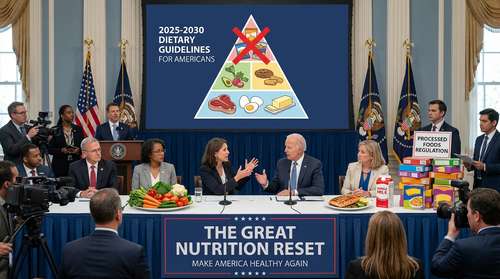
In what is being called the most radical shift in federal nutrition policy since the 1970s, the U.S. government has officially released the 2025-2030 Dietary Guidelines for Americans, marking a historic departure from decades of low-fat, grain-centric advice. Unveiled earlier this month by Health and Human Services (HHS) Secretary Robert F. Kennedy Jr. and USDA Secretary Brooke Rollins, the slimmed-down, 10-page document introduces an "inverted food pyramid" that prioritizes animal proteins and full-fat dairy health benefits while declaring war on ultra-processed foods and added sugars. As the dust settles on the January 7 release, a new analysis published yesterday by industry experts describes the guidelines as a complete "rewiring of the American plate," igniting a fierce debate between metabolic health advocates and traditional nutrition organizations.
The 'Make America Healthy Again' Nutrition Doctrine
The new framework, explicitly aligned with the "Make America Healthy Again nutrition" agenda, jettisons the complex calorie-counting of previous editions in favor of a simple mantra: "Eat Real Food." For the first time, the guidelines officially recommend ditching industrial seed oils in favor of traditional fats like butter, tallow, and olive oil, signaling an official end to the government's long-standing "war on saturated fats."
The most visible symbol of this reset is the new food pyramid 2026. Unlike the grain-heavy base of the 1992 pyramid or the segmented MyPlate, the new visual places high-quality proteins (red meat, eggs, poultry) and healthy fats at the top hierarchy of importance, followed by fruits and vegetables. Grains, previously the foundation of the American diet, have been demoted to the bottom, with a stark warning to "significantly reduce" refined carbohydrates.
"These guidelines return us to the basics," Secretary Kennedy stated during the rollout. "American households must prioritize whole, nutrient-dense foods and dramatically reduce highly processed foods. This is how we turn the tide on chronic disease."
The War on Sugar and Ultra-Processed Foods
Perhaps the most aggressive policy shift is the crackdown on industrial food manufacturing. The document explicitly defines a new category of "highly processed foods"—often called ultra-processed foods (UPFs)—and advises Americans to avoid them entirely. This recommendation goes significantly further than the ultra-processed food regulations currently seen in other nations.
Coupled with this is a zero-tolerance approach to added sugars for young children. The guidelines state that "no amount of added sugar is recommended" for children under age four, a move that is expected to force a massive reformulation of baby foods and toddler snacks. This aligns with the emerging FDA sugar reduction strategy, which is reportedly pivoting from voluntary targets to mandatory caps on sugar in school meals and federal food programs.
School Lunch Overhaul
The impact of these guidelines will be felt immediately in the National School Lunch Program. The USDA has signaled that starting in the 2026-2027 school year, menus must align with the protein-prioritized diet model, replacing sugary cereals and juice with eggs, whole milk, and unprocessed meats.
Saturated Fat and the 'Science vs. Ideology' Clash
The release has triggered a seismic rift in the nutrition community. Traditional organizations, including the American Heart Association and the Academy of Nutrition and Dietetics, have issued blistering critiques. They argue that the promotion of red meat and the removal of limits on saturated fat ignore decades of cardiovascular research. Critics have dubbed the new visual the "Rancher's Pyramid," suggesting it favors agricultural interests over settled science.
"The science on saturated fat has not changed," noted nutrition expert Marion Nestle in a recent statement, warning that the guidelines could reverse progress on heart disease. However, supporters of the new guidelines, including a growing coalition of metabolic health doctors, argue that the previous low-fat advice coincided with skyrocketing obesity and diabetes rates. They praise the recognition of full-fat dairy health benefits, citing recent studies that suggest whole-milk dairy may be protective against metabolic syndrome.
What the 2025-2030 Guidelines Mean for You
For the average American, the 2025-2030 Dietary Guidelines for Americans translate to actionable, albeit controversial, advice. The core takeaway is to shop the perimeter of the grocery store and view ingredients lists with skepticism.
- Prioritize Protein: Aim for protein at every meal, aiming for 1.2 to 1.6 grams per kilogram of body weight.
- Embrace Natural Fats: Don't fear butter, ghee, or animal fats, but strictly avoid hydrogenated oils and vegetable oils high in omega-6.
- Eliminate Hidden Sugars: Treat sugar as a toxin rather than a treat, especially for children.
- Check the Processing: If a product contains ingredients you wouldn't find in a home kitchen (like emulsifiers or gums), put it back.
As the debate rages on, one thing is clear: the era of "all calories are equal" is officially over in Washington. The government has staked its position on whole foods, leaving the food industry and consumers to navigate the most significant nutritional pivot in half a century.