In a groundbreaking discovery that could revolutionize how we treat aging and immobility, researchers at the University of Hong Kong (HKUMed) have identified a biological "exercise sensor" that builds bone without the need for physical movement. The study, published today, January 27, 2026, in the journal Signal Transduction and Targeted Therapy, details how a specific exercise mimicking protein called Piezo1 can trick the body into strengthening skeletal structure even in bedridden patients. This finding offers a glimmer of hope for millions suffering from osteoporosis who are physically unable to perform the weight-bearing exercises typically required to maintain bone density.
The Biological 'Exercise Switch' Discovered
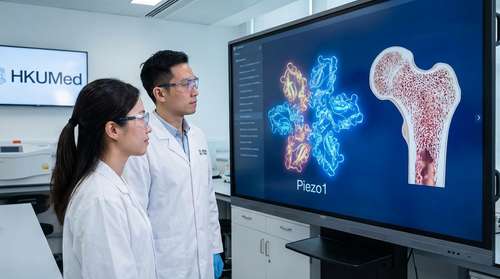
The research team, led by Professor Xu Aimin and Dr. Wang Baile from HKUMed's Department of Medicine, focused on a critical mechanism within our bone marrow. For decades, scientists have known that mechanical stress—like walking or lifting weights—stimulates bone growth. However, the molecular messenger responsible for this process remained elusive until now. The study reveals that Piezo1 acts as a microscopic switch on the surface of mesenchymal stem cells.
When activated by the physical force of exercise, Piezo1 directs these versatile stem cells to differentiate into bone-forming cells (osteoblasts). Without this signal, these same cells tend to become fat cells (adipocytes), leading to the fragile, fat-filled marrow often seen in elderly patients. "We have effectively found the molecular button that tells the body to build bone instead of storing fat," explained Professor Xu Aimin. "By targeting this biological exercise sensor, we can potentially reverse age-related bone loss without a single step being taken."
Turning the Tide on Osteoporosis
This bone health science 2026 breakthrough is particularly significant because it addresses the root cause of skeletal fragility: the cellular decision to create fat instead of bone. As we age, the activity of Piezo1 naturally diminishes, causing our marrow to fill with fat while our bones become porous and brittle. The HKUMed study demonstrates that chemically activating Piezo1 can bypass the need for mechanical force, essentially providing the cellular benefits of a workout in a bottle. This concept of osteoporosis prevention fitness without the gym could be a lifeline for the elderly or those with spinal cord injuries.
Exercise Mimetics: The Future of Longevity Fitness Technology
The implications of this study extend far beyond osteoporosis treatment. The identification of Piezo1 opens the door to a new class of drugs known as "exercise mimetics"—pharmaceuticals that replicate the physiological effects of physical activity. While longevity fitness technology has often focused on wearable devices and tracking apps, this biological approach represents a fundamental shift in how we manage metabolic health.
Dr. Wang Baile, the study's co-lead, emphasized that while this isn't a replacement for the cardiovascular benefits of exercise, it is a game-changer for structural health. "For a young, healthy person, the gym is still the best medicine," Dr. Wang noted. "But for a 90-year-old with a hip fracture history, an exercise mimicking protein therapy could mean the difference between independence and permanent disability."
Global Impact on Metabolic Health News
The urgency of this discovery is underscored by global health statistics. Osteoporosis affects approximately one in three women and one in five men over the age of 50 worldwide. In Hong Kong alone, nearly 45% of women over 65 suffer from significant bone density loss. The burden of fractures on healthcare systems is immense, often leading to a downward spiral of immobility and further health complications.
By offering a pharmacological alternative that mimics the HKUMed bone study findings, pharmaceutical companies may soon race to develop therapies that activate the Piezo1 pathway. This aligns with broader trends in metabolic health news, where the focus is shifting from treating symptoms to manipulating the body's intrinsic maintenance systems. As clinical trials are planned for the coming years, the dream of an "exercise pill" for bone health is moving from science fiction to scientific reality.