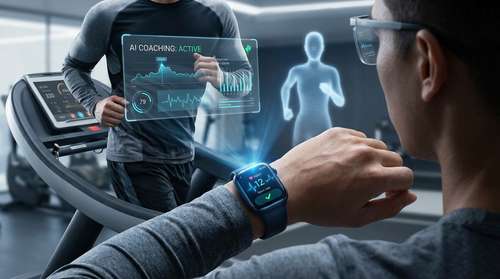
As of April 12, 2026, having an AI personal trainer in 2026 is no longer a futuristic luxury—it is the absolute baseline for modern exercise. The era of static spreadsheets and generic 3-sets-of-10 routines has officially expired. Following the American Council on Exercise's recent declaration of artificial intelligence as the undisputed number one health and fitness trend of the year, millions of athletes and casual gym-goers are upgrading their routines. Advanced AI 'co-pilots' integrated directly into wearable fitness technology have become the most-used fitness tools this month. These intelligent systems have moved entirely beyond simple activity tracking, offering live, adaptive guidance that actively transforms how you train mid-session.
Beyond Step Counters: The Rise of Biometric Workout Coaching
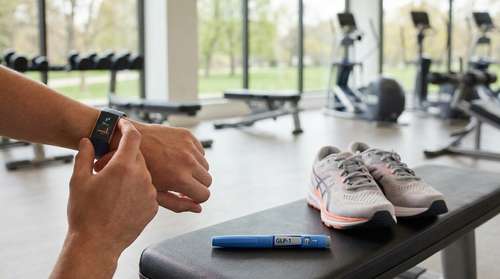
For over a decade, fitness trackers simply reported what you accomplished after the fact. You would finish a run or a lift, check your wrist, and review the damage. Today's biometric workout coaching completely flips that paradigm by analyzing your physiological state during the actual exercise. The massive $575 million funding round for WHOOP in early April 2026—catapulting the company to a $10.1 billion valuation—highlights this monumental industry shift. Investors and athletes are doubling down on algorithmic models powered by billions of hours of physiological data.
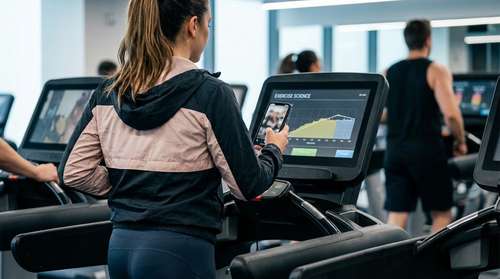
When you step onto the gym floor today, your smart device acts as a live, highly educated coach. If your resting heart rate is slightly elevated from stress, or your core temperature indicates sub-optimal recovery, the AI immediately scales back your planned intensity. It communicates directly with smart gym equipment, adjusting the resistance on your cable machine or the incline on your treadmill before you even press start. You are no longer guessing your capacity; the data dictates your optimal output.
How HRV Training Apps Optimize Muscle Readiness
Heart Rate Variability (HRV) has long been the gold standard metric for elite athletes, but modern HRV training apps have finally mainstreamed these elite performance protocols for everyday fitness enthusiasts. Your HRV acts as a direct window into your autonomic nervous system. By analyzing the micro-fluctuations between your individual heartbeats, these platforms determine exactly how much physical stress your body can safely absorb on any given day.
Instead of stubbornly pushing through a heavy deadlift session when your nervous system is heavily depleted, your AI co-pilot intervenes. The platform aggregates real-time biometric signals to identify your true recovery readiness. If your metrics indicate peak central nervous system readiness, the algorithm progressively overloads your workload to maximize muscle hypertrophy. If fatigue is detected, it dynamically pivots your session toward active recovery, zone 2 cardio, or mobility work. This granular, mid-session adjustment ensures maximum physical adaptation while drastically reducing the risk of joint strain and central fatigue.
The Impact of Predictive Fitness Technology
This is where predictive fitness technology truly flexes its muscles. Artificial intelligence does not merely read your current state; it accurately anticipates your future physiological needs. By analyzing your historical recovery patterns, daily movement consistency, and biometric stress indicators, the algorithm predicts when you are most susceptible to injury. It calculates the exact deload phases your body requires days before you even feel the physical symptoms of overtraining. This proactive approach ensures you spend more weeks making measurable progress and less time sidelined by preventable muscle strains.
Voice-Led Integration and 2026's AI Fitness Trends
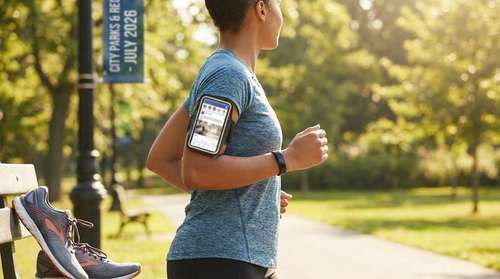
The rapid explosion of these proactive systems highlights the broader AI fitness trends shaping the remainder of the decade. Consumers are rapidly abandoning one-size-fits-all programming. We are seeing a massive shift toward screen-free, voice-led integrations. New releases like the Luna Band, which made massive waves at CES 2026, allow you to receive hands-free, real-time health advice mid-rep. You no longer need to pull out your phone to log a set; the AI communicates directly through your earbuds, analyzing your breathing patterns to adjust your rest intervals on the fly.
At healthvot, we have documented this technology's rapid evolution from experimental novelty to essential health infrastructure. Fitness centers and independent athletes alike are realizing that ignoring these biometric tools leaves you at a severe performance disadvantage. The technology gap between those utilizing adaptive AI and those relying on static, paper-based routines is widening every single week.
Embracing a biometric co-pilot means surrendering the guesswork of your routine to a system that understands your cellular reality better than you do. As the algorithms grow sharper this spring, the question is no longer whether you should adopt real-time AI coaching, but rather how quickly you can integrate it to unlock your ultimate physical potential.