The conversation surrounding weight loss medication is undergoing a profound shift. For years, patients prescribed blockbuster diabetes and obesity medications noted unexpected changes to their emotional well-being—a reduction in food noise, elevated moods, and a sudden lifting of brain fog. Now, the scientific community has the clinical data to back up these anecdotal claims. A massive, nationwide study published this month has confirmed undeniable semaglutide mental health benefits. By effectively slashing the risks of severe psychological decline, these metabolic medications are opening an entirely new frontier in psychiatric care.
The Lancet Psychiatry Semaglutide Study 2026: Breaking Down the Data
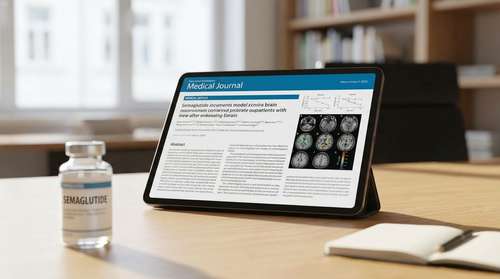
Published in late March 2026, the sweeping Lancet Psychiatry semaglutide study 2026 tracked 95,490 Swedish adults diagnosed with pre-existing depression or anxiety alongside type 2 diabetes or obesity. By analyzing national health registers spanning from 2009 to 2022, an international team of researchers from the University of Eastern Finland, the Karolinska Institutet in Stockholm, and Griffith University in Australia compared patients' mental health during periods they were taking GLP-1 medications against periods they were not.
The clinical results were staggering. Patients actively using semaglutide—the active pharmaceutical ingredient in Ozempic and Wegovy—experienced a 42% lower risk of worsening mental illness, which the study defined through severe metrics like psychiatric hospitalizations and extended sick leave. More specifically, the data showed a 44% decreased risk of worsening depression and a 38% drop in worsening anxiety.
The medication even exerted a powerful protective effect against addiction, driving a 47% reduction in worsening substance use disorders. Our study is very large and comprehensive, so I think we can be pretty certain that there is an association with using GLP-1s and reduced psychiatric symptoms, noted Dr. Markku Lähteenvuo, research director at the University of Eastern Finland. While liraglutide also showed positive effects, demonstrating an 18% overall reduction in psychiatric decline, older generation drugs like exenatide and dulaglutide did not exhibit the same robust protective benefits.
How Ozempic for Depression and Anxiety Rewires the Brain
The idea of specifically prescribing Ozempic for depression and anxiety might sound counterintuitive to those who solely view it as an appetite suppressant. However, the connection becomes much clearer when examining the physical architecture of the human brain. The mechanistic rationale lies in the fact that GLP-1 receptors are densely expressed in brain regions directly responsible for emotion, memory, and stress regulation, notably the amygdala, hippocampus, and prefrontal cortex.
Scientists theorize these medications deliver a highly effective one-two punch to psychiatric symptoms. First, they dramatically reduce systemic inflammation throughout the body and central nervous system—a biological state increasingly recognized as a primary driver of clinical depression. Second, they stabilize the brain's dopamine reward pathways. This dual action helps explain why patients not only lose weight but also report a drastic reduction in compulsive behaviors, leading to a profound improvement in overall GLP-1 receptor agonists mood regulation.
A Shift in the Medical Paradigm
While the psychological boost of shedding excess weight, improving physical mobility, and getting better sleep undeniably plays a role in elevated mood, medical experts increasingly believe the direct neurobiological effects are the true drivers. This realization sits at the absolute forefront of recent metabolic psychiatry breakthroughs—a rapidly expanding medical discipline examining the deep physiological overlap between metabolic dysfunction, insulin resistance, and severe mental illness.
Revisiting the FDA GLP-1 Suicide Warning Update
The road to validating these mental health benefits hasn't been without its share of regulatory hurdles. In recent years, isolated pharmacovigilance reports and mixed observational data sparked intense debate over the safety profile of weight loss drugs and mental health. This uncertainty prompted intense scrutiny, culminating in the highly publicized FDA GLP-1 suicide warning update and similar probes by the European Medicines Agency, which investigated preliminary reports of suicidal ideation among a small subset of users.
The latest 2026 clinical findings provide a definitive, large-scale counter-narrative to those early fears. Rather than exacerbating self-harm, the register study revealed that GLP-1 receptor agonists, as a pharmacological group, were actually associated with a 44% reduced risk of suicidal behavior and self-harm. By utilizing a rigorous within-individual statistical design—meaning each patient served as their own control—researchers effectively eliminated the confounding lifestyle variables that plagued earlier, smaller analyses. The data strongly suggests that the severe psychiatric events noted in earlier warning updates were likely tied to the underlying vulnerabilities of the patient population rather than the medication itself.
The Future of Dual-Targeted Therapies
The implications of this data for global public health are enormous. As Dr. Mark Taylor of Griffith University pointed out, mental health conditions are currently the leading cause of sick leave and workforce absence. Mitigating these conditions through metabolic treatments could save health systems billions while transforming patient lives. Depression and anxiety are among the most common, debilitating comorbidities for individuals living with type 2 diabetes, severely impacting their quality of life and their ability to adhere to medical treatments.
Physicians caution that these medications are not yet approved as standalone psychiatric treatments. Formal randomized clinical trials specifically targeting mental health outcomes remain the gold standard and will be required to definitively prove direct causation. However, the real-world, population-level data is now impossible to ignore.
For patients currently battling both metabolic disease and severe mental health disorders, semaglutide is emerging as a uniquely effective, dually targeted therapy. As ongoing research pushes forward, the historical boundaries separating physical and mental health treatments will continue to blur, offering renewed hope for millions of patients navigating complex, co-occurring conditions.