If you could turn back the clock on your brain’s biological age, would you lace up your running shoes? According to a groundbreaking study published today, January 22, 2026, in the Journal of Sport and Health Science, the fountain of youth might just be a consistent aerobic workout. Researchers have discovered that one year of regular aerobic exercise can make the human brain appear nearly 12 months younger on MRI scans compared to those who remain sedentary. This powerful finding highlights aerobic exercise for brain health as a critical tool in the 2026 longevity toolkit.
The Science: Reversing the Neurological Clock
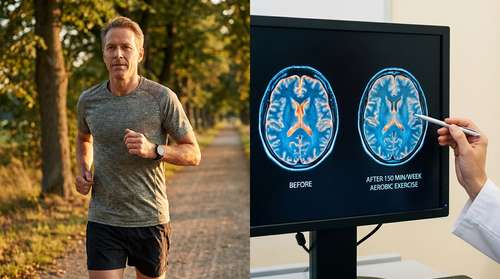
The study, led by researchers at the AdventHealth Research Institute, used advanced magnetic resonance imaging (MRI) to measure what scientists call "brain-predicted age difference" (brain-PAD). This biomarker estimates how old a brain looks biologically compared to the person's actual chronological age. A higher brain-PAD typically signals faster aging and has been linked to cognitive decline.
In this clinical trial of 130 healthy adults aged 26 to 58, participants were split into two groups: one that adhered to a moderate-to-vigorous aerobic exercise routine and a control group that maintained their usual lifestyle. After 12 months, the results were striking.
"We found that a simple, guideline-based exercise program can make the brain look measurably younger over just 12 months," stated Dr. Lu Wan, the study's lead author. While the control group's brains aged typically (appearing about 0.35 years older), the exercise group actually reversed their brain age by approximately 0.6 years. When combined, this created a massive net difference of nearly one full year between the active and sedentary groups.
The Protocol: How to Optimize Neuroplasticity
You don't need to become a marathon runner to unlock these anti-aging exercise benefits. The participants achieved these results by following standard physical activity guidelines—approximately 150 minutes of moderate-to-vigorous aerobic activity per week. This aligns perfectly with 2026 fitness trends that prioritize sustainable longevity over high-intensity burnout.
Key aspects of the effective routine included:
- Consistency: Regular sessions, averaging 3-4 times per week.
- Intensity: Elevating heart rate to a moderate-to-vigorous zone (enough to break a sweat but still hold a conversation).
- Duration: Sustaining the habit for a full year to see structural changes.
This evidence suggests that neuroplasticity—the brain's ability to reorganize and form new neural connections—is highly responsive to cardiovascular health. By improving blood flow and releasing neuroprotective factors, aerobic workouts appear to physically preserve brain volume and integrity.
Why Midlife is the Critical Window
One of the most significant takeaways from this research is the age range of the participants: 26 to 58 years old. Historically, much of the research on reverse brain aging has focused on elderly populations already experiencing decline. This study shifts the spotlight to early and mid-adulthood.
Dr. Kirk I. Erickson, senior author and neuroscientist, emphasized the importance of this timing: "From a lifespan perspective, nudging the brain in a younger direction in midlife could be very important."
Prevention Over Cure
Acting during this "pre-clinical" window is vital. Even small shifts in brain age now could compound over decades, potentially delaying or preventing the onset of neurodegenerative conditions later in life. It reframes exercise not just as a tool for weight management, but as a long-term investment in cognitive capital.
Beyond the Scan: Real-World Benefits
While the MRI data provides the visual proof, the real-world implications are even more compelling. A younger-looking brain typically correlates with sharper memory, better executive function, and improved mood. Participants in the exercise group didn't just look better on paper; they were building a physiological buffer against the stresses of aging.
Interestingly, the study noted that improvements in cardiorespiratory fitness (VO2 max) didn't fully explain the brain benefits. This suggests that aerobic exercise triggers a complex cascade of biological mechanisms—likely involving inflammation reduction and metabolic improvements—that work together to rejuvenate neural tissues.
The Future of Anti-Aging Fitness
As we navigate the wellness landscape of 2026, the focus has shifted from aesthetics to cellular health. This MRI brain age study validates what health experts have long suspected: movement is medicine for the mind. Whether it's brisk walking, swimming, cycling, or dance cardio, the best exercise for your brain is the one you will do consistently.
If you have been waiting for a sign to start moving, let this be it. By dedicating just 150 minutes a week to aerobic activity, you aren't just burning calories—you are literally buying your brain more time.