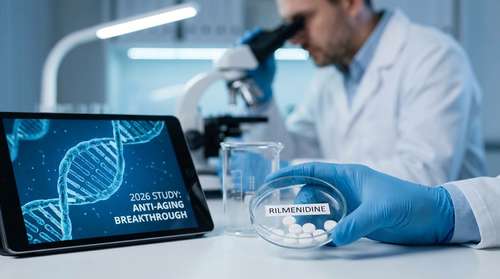
January 21, 2026 – The quest for the fountain of youth may have just taken a pharmaceutical leap forward. Researchers have identified Rilmenidine, a common prescription drug used for decades to treat high blood pressure, as a powerful candidate for slowing the human aging process. In a landmark study highlighted this week, scientists revealed that this repurposed medication acts as a "calorie restriction mimetic," tricking cells into a protective, anti-aging state without the need for extreme dieting. These findings, which position Rilmenidine as a frontrunner in longevity drug breakthroughs 2026, could revolutionize how we approach healthy aging.
The Rilmenidine Breakthrough: Turning Back the Biological Clock
For years, scientists have known that drastically reducing calorie intake—while maintaining nutrition—is the most effective way to extend lifespan in nearly every species studied. However, sticking to a near-starvation diet is physically difficult and potentially dangerous for humans. This has sparked a global race to find calorie restriction mimetics: compounds that trigger the same beneficial genetic switches as fasting without the hunger.
The new study, led by researchers at the University of Liverpool and published in Aging Cell, confirms that Rilmenidine achieves exactly this. In trials involving the model organism C. elegans, treated subjects showed significantly extended lifespans and improved health markers in old age. Crucially, the drug was effective even when administered later in life, suggesting that it’s never too late to start an anti-aging pill research regimen.
"We have identified a mechanism that allows us to reprogram cellular aging using a drug that is already in our pharmacy cabinets," stated the lead researcher in a press briefing on January 21. "Rilmenidine doesn't just make organisms live longer; it keeps them healthier for a greater proportion of their lives."
How It Works: Targeting the Nish-1 Receptor
Unlike other buzzy longevity supplements that flood the market with vague promises, Rilmenidine’s mechanism is precise and scientifically verified. The 2026 study details how the drug binds to a specific cellular receptor known as the I1-imidazoline receptor nish-1. When Rilmenidine activates this receptor, it sets off a cascade of genetic events that mirror the body's response to low-calorie states.
This activation prompts cells to clear out damaged components—a process called autophagy—and boosts stress resilience. The result is a cellular environment that is more resistant to the wear and tear associated with aging. Because the drug targets this specific receptor, researchers believe it can offer the benefits of healthy aging supplements with a much higher degree of potency and reliability.
Why Repurposed Drugs Are the Future of Longevity
One of the most exciting aspects of this discovery is that Rilmenidine is not an experimental compound but a repurposed drug for longevity. Developing a new drug from scratch takes over a decade and costs billions, with no guarantee of safety. Rilmenidine, however, has been prescribed for hypertension for over 30 years. Its safety profile is well-documented, and side effects are rare and generally mild.
This "repurposing" strategy allows scientists to fast-track potential anti-aging treatments. Since safety trials are largely redundant, researchers can move directly to testing efficacy in humans, potentially shaving years off the timeline for a commercially available blood pressure medication for aging therapy.
Comparing Rilmenidine to Other Anti-Aging Candidates
The field of geroscience has seen other contenders, most notably Metformin and Rapamycin. While Metformin has shown promise in observational studies of diabetics, and Rapamycin extends life in mice but comes with significant immune-suppressing side effects, Rilmenidine offers a unique "Goldilocks" advantage.
- Safety: Unlike Rapamycin, Rilmenidine does not suppress the immune system, making it safer for long-term daily use in older adults.
- Specificity: While Metformin affects multiple metabolic pathways broadly, Rilmenidine’s action on the nish-1 receptor is highly targeted, potentially reducing off-target effects.
- Availability: As a generic drug, it is affordable and widely manufactured, avoiding the exclusivity and high costs often associated with new biotech interventions.
What This Means for Human Healthspan
The concept of "healthspan"—the number of years we live in good health—is central to this research. An aging population brings a tidal wave of chronic conditions like Alzheimer's, heart disease, and frailty. If Rilmenidine anti-aging therapy translates successfully to humans, it could delay the onset of these age-related diseases simultaneously.
Imagine a future where a single daily pill, originally designed for blood pressure, protects your brain, heart, and immune system from the ravages of time. While clinical trials specifically for longevity are the next necessary step, the data released this week provides the strongest evidence yet that we are closing in on a viable pharmaceutical intervention for aging.
As we move further into 2026, the scientific community is watching closely. If results continue to hold, Rilmenidine may well become the cornerstone of preventative medicine, transforming aging from an inevitable decline into a manageable condition.