Forget expensive creams or experimental gene therapies; the secret to reversing aging might lie in the trillions of bacteria living inside your digestive tract. In a groundbreaking study published today, January 23, 2026, in Stem Cell Reports, researchers have demonstrated for the first time that the age-related decline of intestinal stem cells can be effectively reversed by restoring a youthful gut microbiome.
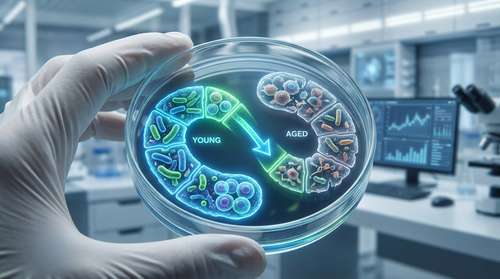
The collaborative research, led by scientists at Cincinnati Children’s Hospital Medical Center and the University of Ulm in Germany, offers definitive proof that the microbiome is not just a bystander in the aging process but a driver of it. By transplanting gut bacteria from young mice into older ones, the team successfully rejuvenated the older animals' intestinal tissue, making it function as if it were young again. This discovery marks a pivotal moment in longevity research 2026, suggesting that the path to healthy aging may be as simple—and complex—as resetting our internal ecosystem.
The Science: How Bacteria Talk to Stem Cells
The human intestine is a marvel of regeneration, completely renewing its lining every few days. This constant repair job is handled by intestinal stem cells (ISCs), which reside deep within the gut wall. However, as we age, these stem cells lose their ability to divide and repair tissue efficiently. This decline leads to the common gastrointestinal issues seen in seniors, such as impaired nutrient absorption, a "leaky" gut barrier, and chronic inflammation.
Until now, scientists believed this cellular exhaustion was purely intrinsic—a result of the stem cells simply getting old. The new study flips this narrative. The researchers found that the aging of these stem cells is directly influenced by the changing neighborhood of bacteria around them.
"We discovered that the microbiome in aged subjects suppresses crucial signaling pathways that stem cells need to function," explained the study's co-authors in a press briefing. Specifically, the team identified a decline in Wnt signaling—a molecular pathway essential for stem cell renewal—in the older guts. This decline was driven by specific shifts in the bacterial population.
Reversing the Clock with Microbiota Transfer
To test if this process was reversible, the team performed Fecal Microbiota Transplants (FMT). They took the gut contents from young, healthy mice and transferred them into older mice with deteriorating intestinal health. The results were striking.
Within weeks, the immune system and stem cells of the older mice began to behave like those of the younger donors. The transplant restored the expression of the Ascl2 gene, a master regulator of stem cell activity, and reactivated the dormant Wnt signaling pathways. Consequently, the older intestines regained their ability to regenerate tissue and repair damage efficiently. Effectively, the intestinal stem cells were tricked into thinking they were young again.
Implications for Regenerative Medicine
This breakthrough has massive implications for regenerative medicine. Currently, treating age-related organ failure often involves invasive procedures or drugs with heavy side effects. This research suggests a biological alternative: manipulating the microbiome to stimulate the body's own repair mechanisms.
For the millions of older adults suffering from aging gut health issues—ranging from frailty to susceptibility to infections—this offers hope for therapies that treat the root cause rather than just symptoms. By maintaining a "youthful" microbiome, it may be possible to preserve the structural integrity of the gut well into old age, preventing the systemic inflammation (often called "inflammaging") that drives many chronic diseases.
Beyond Probiotics: What This Means for You
While this news is exciting, experts caution that it doesn't mean you can simply buy a "youth probiotic" at the grocery store tomorrow. The study utilized a complex, complete ecosystem transfer, not just a single strain of bacteria. Most commercial probiotics do not colonize the gut permanently or contain the specific diversity needed to trigger these regenerative signals.
However, this reinforces the importance of diet and lifestyle in reverse aging strategies. Eating a fiber-rich diet, avoiding unnecessary antibiotics, and consuming fermented foods can help maintain microbiome diversity. As we move through 2026, we can expect to see clinical trials testing defined consortia of bacteria—essentially "prescription super-probiotics"—designed specifically to reactivate aging stem cells in humans.
The Future of Longevity
We are entering a new era where we view the human body as a holobiont—a partnership between host and microbe. This study confirms that by caring for our microbial partners, we are, in essence, caring for the very cells that keep us young. As regenerative medicine evolves, the gut microbiome is proving to be one of the most powerful, modifiable targets for extending not just lifespan, but healthspan.