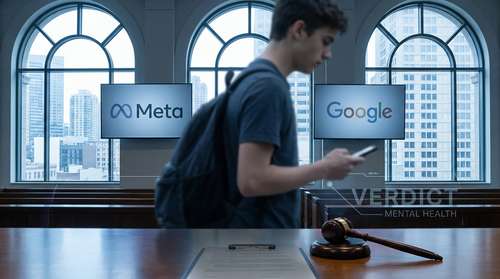
In what legal experts are already calling a seismic shift in corporate responsibility, a Los Angeles jury has handed down a historic Meta Google mental health verdict. Following more than 40 hours of intense deliberation over nine days, twelve jurors ordered Meta Platforms and Alphabet's Google to pay $6 million in damages to a 20-year-old woman. The sweeping decision marks the very first time tech giants have been held directly liable by a jury for designing digital platforms that cause severe psychological harm. This verdict transforms the closely watched social media addiction lawsuit 2026 into a permanent turning point for the industry, establishing a new baseline for how courts view digital product safety.
The Details of the Landmark Social Media Addiction Trial
The plaintiff, identified in court documents as Kaley or KGM, presented a harrowing account of growing up deeply entangled in the digital ecosystem. She testified that she began using Google's YouTube at age six and Meta's Instagram by age nine. Over the years, her compulsive platform usage fueled severe depression, social phobia, anxiety, and body dysmorphia.
Jurors ultimately sided with the plaintiff, awarding $3 million in compensatory damages and an additional $3 million in punitive damages. They determined that both corporations acted with "malice, oppression, or fraud" by prioritizing user engagement over safety. Responsibility was officially divided based on fault: Meta bears 70% of the financial penalty ($4.2 million), while Google is responsible for the remaining 30% ($1.8 million).
Notably, TikTok and Snap were originally named as defendants in the litigation but chose to settle their portions of the case confidentially before the trial began.
Algorithmic Engineering: A Digital Addiction Legal Precedent
For years, tech companies have shielded themselves from liability using laws that prevent them from being sued over third-party content. However, the legal team representing Kaley took a different route. They didn't sue over the videos or photos posted by users; they focused on the underlying machinery of compulsion.
The jury found both Meta and Google negligent in their product design. Features like the "infinite scroll" and relentless algorithmic recommendations were pinpointed as intentional mechanisms engineered to hook vulnerable users. Furthermore, the companies were found liable for failing to warn parents and young users about these inherent dangers, establishing a formidable digital addiction legal precedent.
How Big Tech Responded
Throughout the trial, the defense fought aggressively against the allegations. Meta and Google argued that Kaley's psychological struggles stemmed from a turbulent home life and pre-existing learning disabilities rather than their applications. Meta CEO Mark Zuckerberg even took the stand, defending Instagram as a tool that adds value to people's lives while facing questions about internal research on teen well-being.
Following the verdict, both companies announced immediate plans to appeal. A Google spokesperson argued that the case fundamentally mischaracterizes YouTube, describing it as a responsibly built streaming service rather than a social network. Meanwhile, Meta representatives maintained that the youth mental health crisis social media connection is profoundly complex and cannot be blamed on a single piece of software.
Addressing the Social Media Impact on Depression
Despite the planned appeals process, the courtroom victory highlights a growing consensus among experts and the general public. During the seven-week proceeding, testimony from therapists, software engineers, and child development specialists painted a stark picture of the social media impact on depression.
The apps did not just reflect the plaintiff's pain; they actively amplified and manufactured it. Endless exposure to filtered, idealized images pushed a young girl deeper into comparison culture, leading to withdrawal from her family and eventual suicidal ideation. This narrative resonated strongly with the jury, validating the lived experiences of millions of teenagers navigating the modern internet.
A New Era for Big Tech Accountability Mental Health
While $6 million is a minor sum for conglomerates with annual capital expenditures exceeding $100 billion, the symbolic and legal ramifications of this defeat are massive. This Los Angeles case was specifically selected as a "bellwether" trial—a legal test run meant to gauge jury sentiment and establish precedent for a much larger consolidated group of lawsuits.
Currently, up to 2,500 similar plaintiffs, including hundreds of families and school districts, have cases pending in California courts against these platforms. Plaintiff's attorney Mark Lanier characterized the victory as the "tip of the spear" and a clear message from ordinary citizens to an entire industry.
The Los Angeles decision does not exist in a vacuum. It follows closely on the heels of another major ruling where a New Mexico jury ordered Meta to pay $375 million for violating state consumer protection laws regarding children's safety.
Going forward, this historic ruling will likely force developers to fundamentally rethink how they build digital environments for minors. Whether it leads to mandatory chronological feeds, stronger parental controls, or strict time limits, the days of unregulated behavioral engineering face serious legal challenges. The jury has signaled that continuous digital engagement cannot come at the cost of a generation's mental well-being.