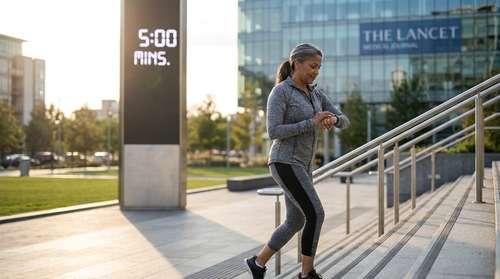
Breaking news for anyone struggling to find time for the gym: a groundbreaking new study published today, January 21, 2026, in The Lancet reveals that adding just 5 minutes of moderate physical activity to your daily routine can significantly extend your life. This landmark research, analyzing data from over 135,000 adults, offers the most definitive proof yet that 5-minute workout longevity benefits are real, achievable, and powerful enough to counteract the deadly effects of a modern sedentary lifestyle.
The Lancet Exercise Study 2026: A Paradigm Shift
For decades, public health guidelines have suggested 150 minutes of exercise per week, a target that many find daunting. However, this new analysis led by researchers at the Norwegian School of Sport Sciences and the University of Sydney flips the script. By using wearable accelerometers rather than unreliable self-reported questionnaires, the team captured the true impact of brief, incidental movements that often go unnoticed.
The findings are startlingly positive. The data shows that for the average adult, increasing daily moderate physical activity by a mere five minutes is associated with a 10% reduction in the risk of premature death. For the least active individuals—those comprising the bottom 20% of physical activity levels—the benefits are even more pronounced. This demographic could see a 6% drop in mortality risk with just five extra minutes of movement, challenging the "all or nothing" mentality that discourages so many from exercising.
Why "Micro-Workouts" Are So Effective
How can such a short duration make such a big difference? The secret lies in the physiological response to micro-workouts health benefits. Brief bursts of activity, often referred to as "exercise snacks" or vigorous intermittent lifestyle physical activity (VILPA), trigger rapid metabolic changes. These short spikes in heart rate improve insulin sensitivity, clear blood glucose, and reduce chronic inflammation—key factors in preventing heart disease and metabolic disorders.
Lead author Dr. Ulf Ekelund emphasized that these aren't necessarily scheduled gym sessions. "What we are seeing is that the body responds incredibly well to consistency," Ekelund noted in the study's release. "Whether it is a brisk walk to the bus stop or taking the stairs instead of the elevator, these accumulated minutes signal to your body that it needs to maintain vital systems, effectively slowing the aging process."
How to Live Longer with Exercise: The 30-Minute Rule
While the headline finding focuses on the power of five minutes, the study offered another crucial insight into sedentary lifestyle risks 2026. Researchers found that reducing sedentary time by 30 minutes a day—swapping sitting for low-intensity movement like standing or slow walking—reduced the risk of early death by an additional 7%.
This creates a two-pronged approach to longevity: add intensity for five minutes, and reduce stillness for thirty. The combination acts as a powerful shield against cardiovascular disease. In an era where remote work and streaming services keep millions desk-bound, this prescription is far more accessible than traditional fitness advice. You don't need to sweat for an hour; you just need to break the pattern of prolonged inactivity.
Practical Ways to Get Your 5 Minutes
Integrating brisk walking for health into a jam-packed schedule is easier than you think. Here are actionable ways to hit that 5-minute target without altering your entire day:
- The Commuter Dash: Park at the far end of the lot or get off the bus one stop early. Walking briskly for 2.5 minutes each way hits your daily quota effortlessly.
- Domestic Sprints: When doing chores like vacuuming or carrying groceries, pick up the pace. Turn routine housework into a moderate-intensity event.
- Stair Snacking: Ignore the elevator. Climbing three flights of stairs vigorously can take less than two minutes but offers the cardiovascular equivalent of a much longer jog.
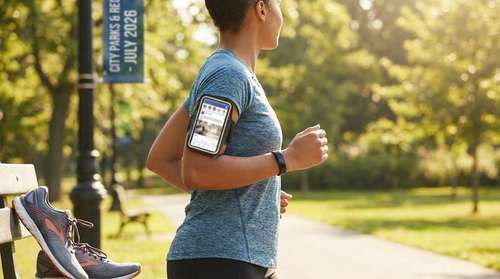
- The Coffee Break Walk: Instead of scrolling through your phone while the coffee brews, take a brisk lap around the building or block.
The End of the "Gym-Only" Myth
This Lancet exercise study 2026 arrives at a critical moment. As health tech evolves, we are learning that our biology values frequency and consistency over occasional heroics. The old belief that exercise doesn't count unless you're in gym gear and sweating for 45 minutes is scientifically dead.
For the millions of Americans who feel they are too busy to be healthy, this news is a lifeline. It democratizes health, making longevity accessible to single parents, overworked executives, and retirees alike. The barrier to entry has never been lower. The question is no longer "Can I find an hour to train?" but rather "Can I find five minutes to move?"
As we move further into 2026, the message from the scientific community is clear: Every step counts, and the most important workout of your life might be the five-minute walk you take today.