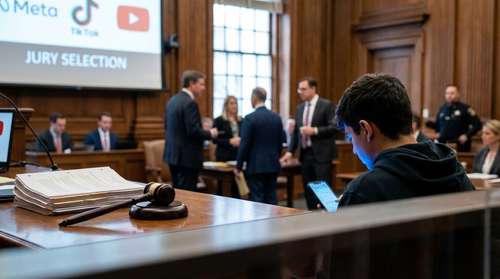
Jury selection officially commenced Tuesday in a landmark social media addiction trial in Los Angeles, marking a pivotal moment in the legal battle between Big Tech and families alleging their children were harmed by addictive algorithms. In what legal experts are calling a "Big Tobacco moment" for the tech industry, giants like Meta (parent of Facebook and Instagram), TikTok, and YouTube (Google) are facing a jury for the first time over claims that they deliberately designed their platforms to hook young users, directly fueling a youth mental health crisis.
The Case: Profit Over Safety?
The trial, presiding under Los Angeles Superior Court Judge Carolyn B. Kuhl, represents the first "bellwether" case of thousands consolidated under the Judicial Council Coordination Proceeding (JCCP 5255). The plaintiffs argue that these tech behemoths ignored their own internal research regarding social media harm to children and instead engineered features—such as infinite scroll, constant push notifications, and intermittent variable rewards (similar to slot machines)—to maximize engagement at the expense of user well-being.
Central to this specific trial is the case of a 19-year-old plaintiff identified in court documents only as "KGM." Her attorneys allege that she began using social media at age 10 and quickly spiraled into a cycle of addiction that led to severe depression, anxiety, body dysmorphia, and suicidal ideation. "These companies treated our children as revenue streams, not people," said one of the lead attorneys during a pre-trial briefing. "They knew their designs were addictive, and they doubled down."
Mark Zuckerberg Testimony and Executive Liability
One of the most anticipated aspects of this Meta TikTok YouTube lawsuit is the expected testimony of high-profile executives. Meta CEO Mark Zuckerberg testimony is slated to be a focal point of the proceedings, with Instagram head Adam Mosseri also on the witness list. Plaintiffs plan to grill these leaders on internal communications that may show they were aware of the psychological toll their platforms took on teenagers but chose to prioritize growth.
Legal analysts suggest that if the jury finds these executives and their companies liable, it could piece the veil of immunity that has long protected Silicon Valley. "This isn't just about one teenager; it is about establishing tech company liability mental health precedents that could force a complete overhaul of how the digital world operates for minors," noted a legal observer outside the courthouse.
Snap Settlements and Defense Strategies
Notably absent from the defense table is Snap Inc., the parent company of Snapchat. Just days before jury selection began, Snap reached a confidential settlement with the plaintiffs, effectively removing itself from this high-stakes courtroom drama. This last-minute move has intensified the spotlight on the remaining defendants.
The defense for Meta, TikTok, and YouTube is expected to rely heavily on the First Amendment and Section 230 of the Communications Decency Act, arguing that they are publishers of third-party content and thus immune from liability. They will likely contend that there is no medical consensus on "social media addiction" as a clinical diagnosis and highlight the parental supervision tools they have introduced in recent years.
The Youth Mental Health Crisis on Trial
The outcome of this trial could validate the long-held suspicions of parents and health professionals regarding teen social media depression. Evidence presented is expected to link the spike in teenage suicide rates and mental health hospitalizations directly to the rise of mobile social networking. By framing the case around "defective design" rather than just content moderation, plaintiffs are attempting to bypass the traditional legal shields that have protected tech firms for decades.
As the trial unfolds over the coming weeks, the world is watching. A verdict against these companies wouldn't just result in significant financial damages; it would signal a seismic shift in the regulatory landscape, potentially forcing platforms to redesign their algorithms to prioritize safety over addiction.