A groundbreaking analysis from the University of British Columbia (UBC) has exposed a persistent and dangerous exercise physiology gender gap that continues to leave women behind in fitness science. Published this week in Applied Physiology, Nutrition, and Metabolism, the study reveals that nearly half of all recent exercise physiology research focuses exclusively on men, warning that the scientific community is failing to provide evidence-based data for female bodies. As of late January 2026, this research serves as a wake-up call for an industry that has long generalized male-centric findings to the entire population.
The Shocking Statistics: Women Are Still Missing from the Data
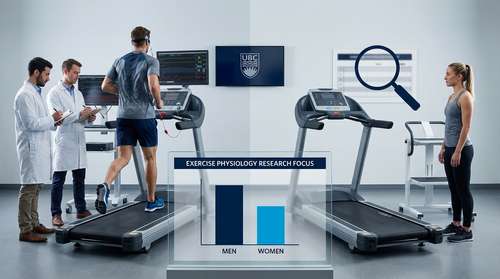
Led by Dr. Meaghan MacNutt, an assistant professor at UBC Okanagan’s School of Health and Exercise Sciences, the research team analyzed over 600 original research articles published in six leading exercise physiology journals. The findings, released yesterday, paint a stark picture of exclusion in women's fitness research 2026.
The study found that approximately 50% of the analyzed papers included only male participants. In contrast, fewer than one in ten studies focused exclusively on female physiology. This disparity means that the vast majority of "standard" fitness protocols—from recovery timelines to hypertrophy training—are largely based on male biology.
"Our numbers are closer to what we see in disciplines with very well-known gender gaps, like physics or computer science," Dr. MacNutt stated, highlighting that exercise physiology lags significantly behind other biomedical fields in gender equity.
Why the Data Gap Threatens Women’s Health
The exclusion of women from foundational research is not just an academic issue; it is a practical health hazard. When female physiology sports science is ignored, trainers and medical professionals are forced to apply male-derived data to women, often with suboptimal or even harmful results.
Women have distinct physiological responses to physical activity, influenced by factors such as hormonal fluctuations, menstrual cycles, and different muscle fiber compositions. By generalizing findings from male bodies, the fitness industry overlooks critical sex-based differences in:
- Injury Prevention: Women are more susceptible to certain injuries (like ACL tears) due to biomechanical differences, yet prevention protocols often lack female-specific validation.
- Metabolic Health: Fat oxidation and energy utilization differ between sexes, affecting how diet and exercise plans should be structured.
- Cardiovascular Response: Heart rate variability and recovery times can vary significantly, meaning "standard" heart rate zones may be inaccurate for women.
The UBC exercise science study argues that this "one-size-fits-men" approach compromises the safety and effectiveness of exercise prescriptions for half the global population.
The "Authorship Gap" Fuels the Problem
The study identifies a clear link between who is doing the research and who is being studied. The UBC analysis revealed that women are significantly underrepresented as researchers in the field. Women made up only 27% of total authors across the 600+ studies reviewed, and held only 16% of senior author roles.
Who Asks the Questions Matters
This lack of representation at the senior level limits the types of questions being asked. The research suggests that when women are in decision-making roles, studies are more likely to consider gender-specific health research and include female participants. Without more women in the lab and on the review boards, the cycle of exclusion is likely to continue.
"These gaps... undermine the science by limiting whose bodies we understand and whose ideas shape that understanding," the research team noted. Diversifying the academic workforce is a critical step toward achieving inclusive fitness training standards.
Moving Toward Inclusive Science
The release of this study in January 2026 marks a critical turning point. For the fitness industry to evolve, it must move beyond token inclusion and strictly enforce guidelines that mandate sex-disaggregated data. Journals and funding bodies are facing increased pressure to reject studies that exclude women without a valid scientific justification.
For coaches, athletes, and fitness enthusiasts, this means questioning the "science" behind popular training programs. Is the protocol based on data relevant to you, or is it a remnant of fitness science bias? Demanding better research is the first step toward a fitness landscape where every body is understood, valued, and optimized.