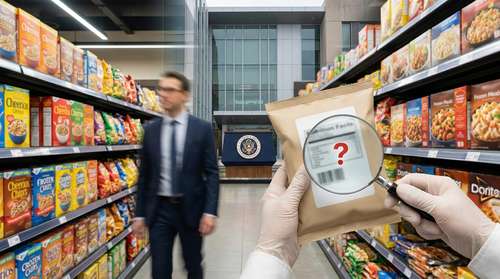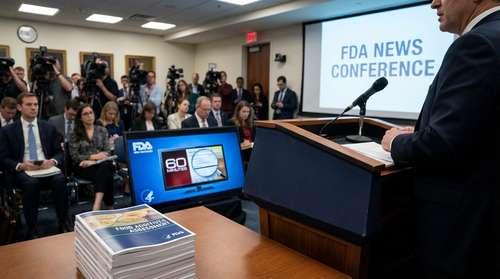
In a potential watershed moment for American public health, the FDA is poised to re-evaluate the safety of ultra-processed foods following a startling 60 Minutes investigation aired this Sunday. Department of Health and Human Services (HHS) Secretary Robert F. Kennedy Jr. confirmed that the agency will act on a landmark petition to close the "Generally Recognized as Safe" (GRAS) regulatory loophole, a decades-old policy that has allowed thousands of additives to enter the food supply with minimal government oversight. This move signals a major shift in nutrition policy 2026, aiming to tackle the country’s deepening chronic disease crisis.
The '60 Minutes' Report: Exposing the GRAS Regulatory Loophole
The 60 Minutes segment, led by correspondent Bill Whitaker, shone a harsh spotlight on a 1958 provision known as "Generally Recognized as Safe" (GRAS). Originally intended for common ingredients like vinegar and table salt, the rule has evolved into what critics call a massive backdoor for the food industry. Under current regulations, companies can self-certify new chemical additives and processed ingredients as safe without ever submitting data to the FDA for approval.
During the broadcast, former FDA Commissioner Dr. David Kessler described the situation as a systemic failure, arguing that the statute was never designed to cover the complex, synthetic compounds found in modern ultra-processed foods. "We created a system where the industry tells the government what is safe, rather than the government telling the industry," Kessler stated. This lack of transparency means that neither regulators nor consumers know exactly what is in the food supply, a gap that Secretary Kennedy described as "the end of the 'trust us' era in FDA food safety."
FDA to Act on Kessler’s Petition Targeting Refined Carbs
The immediate catalyst for change is a citizen petition filed by Dr. Kessler, which calls for the FDA to revoke the GRAS status of specific processed refined carbohydrates. The petition targets ingredients like high-fructose corn syrup, maltodextrin, and modified starches—substances that Kessler argues are not just empty calories but biologically disruptive agents driving the obesity epidemic.
Shift from Regulation to "Informed Public"
In his interview, RFK Jr. clarified the administration's approach. While promising to act on Kessler's petition, he emphasized that the goal is not necessarily to ban all ultra-processed products outright but to enforce rigorous safety standards and transparency. "I’m not saying that we’re going to regulate ultra-processed food [out of existence]," Kennedy told Whitaker. "Our job is to make sure that everybody understands what they’re getting, to have an informed public."
This nuanced stance suggests a future where manufacturers may be forced to prove the safety of their ingredients before they hit the shelves, reversing the current burden of proof. If the petition succeeds, it could force a massive reformulation of popular grocery items, from breakfast cereals to frozen dinners, effectively ending the "innocent until proven guilty" status of many food additives health risks.
The Health Crisis: Biology vs. Food Engineering
The push for tighter regulation is underpinned by growing scientific consensus linking ultra-processed foods to a myriad of chronic health conditions. Dr. Kessler explained that modern food engineering has created products that bypass the body's natural satiety signals. "Our biology was never intended to handle" these hyper-palatable, rapidly absorbable foods, he warned, linking them directly to type 2 diabetes, fatty liver disease, and metabolic dysfunction.
This perspective aligns with the broader "Make America Healthy Again" (MAHA) agenda, which prioritizes addressing the root causes of chronic illness over symptom management. By targeting the GRAS mechanisms that allow these ingredients to proliferate, the FDA aims to disrupt the cycle of chronic disease diet patterns that affect more than half of the American population.
Industry Pushback and the Path Forward
The food industry has already begun to mobilize in defense of the current system. The Consumer Brands Association, a trade group representing major food manufacturers, issued a statement following the report. They argued that there is no "agreed-upon scientific definition of ultra-processed foods" and maintained that their member companies adhere to rigorous safety standards. "The GRAS process plays an important role in enabling companies to innovate to meet consumer demand," the association stated.
Despite this resistance, the momentum for reform appears strong. In addition to the GRAS review, the FDA recently announced a reassessment of the preservative BHA (butylated hydroxyanisole), further indicating a tougher stance on chemical additives. As the agency moves to review the safety of these ubiquitous ingredients, 2026 is shaping up to be a defining year for food safety reform, potentially transforming what Americans find on their supermarket shelves.