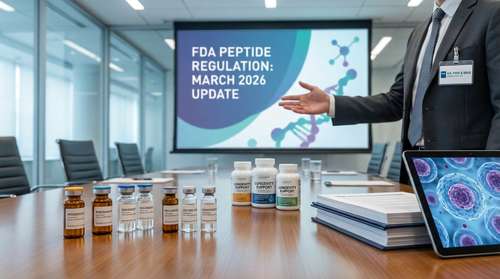
On March 27, 2026, federal health officials convened a watershed public meeting that could forever change the landscape of the American wellness industry. The primary focus was a radical proposal: expanding longstanding definitions of dietary supplements to encompass high-tech wellness tools like peptides and advanced probiotics. This potential regulatory overhaul comes as a cornerstone of the 'Make America Healthy Again' initiative, promising to shift longevity supplement breakthroughs out of clinical gray areas and directly into the consumer market. For individuals eager to optimize their healthspan, this FDA peptide regulation 2026 update marks the most significant federal pivot in decades.
A Turning Point in FDA Peptide Regulation 2026
For decades, the U.S. Food and Drug Administration has classified dietary supplements strictly as food-derived substances, herbs, and vitamins. However, Friday's meeting tackled the concept of a dietary supplement criteria expansion head-on. Industry leaders and federal regulators debated whether the old framework should broaden to include laboratory-synthesized compounds.
Peptides—short chains of amino acids naturally produced in the human body—have exploded in popularity for their potential benefits in tissue healing, immune function, muscle growth, and longevity. Yet, because they do not easily fit into traditional food categories, many innovative peptide products currently violate FDA rules. By addressing these outdated restrictions, regulators are finally acknowledging the surging consumer demand for peptides for healthy aging.
RFK Jr Health Policy Updates and the MAHA Movement
This dramatic ideological shift is largely spearheaded by Health and Human Services Secretary Robert F. Kennedy Jr.. Kennedy has been a vocal proponent of alternative wellness therapies, recently vowing to "end the war at FDA" on dietary supplements and peptides. As part of his broader health movement, Kennedy's approach seeks to empower consumers by loosening restrictions on treatments that have historically been sidelined by federal agencies.
Earlier this year, Kennedy signaled his intention to reverse a 2023 FDA decision that banned compounding pharmacies from producing nearly two dozen specific peptides. He argued that restricting these substances forces consumers into sketchy, overseas gray markets. The FDA's top food official, Kyle Diamantas, echoed this pro-industry sentiment at the meeting, emphasizing the administration's commitment to "cutting red tape" to lower costs for the natural products sector.
The Push for Peptide Therapy Accessibility
Improving peptide therapy accessibility is central to the new administration's strategy for anti-aging cellular health. If the FDA moves forward with reclassifying 14 of the 19 banned peptides from Category 2 back to Category 1, patients could see several direct benefits:
- Enhanced Quality Control: Licensed U.S. compounding pharmacies would be permitted to prepare these therapies under strict safety standards.
- Safer Alternatives: Consumers could avoid unregulated online suppliers that often sell adulterated or mislabeled products.
- Medical Oversight: Patients would access cutting-edge tools through their physicians rather than self-administering speculative compounds.
Dietary Supplement Criteria Expansion: Industry vs. Critics
While the prospect of widely available longevity supplement breakthroughs excites many wellness advocates, it has sparked fierce debate in Washington. The Natural Products Association, which initially requested the March meeting, argues that unclear regulatory expectations stifle innovation and drive up manufacturing costs. They believe that next-generation health products deserve a clear, legal pathway to market.
Conversely, consumer watchdogs are sounding alarms. Jensen Jose, senior regulatory counsel for the Center for Science in the Public Interest, testified that allowing new, synthetic ingredients would dangerously expand a market the FDA already struggles to monitor. Furthermore, scientific experts like Dr. Eileen Kennedy caution that while peptides show promise in animal studies, many lack robust human clinical trials to confirm their safety and efficacy. Unregulated use could lead to severe off-target effects, potentially harming major organs or triggering massive immune responses.
The Future of Anti-Aging Cellular Health
The battle over FDA peptide regulation 2026 signals a fundamental shift in how Americans approach preventative medicine. As scientific innovation moves faster than bureaucratic frameworks, federal agencies are being forced to adapt. Whether you are an athlete looking for faster injury recovery or an individual exploring peptides for healthy aging, the outcomes of these public meetings will directly impact your options.
Moving forward, consumers can expect to see significant RFK Jr health policy updates unfold in real-time as the administration pushes its agenda. If the dietary supplement criteria expansion becomes official policy, it will democratize access to next-generation wellness tools. Until the final rulings are published, the medical community watches closely, anticipating a new era for longevity and cellular health.