In a landmark decision that promises to reshape the mental health landscape, the U.S. Food and Drug Administration (FDA) has officially cleared ProlivRx, a groundbreaking prescription-only neuromodulation device designed for the at-home treatment of Major Depressive Disorder (MDD). Approved earlier this month, this first-of-its-kind therapy offers a new lifeline for millions of adults who have failed to find relief through standard antidepressant medications, marking a pivotal moment in mental health innovation 2026.
First Prescription At-Home Neuromodulation Therapy for Depression
Developed by Neurolief, ProlivRx represents a significant technological leap as the first physician-directed, at-home brain neuromodulation therapy to receive FDA approval via the rigorous Premarket Approval (PMA) pathway. Unlike over-the-counter wellness gadgets, ProlivRx is a Class III medical device indicated specifically as an adjunctive treatment for adults with MDD who have not achieved satisfactory improvement from at least one previous antidepressant.
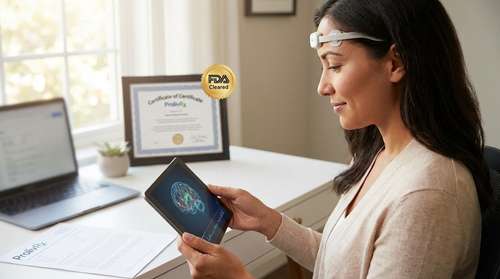
The device utilizes a proprietary technology known as external Combined Occipital and Trigeminal Afferent Stimulation (eCOT-AS). Patients wear a headset that delivers precise, gentle electrical pulses to the occipital and trigeminal nerve pathways in the head—key conduits to the brain stem and higher brain regions involved in mood regulation. This mechanism allows for targeted neuromodulation therapy MDD without the need for invasive procedures or daily clinic visits.
Clinical Breakthrough: The MOOD Study Results
The ProlivRx FDA approval is underpinned by compelling data from the pivotal MOOD Study, a randomized, controlled, multicenter clinical trial. The study demonstrated that ProlivRx could significantly reduce depressive symptoms in patients with treatment-resistant depression compared to a control group.
Dr. Linda Carpenter, a Professor of Psychiatry at Brown University and co-lead investigator of the MOOD trial, highlighted the urgency of this innovation. "Until now, patients struggling with difficult-to-treat depression did not have a non-pharmacological therapy option that could be administered at home," Carpenter noted. She emphasized that while in-clinic treatments like Transcranial Magnetic Stimulation (TMS) are effective, access remains a critical barrier for many. ProlivRx bridges this gap by combining medical supervision with the convenience of non-invasive brain stimulation at home.
Key Findings from the Trials
- High Efficacy: Significant remission and response rates observed in patients resistant to standard medications.
- Safety Profile: The treatment showed a favorable safety profile with a low risk of systemic adverse events, a crucial factor for a device intended for home use.
- Usability: The headset is designed for patient ease, ensuring consistent adherence to the treatment protocol outside a clinical setting.
A New Paradigm: Physician-Directed, Home-Delivered
One of the most defining features of the Neurolief ProlivRx prescription model is its hybrid approach to care. While patients self-administer the treatment at home, they remain under the digital supervision of their healthcare provider. The system likely includes a cloud-based data platform that allows psychiatrists to monitor usage and patient progress remotely, adjusting treatment protocols as necessary.
This model addresses a critical bottleneck in mental healthcare: the scarcity of appointment slots and the logistical burden of daily clinic visits required for traditional neurostimulation therapies. By decoupling high-quality neurostimulation from the physical clinic, ProlivRx could democratize access to advanced depression care across the United States.
Market Context and Future Outlook
The approval of ProlivRx comes at a time of intense activity in the neurotech sector. Just last month, competing device maker Flow Neuroscience received FDA clearance for its tDCS headset via the De Novo pathway. However, ProlivRx's approval via the more stringent PMA pathway underscores its status as a high-risk, high-reward medical intervention backed by robust clinical evidence.
Strategic partnerships are already forming to accelerate the rollout. BrainsWay, a global leader in Deep TMS, has made a strategic investment in Neurolief, signaling strong industry confidence in the at-home depression treatment device market. This collaboration could see ProlivRx integrated into existing psychiatric networks, offering a continuum of care where patients might step down from intensive clinic-based TMS to at-home maintenance with ProlivRx.
As the medical community digests this January 2026 approval, the focus now shifts to insurance coverage and rollout. With the FDA's green light, ProlivRx is poised to become a cornerstone in the fight against the growing mental health crisis, offering hope to those who have long exhausted traditional pharmaceutical options.