In a historic development for mental health care announced this week, the US Food and Drug Administration has authorized a revolutionary new option for patients battling severe mood disorders. This highly anticipated Neurolief FDA approval introduces the world's first prescription, physician-directed FDA approved depression wearable. By utilizing the groundbreaking Proliv Rx system, MDD patients who have failed to achieve satisfactory relief from traditional antidepressant medications finally have an accessible, highly effective alternative.
The Growing Need for Treatment-Resistant Depression New Treatments in 2026
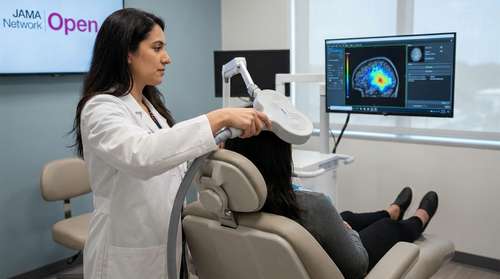
Major Depressive Disorder is a leading cause of disability worldwide, but the harsh reality of psychiatric care is that standard pharmacological treatments do not work for everyone. An estimated one-third of individuals with clinical depression do not experience adequate symptom relief from first-line medications like SSRIs or SNRIs. Historically, once a patient was deemed treatment-resistant, their options narrowed drastically to in-clinic procedures such as Transcranial Magnetic Stimulation (TMS) or electroconvulsive therapy (ECT).
While effective, these traditional clinical interventions present significant logistical hurdles. Patients often must commute to specialty clinics five days a week for several weeks, creating immense barriers regarding time, cost, and geographic access. Recognizing this massive gap in the psychiatric care continuum, the medical community has urgently sought solutions that combine clinical efficacy with patient convenience, paving the way for treatment-resistant depression new treatments 2026.
What is the Proliv Rx System and How Does it Work?
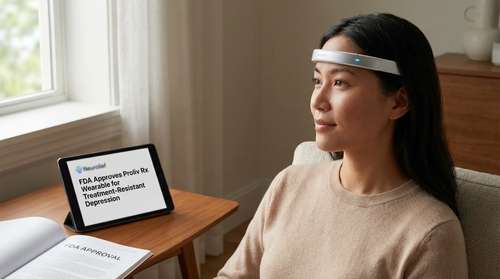
The newly cleared headset shatters traditional barriers by bringing clinical-grade neuromodulation for major depressive disorder directly into the patient's living room. The device utilizes a proprietary technology known as external Combined Occipital and Trigeminal Afferent Stimulation (eCOT-AS).
Patients wear the specialized headset—which features three pairs of integrated output electrodes—comfortably around their head. The device delivers gentle, non-invasive electrical pulses that specifically target the occipital and trigeminal neural pathways. These specific cranial nerves are intimately connected to the brain's broader mood regulation networks, allowing the subtle stimulation to safely modulate depression-related brain circuits over time.
A Breakthrough in Non-Drug Depression Therapy
Because the therapy works directly on the brain's neurocircuitry rather than altering systemic body chemistry, it represents a monumental leap forward for non-drug depression therapy. Traditional psychiatric medications often carry a heavy burden of systemic side effects, including severe weight gain, chronic fatigue, insomnia, and sexual dysfunction. In stark contrast, clinical data for the Proliv Rx showed no systemic adverse events, with the most commonly reported side effect being a mild, transient headache.
Unpacking the MOOD Study Clinical Data
The FDA’s stringent Class III Premarket Approval (PMA) was heavily based on the landmark MOOD clinical trial, which rigorously evaluated the safety and efficacy of this at-home brain stimulation for depression. The randomized, sham-controlled, multicenter study involved 124 adults who had previously failed to respond adequately to at least one antidepressant medication.
After eight weeks of structured use, patients utilizing the active device experienced a mean symptom reduction of 8.62 points on the Hamilton Depression Rating Scale (HDRS), significantly outperforming the sham control group's 6.01-point reduction. Even more impressively, the clinical remission rate for the active treatment group was 21.3%, compared to just 6.0% for the control group.
Dr. Linda Carpenter, a lead investigator of the MOOD trial and professor of psychiatry at Brown University, noted that until now, patients struggling with difficult-to-treat depression simply did not have a non-pharmacological option they could administer at home. During a subsequent 16-week open-label extension of the trial, symptom reduction deepened to 9.78 points, and clinical remission rates climbed to an impressive 31.7%, demonstrating sustained, long-term therapeutic benefits.
Bridging the Gap: The Future of Home-Based Psychiatric Care
One of the most defining features of this new era of mental health care is the seamless integration of technology and professional oversight. While patients self-administer the treatment in the comfort of their homes, they remain under strict clinical supervision. The wearable device pairs with an intuitive mobile application designed to ensure correct usage, track daily adherence, and monitor real-time symptom progression. This data is transmitted securely to the prescribing physician's dashboard, allowing care teams to intervene or adjust treatment plans proactively.
Scott Drees, CEO of Neurolief, emphasized that this system was explicitly developed to extend evidence-based care beyond the physical limitations and infrastructure costs of traditional specialty clinics. As the initial commercial rollout begins this week across authorized U.S. health systems and behavioral health programs, the psychiatric community is witnessing a fundamental paradigm shift. By successfully marrying the clinical rigor of targeted neurostimulation with the unparalleled convenience of wearable technology, millions of adults battling chronic depression finally have a scalable, effective path forward.