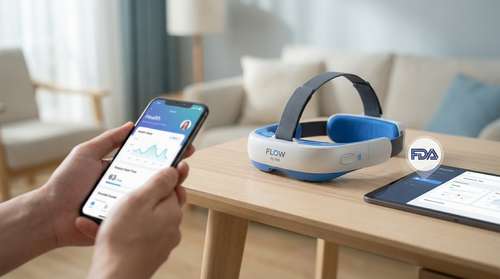
In a landmark decision that could reshape mental health treatment in America, the FDA has officially cleared the Flow FL-100, the first tDCS device authorized for at-home treatment of depression. As of January 29, 2026, details regarding its U.S. rollout have been solidified, offering new hope to the millions of adults battling moderate to severe major depressive disorder (MDD). This prescription-only headset brings clinical-grade brain stimulation out of the hospital and into the living room, marking a pivotal shift toward more accessible, non-drug therapies.
Breaking: A New Era for Mental Health Tech
The approval of the Flow FL-100 represents a significant breakthrough in psychiatric care. For decades, patients seeking neurostimulation therapies like Transcranial Magnetic Stimulation (TMS) had to visit clinics daily, often facing high costs and logistical hurdles. The Flow FL-100 changes this dynamic entirely by utilizing transcranial direct current stimulation (tDCS), a safe and non-invasive technology that patients can self-administer.
Developed by Swedish medtech pioneer Flow Neuroscience, the device has already seen widespread adoption in Europe. Its U.S. clearance serves as a validation of "electric medicine" as a viable frontline treatment, specifically for adults who may not have responded well to traditional antidepressants or wish to avoid their side effects.
How the Flow FL-100 Works
The Flow FL-100 is not a medication but a wearable headset designed to target the biological root of depression. It works by delivering a weak, direct electrical current to the dorsolateral prefrontal cortex (DLPFC)—an area of the brain often found to be underactive in people struggling with depression.
Patients wear the headset for 30-minute sessions while engaging with a companion behavioral therapy app. The treatment protocol is straightforward:
- Initial Phase: Five sessions per week for the first three weeks to jumpstart brain activity.
- Maintenance Phase: Tapering down to two or three sessions per week to sustain improvements.
This dual approach—combining neurostimulation with app-based lifestyle guidance—aims to restore neural activity and help patients manage symptoms holistically.
Clinical Evidence: Does It Really Work?
The FDA's decision was heavily influenced by results from a pivotal clinical trial published in Nature Medicine. The "Empower" study, which included 174 participants, provided compelling data on the device's efficacy. Key findings included:
- High Remission Rates: Approximately 58% of users achieved remission after 10 weeks of treatment.
- Rapid Improvement: Many patients reported noticeable symptom relief within just three weeks.
- Safety Profile: The device demonstrated a strong safety record, with side effects primarily limited to mild skin redness or irritation at the electrode site.
Critically, the study showed that the Flow FL-100 was effective both as a standalone therapy and when used alongside existing medication, giving psychiatrists a versatile new tool for their arsenal.
Cost and Accessibility vs. Traditional TMS
One of the most disruptive aspects of the Flow FL-100 is its pricing model. Traditional TMS therapy can cost anywhere from $6,000 to $12,000 per course and typically requires daily office visits for weeks. In stark contrast, Flow Neuroscience is targeting a U.S. launch price between $500 and $800.
This price point makes neurostimulation accessible to a much broader demographic. While insurance reimbursement pathways are still being established, the out-of-pocket cost is significantly lower than many alternative therapies. The device will be available by prescription, ensuring that usage is monitored by healthcare professionals.
When Can You Get It?
Following the recent FDA clearance, Flow Neuroscience has announced plans for a full U.S. commercial launch in Q2 2026. Patients interested in the device should begin discussing it with their mental health providers now, as prescriptions will be required once distribution begins.
The Future of At-Home Depression Care
The approval of the Flow FL-100 is more than just a product launch; it is a signal that the FDA is ready to embrace digital and home-based health solutions for serious mental health conditions. By empowering patients to take control of their treatment in their own homes, the medical community is taking a massive step toward closing the care gap for the estimated 21 million American adults suffering from major depression.
As we move further into 2026, the integration of devices like the FL-100 into standard care protocols could redefine what recovery looks like—making it personal, accessible, and drug-free.