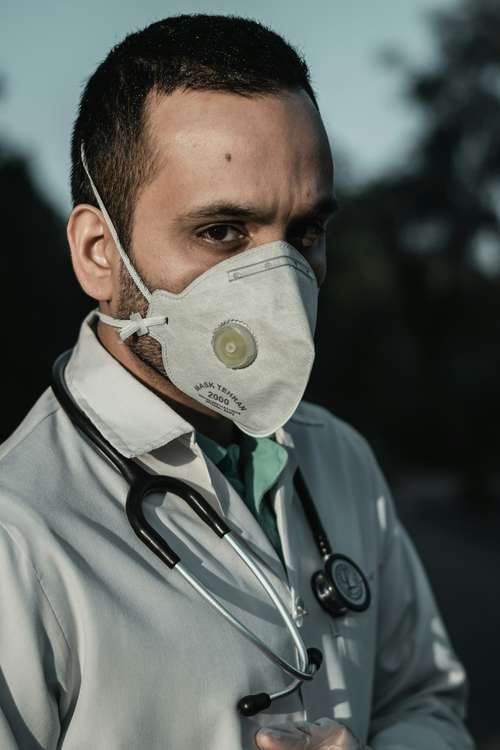
A global coalition of leading health experts has issued a stark warning to the World Health Organization (WHO), declaring that surgical masks provide "inadequate" protection against airborne pathogens and urging an immediate upgrade to respirator-level standards. In an open letter sent on January 9, 2026, clinicians and scientists argued that the continued reliance on loose-fitting blue masks in healthcare settings is putting both staff and patients at avoidable risk as new COVID-19 variants drive a fresh winter surge.
N95 vs Surgical Masks 2026: The Push for Airborne Protection
The debate over N95 vs surgical masks 2026 has reached a tipping point. The signatories of the letter, which include prominent figures like Dr. Adam Finkel and Professor Trisha Greenhalgh, present compelling data that challenges the status quo. They argue that while surgical masks—ubiquitous in hospitals since 2020—offer some barrier, they are fundamentally insufficient for blocking the microscopic airborne particles that transmit the SARS-CoV-2 virus.
According to the experts, surgical masks may block only about 40% of small infectious particles. In sharp contrast, well-fitted respirators like N95s or FFP2s can reduce exposure by approximately 80% to 98%. "There is no rational justification remaining for prioritizing or using surgical masks," the letter states, emphasizing that the science of airborne transmission is now undeniable. The coalition is calling for respirators to become the default standard for all healthcare interactions, not just during specific high-risk procedures.
COVID-19 Winter Surge News Drives Urgency
This call to action comes at a critical moment. COVID-19 winter surge news indicates that hospitalizations are creeping up across the United States and Europe as 2026 begins. With a "tripledemic" of flu, RSV, and new Omicron sub-variants circulating, the burden on healthcare systems is intensifying. The experts argue that protecting the healthcare workforce from reinfection is paramount to preventing burnout and staffing shortages.
Why Airborne Pathogen Safety Matters Now
For years, guidance often treated COVID-19 similarly to droplet-spread illnesses, but the consensus on airborne pathogen safety has shifted. The letter criticizes the slow adaptation of global guidelines, noting that allowing healthcare workers to wear baggy surgical masks—or no masks at all—is "scientifically indefensible." By failing to acknowledge the superior filtration of respirators, current policies may be inadvertently facilitating hospital-acquired infections.
Respirator Protection for COVID: What the Experts Demand
The coalition's demands are clear and specific. They are asking the WHO to update its Infection Prevention and Control (IPC) guidelines to recommend respirator protection for COVID and other respiratory viruses as the universal standard in clinical settings. This shift would align international guidance with the biological reality of how the virus spreads—hanging in the air like smoke rather than just falling to the ground as heavy droplets.
Dr. Finkel illustrated the risk difference with a vivid analogy, comparing the protection gap to falling off a four-inch wall versus a four-foot wall. While a surgical mask is "better than nothing," the superior engineering of an N95 or FFP2 mask offers a safety margin that can mean the difference between infection and health. The letter also suggests that the WHO could help procure these masks for lower-income nations, addressing equity concerns that have historically hindered the adoption of better PPE.
WHO Mask Guidelines Update: A Pending Review?
In response to the mounting pressure for a WHO mask guidelines update, a spokesperson for the organization stated that they are currently reviewing their infection prevention guidelines based on the latest scientific evidence. However, the slow pace of this review has frustrated many in the medical community who feel that the evidence for respirators has been clear for years.
While the WHO cannot mandate policies for individual nations, its guidance carries immense weight. An update recommending respirators would likely trigger a global shift in hospital protocols, forcing governments to stockpile better masks and ditch the less effective surgical options. Until then, the coalition advises healthcare workers and vulnerable patients to take matters into their own hands by upgrading to high-quality respirators whenever possible.
Best Masks for COVID 2026: Practical Advice
For the general public, the takeaway from this high-level medical debate is straightforward. When looking for the best masks for COVID 2026, the expert consensus points away from cloth and surgical options. Whether you choose an N95, KN95, or KF94, the key is fit and filtration. As the winter surge continues, upgrading your personal protective equipment remains one of the most effective tools to avoid infection in crowded indoor spaces.