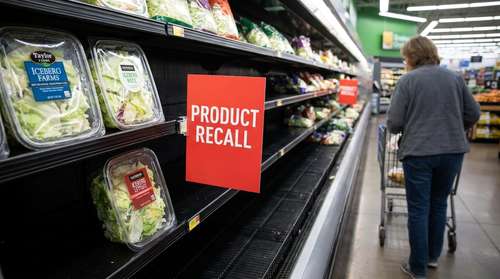
In a stunning shift that has sent shockwaves through the pediatric medical community, the Centers for Disease Control and Prevention (CDC) released its finalized CDC childhood vaccine schedule 2026 earlier this month. The new guidelines, which went into effect January 5, fundamentally restructure how American children receive immunizations, moving several major vaccines—including those for Influenza, RSV, COVID-19, and Rotavirus—from a universal recommendation to a model of "shared clinical decision-making." This historic pivot comes at a precarious moment, as health officials confirm the U.S. is currently grappling with flu levels 25 year high 2026, leaving millions of parents confused about how to protect their families during a severe respiratory virus season.
The New "Shared Clinical Decision-Making" Era
For decades, the standard immunization schedule was a clear-cut roadmap for parents. If a vaccine was on the list, it was recommended for every healthy child. The 2026 update changes the rules of engagement. Under the new guidance, the category of shared clinical decision making vaccines has expanded significantly. This classification means there is no longer a blanket "default" recommendation for these shots. Instead, the decision to vaccinate is left to a negotiation between parents and providers, based on individual risk factors, local disease activity, and family preferences.
The vaccines moved to this new negotiation-based category include:
- Influenza (Flu): Previously a universal yearly shot for everyone over 6 months.
- COVID-19: Now optional based on discussion, rather than routine.
- Rotavirus: An oral vaccine given to infants, now sidelined.
- Meningococcal (MenACWY and MenB): Shifted away from universal adolescent recommendations for low-risk groups.
Federal officials state this move is designed to "align with peer developed nations" like Denmark and reduce vaccine hesitancy by offering more flexibility. However, the American Academy of Pediatrics (AAP) has called the move "dangerous and unnecessary," arguing it removes the community-wide protection that keeps these contagious diseases at bay.
Flu Levels Hit 25-Year High Amid Policy Shift
The timing of these pediatric immunization changes could not be more challenging. Data from the CDC's own FluView network confirms that the 2025-2026 flu season is the most severe the country has seen in over two decades. Hospitalization rates for influenza peaked in late December and remain critically high as of late January 2026.
The dominant strain circulating is Influenza A(H3N2), a particularly aggressive virus known for causing more severe illness in children and the elderly. With the flu shot now removed from the universal "must-have" list, experts worry that vaccination rates—already dipping in recent years—could crater, leading to preventable pediatric deaths and overwhelmed emergency rooms. "Removing the universal flu recommendation during a historic surge is like removing stop signs during rush hour," noted one infectious disease specialist.
RSV and Hepatitis: The "High-Risk" Reclassification
Beyond the shared decision-making model, other staples of the nursery have been reclassified strictly for "high-risk" populations. The RSV vaccine for kids 2026 update restricts the use of RSV immunizations (and monoclonal antibodies) to infants with specific underlying health conditions or those in high-transmission settings.
Similarly, Hepatitis A and Hepatitis B vaccines—previously standard for all babies to prevent liver disease—are now primarily recommended for children with specific risk factors, such as those with infected mothers or travelers to endemic regions. This drastically reduces the "core" universal schedule to just 11 diseases, including measles, mumps, rubella (MMR), polio, and tetanus.
What About Insurance Coverage?
One of the biggest questions for healthvot family health news readers is whether these "sidelined" vaccines will still be covered by insurance. The Department of Health and Human Services (HHS) has confirmed that despite the classification change, all vaccines that were recommended as of December 31, 2025, will remain covered without cost-sharing by most private plans, Medicaid, and the Vaccines for Children (VFC) program. This means parents can still choose to vaccinate their children against Flu, RSV, and Hepatitis B for free—they just have to ask for it.
Actionable Advice for Parents
Navigating this new landscape requires proactive parenting. Here is how to handle the changes:
- Don't Skip the Conversation: "Shared clinical decision-making" implies a discussion, not a refusal. Schedule an appointment with your pediatrician specifically to discuss the pros and cons of the sidelined shots.
- Assess Your Risk: If your child attends daycare or school, their exposure risk to Flu and Rotavirus is high. Most pediatricians still strongly advise these vaccines for healthy children in group settings.
- Watch the HPV Update: In a rare move to simplify the schedule, the CDC now recommends just one dose of the HPV vaccine for adolescents, down from two, citing data that a single dose offers sufficient protection.
While the federal guidance has changed, the biology of viruses has not. With flu levels at a 25-year high, the choice you make in the doctor's office this month carries more weight than ever.