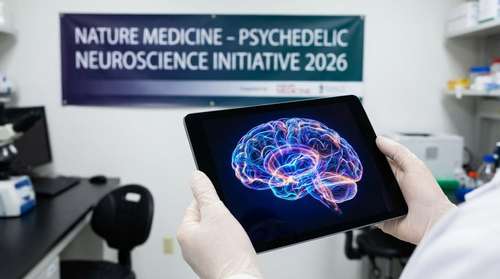
In a watershed moment for psychedelic therapy 2026, an unprecedented international mega-analysis has cracked the code on how mind-altering compounds rewrite human consciousness. A sweeping new Nature Medicine mental health study published this week has identified a universal "neural fingerprint" triggered by five major psychedelics, including LSD and psilocybin. By pooling data from laboratories across five countries, researchers have built the largest and most definitive map of how these substances reshape human brain architecture, offering unprecedented hope for breakthrough mental health treatments.
Unveiling the Universal Neural Fingerprint
For decades, scientists have recognized the therapeutic potential of using psilocybin for depression and post-traumatic stress disorder, yet the biological mechanics remained obscured by limited, small-scale trials. This week's breakthrough, driven by scientists conducting psychedelic research McGill University alongside international partners, shatters those logistical limitations. The consortium analyzed over 500 functional brain scans from 267 participants who were administered one of five distinct compounds: psilocybin, LSD, mescaline, DMT, or ayahuasca.
"This is a breakthrough in how we think about psychedelic drugs," noted Dr. Danilo Bzdok, the study's senior author at McGill University. The team demonstrated that despite vastly different chemical structures and cultural histories—ranging from laboratory-synthesized LSD to traditional Amazonian ayahuasca brews—every single compound triggers the exact same two-step reorganization in the brain.
Melting Rigid Neural Architecture
The first major mechanism involves the temporary dismantling of the brain's internal scaffolding. Under normal, healthy conditions, neural systems operate within strict, segregated networks. The visual cortex tightly manages sight, while the default mode network handles abstract self-reflection and ego.
The research reveals that psychedelics drastically weaken the borders of these internal networks, inducing a state of heightened fluidity. This neural decompression is highly relevant to neuroplasticity and depression, as it physically interrupts the rigid, repetitive thought loops that typically trap patients suffering from severe psychiatric conditions.
Triggering Massive Cross-Talk
The second, and perhaps most striking, effect is a global surge in cross-network communication. When examining brain connectivity and psychedelics, the analysis showed that regions of the brain that rarely interact suddenly begin exchanging massive amounts of information.
Specifically, higher-order thinking networks start sending signals directly to primitive sensory and motor regions. This hyper-connectivity provides a concrete biological explanation for the vivid sensory mixing—or synesthesia—and the profound "ego dissolution" patients frequently report. Manesh Girn, a neuroscientist who co-led the research, explained that this global integration effectively closes the gap between how we process internal memories and how we perceive the external world.
How This Advances Psilocybin for Depression
The timing of this mega-analysis aligns perfectly with a pivotal shift in modern psychiatry. Traditional selective serotonin reuptake inhibitors (SSRIs) often act by blunting emotional extremes, essentially placing a chemical bandage over symptoms without addressing the underlying cognitive rigidity. The new functional connectivity map proves that psychedelic compounds take a radically different approach.
By analyzing the specific impact of different compounds, the researchers uncovered fascinating nuances within the universal blueprint:
- Psilocybin and LSD: Demonstrated incredibly consistent structural changes, heavily bridging sensorimotor networks with subcortical regions like the thalamus and caudate.
- DMT and Ayahuasca: Displayed amplified, more dispersed versions of the same re-wiring pattern, matching their reputation for inducing intense, rapid-onset experiences.
- Mescaline: Functioned on the identical neural framework, proving that plant-based origins and laboratory synthetics share the same therapeutic mechanism.
Researchers emphasize that mapping these network changes provides a concrete biological yardstick for future drug development. Instead of relying solely on subjective patient trip reports, clinicians can now look for this specific brain signature to measure the efficacy of new synthetic compounds.
Thawing the Psychedelic Research Winter
Until now, the exorbitant costs and strict legal barriers surrounding Schedule I substances meant most imaging studies were restricted to fewer than 30 participants. By utilizing an open-science approach and merging 11 independent datasets, the global consortium effectively bypassed the bureaucratic red tape that has stalled clinical advancement since the counterculture backlash of the 1970s.
The implications of this April 2026 Nature Medicine publication extend far beyond academic curiosity. As the medical community increasingly links neuroplasticity and depression to structural brain shifts, psychiatrists finally have a reliable blueprint of the healing mind. We are no longer guessing how these ancient compounds alter human consciousness; we can watch it happen in high resolution, laying the groundwork for the next generation of targeted, life-saving therapies.