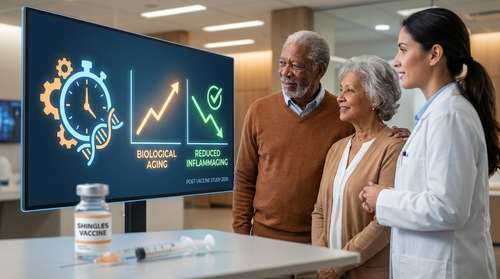
In a surprising twist that could redefine how we view preventative medicine, a landmark study has revealed that the shingles vaccine may do far more than prevent a painful skin rash—it significantly slows biological aging in older adults. Published this week in The Journals of Gerontology, the research offers compelling evidence that suppressing the latent chickenpox virus can reduce systemic inflammation and keep cells genetically "younger." This discovery marks a pivotal moment in longevity research, suggesting that widely available vaccines could serve as powerful tools for inflammaging prevention and extending healthspan.
A New Frontier in Healthy Aging Breakthroughs
For years, the shingles vaccine has been a standard recommendation for seniors to avoid the debilitating pain of herpes zoster. However, researchers at the USC Leonard Davis School of Gerontology have uncovered a hidden benefit: recipients of the vaccine appear to age slower at a molecular level. Lead author Jung Ki Kim and her team analyzed data from nearly 4,000 participants in the U.S. Health and Retirement Study, focusing on adults aged 70 and older.
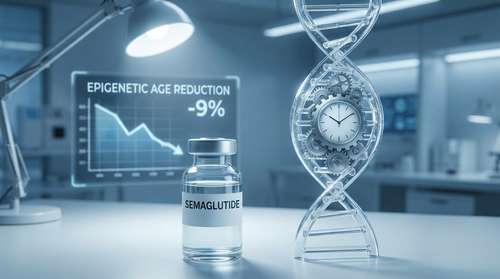
The findings were distinct and statistically significant. Even after adjusting for sociodemographic factors, lifestyle habits, and chronic conditions, vaccinated individuals displayed slower rates of epigenetic clock research 2026 markers and transcriptomic aging. In simple terms, while their chronological age continued to tick forward, their biological clocks—the rate at which their cells and tissues degrade—ticked more slowly than their unvaccinated peers.
Measurable Impact on Cellular Health
The study specifically measured DNA methylation patterns, often referred to as "GrimAge" or "PhenoAge," which are considered the gold standard for predicting mortality and biological age. The vaccinated group consistently scored lower on these metrics, indicating a preserved cellular integrity that is rare in geriatric populations. This positions shingles vaccine benefits as a potential cornerstone of future longevity medical news.
Fighting 'Inflammaging' at the Source
To understand why a vaccine for a skin condition would affect the aging process, one must look at the concept of "inflammaging"—the chronic, low-grade inflammation that naturally increases as we get older. This systemic inflammation is a known driver of frailty, cardiovascular disease, and cognitive decline. The study suggests that the shingles vaccine slows biological aging by targeting a major source of this internal fire: the varicella-zoster virus (VZV).
VZV causes chickenpox in childhood and then lies dormant in the nervous system for decades. While it sleeps, the immune system must expend constant energy to keep it suppressed. Occasionally, it reactivates, causing shingles. The researchers hypothesize that by boosting the immune system's ability to control VZV, the vaccine removes a significant biological stressor. This reduces the background noise of inflammation, effectively cooling down the system and allowing the body's resources to focus on maintenance rather than constant defense.
Zostavax vs. Shingrix: Implications for Modern Medicine
An intriguing aspect of this study is the timing of the data collection, which took place in 2016. This means the participants likely received Zostavax, an older, live-attenuated vaccine. Today, the standard of care is Shingrix, a recombinant vaccine that is significantly more potent and effective. Experts believe that if the older, less effective vaccine showed such promising anti-aging results, the newer Shingrix vaccine might offer even more profound shingles vaccine benefits.
"If the weaker vaccine slowed aging, the implications for the more robust immune response generated by Shingrix are profound," researchers noted. This opens the door for future healthy aging breakthroughs where vaccines are optimized not just for disease prevention, but for their geroprotective (anti-aging) properties.
The Dementia Disconnect and Future Research
While the study provided clear data on inflammation and genetic aging, it also presented a scientific puzzle. Despite previous large-scale analyses linking the shingles vaccine to a reduced risk of dementia (up to 17-20% in some studies), this specific molecular analysis did not find a significant drop in blood biomarkers associated with neurodegeneration, such as neurofilament light chain (NfL) or p-tau.
This suggests a complexity in slow aging for seniors: the pathways that protect the brain might differ from those that slow systemic cellular aging. Alternatively, blood biomarkers might not fully capture the neuroprotective processes occurring within the brain tissue itself. This discrepancy underscores the need for continued epigenetic clock research 2026 to map the precise mechanisms at play.
A Shift in Preventative Health Strategy
The implications of these findings extend far beyond the shingles virus. They challenge the medical community to view adult vaccinations as part of a broader strategy for resilience. If managing latent viral burdens can decelerate the biological clock, we may see a future where vaccines are prescribed not just to stop infections, but to preserve vitality.
For seniors and their families, the message is clear: keeping up with recommended vaccinations is one of the most scientifically valid steps you can take for slow aging for seniors. As we await further longitudinal studies, the shingles vaccine stands out not just as a shield against a painful rash, but as a potential guardian of our cellular youth.