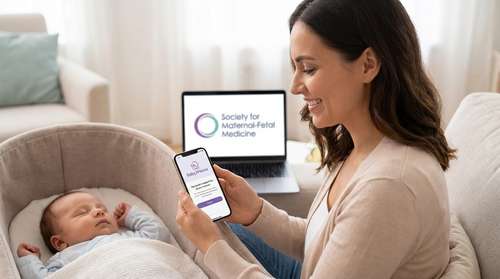
A groundbreaking clinical trial presented at the Society for Maternal-Fetal Medicine (SMFM) 46th Annual Pregnancy Meeting in Las Vegas has revealed that the Baby2Home app significantly improves mental health outcomes for first-time mothers. Released on February 11, 2026, the study demonstrates that this innovative digital health tool markedly reduces symptoms of postpartum depression, anxiety, and stress compared to standard care, offering a new lifeline for new parent mental wellness.
Digital Breakthrough in Maternal Mental Health Technology
The transition to parenthood is often described as one of life's most challenging periods, yet the traditional healthcare model often leaves new parents without continuous support. The new study, led by Dr. Emily S. Miller, Division Director of Maternal-Fetal Medicine at Women & Infants Hospital of Rhode Island, addresses this critical gap. The multi-site randomized controlled trial followed 642 first-time mothers from November 2022 to July 2025, comparing those who used the Baby2Home app against those receiving usual postpartum care.
The results were transformative. Mothers using the app reported significantly lower levels of depression and anxiety throughout their first year. Dr. Miller noted, "Evidence-based digital tools like Baby2Home are opening the door to a new era of postpartum care. We can now extend high-quality support beyond hospital walls and into families' everyday lives." This finding is a major advancement in postpartum depression treatment 2026, suggesting that mobile technology can effectively bridge the gap between clinical visits and daily struggles.
How the Baby2Home App Works
Unlike generic parenting apps that focus solely on the baby's milestones, Baby2Home employs a comprehensive "collaborative care" model. It integrates three core components designed to support the entire family unit:
- Educational Modules & Tracking: Users can track essential infant data such as feeding, sleeping, and growth, while accessing evidence-based advice on newborn care.
- Mental Health Self-Management: The app includes cognitive-behavioral techniques (CBT) and symptom tracking to help mothers manage emotional distress proactively.
- On-Demand Professional Support: Perhaps its most critical feature, the app connects users directly with a care manager who can provide immediate mental health support and problem-solving assistance.
This holistic approach ensures that maternal mental health technology isn't just about monitoring symptoms but actively intervening when parents need it most. By combining digital convenience with human support, the app empowers parents to build confidence and resilience.
Impact on Parenting Confidence and Relationships
The benefits of the Baby2Home app extended well beyond mental health scores. The study found that mothers using the app experienced higher relationship satisfaction with their partners and family members. They also reported a stronger bond with their infants and greater confidence in their parenting abilities. In a field often focused on crisis intervention, these findings highlight the potential for first-time mother support tools to promote overall family flourishing.
Reducing Healthcare Disparities
One of the study's key objectives was to assess whether digital tools could democratize access to care. The trial included a diverse group of participants across various clinical settings, including Northwestern University's Feinberg School of Medicine and Lurie Children's Hospital of Chicago. The consistent positive outcomes suggest that accessible, smartphone-based interventions can be a powerful equalizer in delivering postpartum anxiety digital health solutions to broader populations.
A New Standard for Postpartum Care
The significance of this research was underscored by its reception at the SMFM conference, where it received the prestigious Norman F. Gant Award for Best Research in Maternal Medicine. The full findings are set to be published in the February 2026 issue of the journal Pregnancy.
For healthcare providers and policymakers, the message is clear: the current standard of postpartum care—often limited to a single check-up six weeks after birth—is insufficient. Integrating tools like Baby2Home into routine care protocols could dramatically recalibrate how we support new families. As Dr. Miller emphasized, the first year after birth is critical. By providing continuous, accessible support, we aren't just treating postpartum depression; we are actively constructing a foundation for healthier families for years to come.