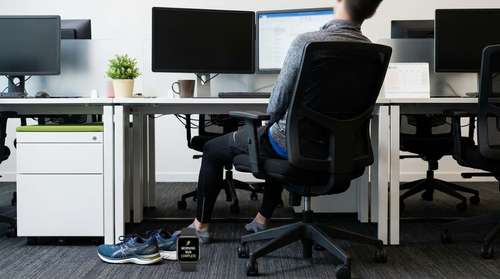
Many health-conscious Americans pride themselves on squeezing in a rigorous morning gym session before heading to the office. But if you spend the next eight hours glued to your desk chair, that dawn sweat session might not be providing the cardiovascular shield you think it is. A groundbreaking new study published in the European Journal of Applied Physiology has shed light on the dangerous reality of the active couch potato lifestyle—a phenomenon where individuals meet daily exercise guidelines but remain highly sedentary for the rest of their waking hours.
The research, published in June 2026, reveals a startling truth about human biology: a dedicated workout routine cannot outwork a desk-bound lifestyle. Even participants who completed a grueling 12-week high-intensity interval training (HIIT) program couldn't escape the severe vascular consequences of sitting uninterrupted for just two hours.
The Immediate Effects of Sitting on Legs
To understand the physiological trap, we have to look at how prolonged sitting blood flow changes happen in real time. Lead researchers, including cardiovascular scientist Haoxuan Liu, focused on the popliteal artery, which is the primary blood vessel supplying the lower legs. When you sit at a 90-degree angle for an extended period, gravity and physical compression take an immediate toll.
Within just two hours of uninterrupted sitting, the study noted that resting blood flow in the legs plummeted dramatically—from an average of 57 mL/min down to an alarming 32 mL/min. Even more concerning was the sudden drop in flow-mediated dilation (FMD), a crucial clinical marker of how well your blood vessels can expand and adapt to circulatory demands. Essentially, remaining seated acts like a severe kink in a garden hose. It starves your lower extremities of essential circulation and triggers acute endothelial dysfunction. These profound effects of sitting on legs happen rapidly, long before you ever feel stiff or sore.
HIIT vs Sitting All Day: Why Your Fitness Level Doesn't Protect You
The most alarming revelation from the recent findings centers on the highly debated topic of HIIT vs sitting all day. For years, experts assumed that elevating your baseline cardiovascular fitness could act as biological armor against a sedentary job. The data, however, paints a distinctly different picture.
After putting participants through a specialized 12-week HIIT protocol, researchers tested their vascular response to standard office behavior. While the subjects significantly improved their overall aerobic capacity and heart health, the rigorous training alone was completely insufficient to counteract the local damage occurring in their lower extremities.
When analyzing aerobic fitness blood vessels, the highly fit individuals suffered the exact same acute vascular impairment after two hours of sitting as they did before they got into shape. You simply cannot store up the circulatory benefits of exercise to protect your legs from complete inactivity later in the afternoon.
Protecting Your Vascular Health at a Desk Job
For the millions of professionals navigating the realities of a corporate 9-to-5, this research presents a serious wake-up call regarding vascular health desk job risks. Identifying as an active couch potato doesn't just mean your muscles get tight; it means your circulatory system is actively compromised for roughly a third of your life.
The inner lining of your blood vessels, known as the endothelium, relies on the friction of flowing blood to release nitric oxide, a molecule that keeps arteries flexible and healthy. When you sit and blood stagnates, nitric oxide production halts. Over time, repeated daily bouts of reduced leg circulation can contribute to broader cardiovascular disease, arterial stiffness, and chronic low-grade inflammation. Relying on a 45-minute spin class to undo eight hours of vascular stagnation is mathematically and biologically impossible.
How to Reverse Sitting Damage Before It Is Too Late
Fortunately, learning how to reverse sitting damage doesn't require quitting your profession or adding a second grueling workout to your evening schedule. The antidote to the active couch potato syndrome isn't exercising harder—it is moving more frequently.
Embrace Movement Snacks
Vascular experts emphasize the concept of micro-workouts throughout the workday. Breaking up your sitting time every 30 to 45 minutes with just two minutes of light activity is enough to restore normal popliteal blood flow. Walking to the water cooler, doing a quick set of calf raises, or simply pacing while taking a phone call prevents the blood pooling and vessel constriction that lead to long-term damage.
Utilize Dynamic Workstations
Incorporating a sit-stand desk can be a powerful tool for your circulatory system. By alternating your posture throughout the day, you force your leg muscles to contract constantly. These minor muscular contractions act as a secondary pump, forcefully pushing blood back up toward your heart and maintaining healthy endothelial function.
Ultimately, the latest physiological research proves that physical activity is not a daily checkbox you can mark off in the morning and promptly forget about. True cardiovascular longevity requires a fundamental lifestyle shift. Keep crushing your morning workout, but remember that your blood vessels demand your attention all day long.