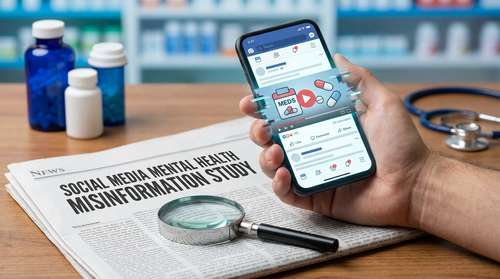
In a healthcare landscape increasingly dominated by algorithms, a major report released on April 11, 2026, has confirmed what clinical psychologists have warned about for years. We are currently facing an unprecedented crisis of social media mental health misinformation. The comprehensive study sounds the alarm on the unchecked rise of popular content creators who routinely provide inaccurate, unverified guidance about prescription drugs and complex psychiatric conditions without any clinical oversight.
Across platforms like Instagram and TikTok, millions of users engage with bite-sized videos detailing symptoms of depression, anxiety, and neurodivergent conditions. While this content has historically been praised for destigmatizing mental illness, the latest findings reveal a darker reality where engagement metrics prioritize relatability over scientific accuracy.
The Revealing Med-Fluencer Prescription Drug Study
The highly anticipated med-fluencer prescription drug study examined thousands of the most-viewed videos across major platforms. Researchers discovered that a staggering majority of claims regarding psychiatric medications lacked scientific backing. Creators frequently gloss over severe side effects while framing prescription drugs as universal fix-all solutions.
Patient influencers—users who document their mental health journeys—often inhabit an ethical gray area. Many build highly profitable micro-communities around specific drug hashtags, generating billions of collective views. The study identified multiple instances where these creators failed to disclose financial ties to pharmaceutical marketers or aggressive telehealth startups. This influencer healthcare impact directly mirrors direct-to-consumer pharmaceutical advertising, but it bypasses the stringent federal regulations designed to protect patients from predatory marketing.
How Algorithms Reward Emotion Over Evidence
Social media platforms are designed to keep users engaged, and nothing drives engagement faster than emotional validation. When someone struggling with focus or mood regulation watches a video that perfectly describes their internal state, the algorithm registers their prolonged attention. It then floods their feed with similar content, creating an echo chamber that reinforces self-diagnosis. This environment actively suppresses nuanced clinical discussions in favor of highly shareable, oversimplified checklists.
TikTok ADHD Self-Diagnosis Trends and Telehealth Traps
One of the most concerning findings from the recent data revolves around the explosion of TikTok ADHD self-diagnosis trends. Videos promising to reveal the "hidden signs" of attention-deficit/hyperactivity disorder regularly pathologize normal human experiences. Viewers watch friendly creators list universal traits—like occasional forgetfulness, executive dysfunction on busy days, or losing focus during boring tasks—and immediately adopt a medical label. Previous peer-reviewed analyses noted that less than half of ADHD content on the platform aligns with established diagnostic criteria.
This constant stream of mental health medication misinformation 2026 has tangible consequences. Clinical psychologists note that younger demographics are now presenting at clinics convinced they need specific stimulant medications based entirely on a 60-second video. Complicating matters further, predatory telehealth companies often sponsor these same med-fluencers. Users are directed to sign up for monthly subscription services that eagerly prescribe addictive stimulants or antidepressants after a cursory five-minute digital consultation.
The Real Dangers of Online Mental Health Advice
The true dangers of online mental health advice extend far beyond simple mislabeling. When patients misdiagnose themselves, they often initiate incorrect and potentially harmful treatment paths. Someone suffering from severe generalized anxiety might pursue ADHD stimulants, which can radically exacerbate their anxiety symptoms. Conversely, individuals experiencing bipolar disorder might seek standard antidepressants without mood stabilizers, risking severe manic episodes.
Furthermore, this digital phenomenon contributes directly to national drug shortages. The skyrocketing demand for specific branded medications leaves patients who have legitimate, heavily documented clinical needs struggling to fill their prescriptions at local pharmacies. The rush to secure medication without comprehensive psychological evaluations places intense strain on an already overburdened healthcare system.
Finding Safe Mental Health Resources Online
You do not have to abandon digital platforms entirely, but navigating them requires heightened digital literacy. The key to mitigating the effects of social media mental health misinformation is shifting how we consume medical content. Treat social media as a starting point for self-reflection rather than a diagnostic tool.
When looking for safe mental health resources online, always verify the credentials of the person speaking. Are they a licensed psychiatrist or clinical psychologist, or simply an engaging speaker with a ring light? Cross-reference any claims with established, peer-reviewed medical institutions like the National Institute of Mental Health or the American Psychological Association. If an influencer provides a direct affiliate link to a prescription service, view their advice with immediate skepticism.
Medical treatment requires personalized, nuanced care from a licensed professional who understands your complete medical history. While a viral video might make you feel seen, true healing begins in the privacy of a doctor's office, far away from the pressures of a social media feed.