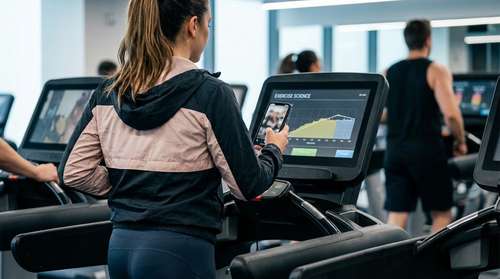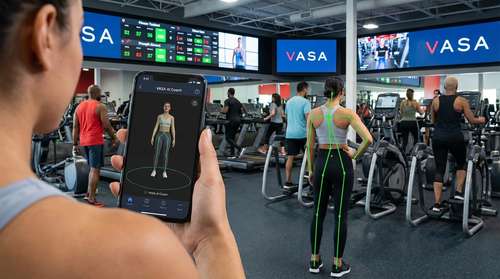
The landscape of affordable fitness shifted dramatically today. On April 13, 2026, the VASA Fitness AI app officially hit the market, merging professional certified coaching with next-generation machine learning. For years, premium data-driven workouts were locked behind luxury gym memberships or expensive boutique studios. Now, one of the nation's fastest-growing high-value, low-price (HVLP) fitness chains is democratizing access to elite athletic technology. By combining a proprietary digital platform with in-gym diagnostics, VASA is setting a new benchmark for what members expect from a standard gym membership.
High-Tech Meets High-Value: Inside the Platform
VASA Fitness developed this industry-first application in partnership with motion-capture technology firm Demotu. The primary objective is to bridge the gap between human expertise and algorithmic precision. At the core of the experience is a seamless handoff between the physical gym floor and the member's mobile device.
Every VASA membership includes a complimentary 60-minute personal training consultation. During this initial session, trainers conduct a comprehensive 3D movement analysis alongside an InBody composition scan. These two diagnostic tools provide a granular look at a member's mobility, muscular imbalances, and baseline metrics. Certified trainers use this data to build a foundation, but the AI takes over the daily execution and long-term scaling of the routine.
How 3D Movement Analysis Drives Personalized Workout Programming
The integration of deep biomechanical screening into an HVLP setting is a significant leap forward for accessible fitness. Traditionally, visual movement assessments relied entirely on a trainer's naked eye. The new VASA platform digitizes this process, ensuring that the resulting personalized workout programming is rooted in hard data.
Poor form is a leading cause of gym injuries and fitness plateaus. When the system understands an individual's specific hip shift during a squat or shoulder limitation during an overhead press, it avoids prescribing movements that exacerbate those issues. Once the baseline data is fed into the system, the AI fitness coach dynamically adjusts the regimen. As members log their completed sets, weights, and subjective feedback into the app, the algorithm recalibrates upcoming sessions. If a user is progressing faster than anticipated on lower-body strength, the app automatically scales the resistance.
Empowering the Human Element
Between face-to-face sessions, members can view trainer-prescribed routines, watch exercise demos, and track biometrics. VASA leadership is quick to clarify that the technology serves to augment, rather than replace, their staff.
"This isn't about replacing trainers—it's about empowering them," noted VASA Fitness COO Chris Griebe during the launch announcement. "Technology allows our trainers to deliver smarter, more personalized programs at scale, so every member gets a plan that works for them".
Shaping Fitness Technology Trends in 2026
The debut of the VASA platform aligns perfectly with broader fitness technology trends 2026. The industry is rapidly moving away from one-size-fits-all digital templates. Competitors in the luxury and equipment space are making similar moves; for instance, Technogym recently unveiled its own adaptive AI ecosystem trained on 38 million users. However, VASA's innovation lies in introducing AI personal training to a budget-friendly market segment.
For the average gym-goer, affording a dedicated coach three days a week is rarely financially feasible. By leveraging machine learning, VASA delivers a hybrid model that provides the accountability of a human professional with the cost-efficiency of software. Instead of simply logging what happened in the past, the platform looks forward, mapping out the precise sets, reps, and rest periods needed for optimal progress. It is a blueprint expected to force other big-box operators to rethink their digital strategies.
HVLP Gym Innovations and Rapid Market Growth
The app's launch coincides with a pivotal leadership transition for the brand. Just two weeks ago, on March 31, 2026, VASA named former Portillo's executive Michael Osanloo as its new CEO, succeeding retiring chief Rich Nelsen. Under Nelsen, the company ballooned to over 70 clubs across eight states, adding an impressive 335,000 new members in 2025 alone.
Osanloo inherits an organization heavily invested in both its physical footprint and digital capabilities. The company recently allocated $30 million toward club upgrades, enhancing its boutique-style Studio Flow, Studio Red, and Studio LFT classes, while integrating high-end recovery options like cold plunges and red light therapy. These HVLP gym innovations are now directly connected to a smart digital ecosystem.
A member might take a Studio LFT strength class on Tuesday, utilize the cold plunge for recovery, and open the VASA Fitness AI app on Wednesday to find their solo workout dynamically adjusted to account for the previous day's fatigue. By bridging the gap between physical amenities and artificial intelligence, the fitness chain is proving that accessible price points no longer mean compromising on cutting-edge personalization.