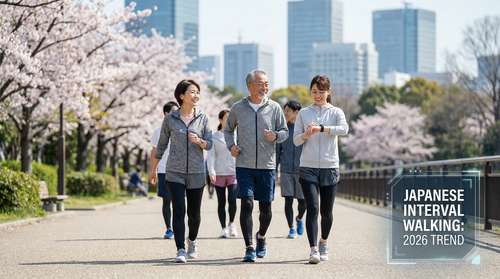
Forget the 10,000-step dogma that has dominated fitness trackers for a decade. As of late January 2026, a massive shift in longevity science has catapulted a specific micro-workout to the top of the global wellness conversation. Known as Japanese interval walking, this '3-minute rule' has seen search interest spike over 3,000% this week alone, with new reports from the last 48 hours confirming it may be the most efficient tool we have for reversing biological aging. Unlike steady-state cardio, this method—rooted in the concept of intermittent power walking—is proving that intensity, not just duration, is the key to unlocking youth-preserving hormones and slashing blood pressure.
The '3-Minute Rule' Explained: What Is Japanese Interval Walking?
At its core, the trend leverages a protocol known scientifically as Interval Walking Training (IWT). Originally developed by Dr. Hiroshi Nose at Shinshu University, the method has resurfaced this week as the defining fitness trend of 2026. The formula is deceptively simple but metabolically potent:
- 3 Minutes of Power Walking: Walk at a pace where talking becomes difficult (about 70% of your maximum effort).
- 3 Minutes of Recovery: Slow down to a leisurely stroll (about 40% effort) to let your heart rate settle.
- Repeat: Perform this cycle 5 times for a total of 30 minutes.
New data released this week suggests that this specific rhythm acts as a "stress-recovery" pump for the cardiovascular system. By forcing the heart to ramp up and cool down repeatedly, you improve arterial elasticity far more effectively than a standard hour-long walk.
Why It Beats the 10,000 Step Standard
For years, we've been told that hitting a volume target was the golden ticket to health. However, fitness experts weighing in over the last few days argue that walking for weight loss and longevity requires a different approach. A steady stroll often fails to raise the heart rate enough to trigger significant aerobic adaptations.
In contrast, Japanese interval walking engages fast-twitch muscle fibers in the legs—specifically the glutes and hamstrings—which are crucial for blood sugar regulation. Recent analyses comparing IWT to continuous walking show that the interval group experienced up to a 20% greater improvement in VO2 peak (a key marker of biological age) and significant reductions in resting blood pressure, while the steady-state walkers saw minimal changes despite covering the same distance.
The Longevity Link: Slashing Biological Age
The term "biological age" refers to how fast your cells are deteriorating compared to your chronological age. The buzz surrounding longevity exercises in 2026 focuses heavily on mitochondrial efficiency—how well your cells produce energy. Low impact cardio like interval walking is currently being hailed as a "mitochondrial booster."
Reversing 'Lifestyle' Diseases
Reports surfacing this week highlight that this intermittent style of movement helps clear glucose from the bloodstream more rapidly than steady exercises. For adults over 40, this is a game-changer. By improving insulin sensitivity and leg strength simultaneously, the 3-minute rule directly combats the two biggest drivers of aging: metabolic dysfunction and muscle loss (sarcopenia).
How to Start the Routine Today
You don't need a gym membership or specialized gear to join the movement that is sweeping the nation this week. Here is the optimal way to integrate intermittent power walking into your schedule:
- The Warm-Up: Start with a normal 5-minute walk to lubricate the joints.
- The Fast Interval: Speed up until you feel slightly breathless. You should be able to say "yes" or "no," but not a full sentence.
- The Slow Interval: Drop your pace dramatically. This recovery phase is just as important as the sprint; it allows lactate to clear from the muscles.
- Frequency: Aim for 4 sessions per week.
As we move further into 2026, the message from the medical community is clear: You don't need to spend hours pounding the pavement. By essentially "hacking" your walk with intensity intervals, you can achieve superior heart health and longevity benefits in a fraction of the time.