ORLANDO, FL (February 17, 2026) – If you could turn back the clock on your brain’s biological age by simply moving your body, would you? A landmark study released today by the AdventHealth Research Institute suggests the answer lies in a specific number: 150 minutes.
In a breakthrough for cognitive longevity research, scientists have confirmed that adults who adhere to a standard regimen of 150 minutes of cardio benefits per week can effectively reverse markers of brain aging. The findings, published in the Journal of Sport and Health Science, utilize advanced neuroimaging to show that consistent aerobic exercise creates a "youthful" structural shift in the brain, effectively making it appear nearly one year younger than those of sedentary peers.
The Science of De-Aging: Understanding Brain-PAD
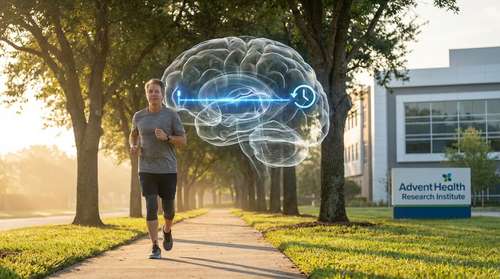
The study centered on a metric known as brain-PAD score improvement (Predicted Age Difference). This advanced neuroimaging biomarker measures the gap between a person's chronological age and the "biological age" of their brain as seen on an MRI. A positive score means the brain looks older than it should; a negative score implies a younger, more resilient brain.
Researchers followed 130 healthy adults aged 26 to 58 over a 12-month period. Participants were split into two groups: one that maintained their usual lifestyle and another that engaged in moderate-to-vigorous aerobic training for longevity. The results were statistically significant and visually striking.
By the end of the year, the exercise group saw their Brain-PAD scores drop by an average of 0.6 years—meaning their brains physically looked younger. Conversely, the control group’s brains aged naturally, appearing about 0.35 years older. When compared directly, the net difference between the movers and the non-movers was nearly a full year.
The 150-Minute Protocol: Accessible to Everyone
One of the most encouraging aspects of the AdventHealth Research Institute 2026 findings is the accessibility of the intervention. The participants didn't need to train for marathons or engage in high-intensity interval torture. They simply met the standard public health guidelines.
The protocol involved:
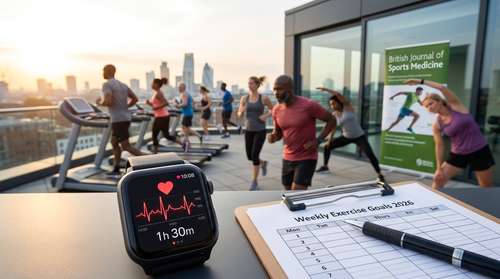
- Volume: 150 minutes of moderate-to-vigorous activity per week.
- Frequency: Roughly 30 minutes a day, 5 days a week.
- Type: Brisk walking, cycling, swimming, or any activity that raises the heart rate and sweat levels.
"Many people worry about how to protect their brain health as they age," noted Dr. Lu Wan, lead author and data scientist at AdventHealth. "Studies like this offer hopeful guidance grounded in everyday habits. These absolute changes were modest, but even a one-year shift in brain age could matter over the course of decades."
Midlife: The Critical Window for Cognitive Fitness
Unlike previous research that focused heavily on seniors already experiencing decline, this study targeted midlife adults (ages 26-58). This aligns with emerging cognitive fitness trends 2026, which emphasize early intervention and "pre-habilitation" rather than just damage control.
Dr. Kirk I. Erickson, Director of Translational Neuroscience at AdventHealth, emphasized that midlife is a critical window. "People often ask, 'Is there anything I can do now to protect my brain later?'" Erickson said. "Our findings support the idea that following current exercise guidelines may help keep the brain biologically younger, even in midlife."
The Mechanism Mystery
Interestingly, while the exercisers significantly improved their cardiorespiratory fitness (VO2peak), the study found that this fitness boost wasn't the sole driver of the brain's structural changes. This suggests that reverse brain aging exercise triggers a complex cocktail of biological benefits—likely involving increased blood flow, reduced inflammation, and the release of neuroprotective factors—that work together to preserve gray matter.
Exercise to Prevent Dementia: A 2026 Perspective
As we navigate the health landscape of 2026, the focus has shifted squarely to prevention. With dementia rates projected to rise globally, identifying scalable, drug-free interventions is a top priority for public health officials. This study provides "Class A" evidence that exercise to prevent dementia isn't just a theory—it has measurable, structural impacts on the brain's anatomy.
For the average person, the takeaway is simple but profound: Your brain is not static. It is a plastic, adaptable organ that responds to how you treat your body. By dedicating just 2.5 hours a week to movement, you aren't just burning calories; you are biologically investing in a younger, more resilient mind.