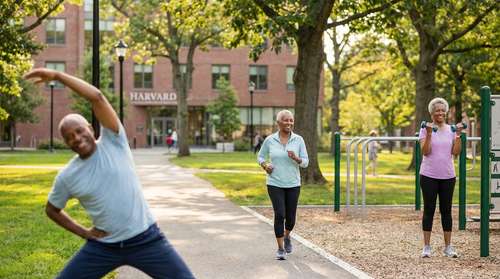
If you have been sticking to the same daily walk or treadmill routine for years, it might be time to shake things up. A groundbreaking Harvard longevity study 2026 released this week has revealed that the diversity of your physical activity could be just as crucial as the duration. The massive analysis, published in BMJ Medicine, suggests that mixing different types of movement—from gardening and swimming to weightlifting—can significantly slash your mortality risk, offering a new blueprint for healthy aging exercise variety.
The Power of Diverse Movement for Longevity
For decades, public health guidelines have focused primarily on the amount of time we spend moving—typically recommending 150 minutes of moderate activity per week. However, this new research from the Harvard T.H. Chan School of Public Health introduces a vital nuance: how you move matters deeply. Tracking over 111,000 adults across a 30-year period, researchers discovered that those who engaged in the widest range of physical activities had a 19% lower risk of premature death compared to those with the least variety.
This reduction in physical activity and mortality risk persisted even when researchers accounted for the total time spent exercising. "It's a pretty novel finding that engaging in more types of activities at a given total activity level may offer additional health benefits toward longevity," explained Yang Hu, the study's lead author and a research scientist at Harvard. The implication is clear: spreading your energy across multiple disciplines creates a more robust physiological shield against aging than specializing in just one.
Why Variety Trumps Repetition
Why does diverse movement for longevity yield such impressive results? The study points to the complementary benefits of different exercises. While running might boost cardiovascular health, it doesn't necessarily improve balance or upper body strength in the way that yoga or tennis might. By engaging in multiple modalities, you stimulate different biological systems—improving VO2 max, muscle endurance, metabolic health, and bone density simultaneously.
The BMJ Medicine exercise research highlighted that variety was specifically linked to a 13-14% lower risk of death from cardiovascular disease and cancer. This suggests that a "cross-training" approach doesn't just prevent injury by avoiding repetitive strain; it actively optimizes your body's defense mechanisms against the leading causes of death. This holistic approach is fast becoming one of the most evidence-backed healthspan optimization strategies available.
The Best Exercises for Seniors Living Longer
The study analyzed a wide spectrum of activities to determine what constitutes a beneficial "mix." Participants who saw the greatest longevity boosts didn't just stick to the gym. They combined structured workouts with functional daily movements. Based on the findings, the best exercises for seniors living longer include a combination of:
- Aerobic activities: Walking, jogging, cycling, or swimming for heart health.
- Strength training: Weightlifting or resistance exercises to maintain muscle mass.
- Flexibility and balance: Yoga, stretching, or tai chi to prevent falls.
- Functional outdoor work: Gardening, mowing the lawn, or heavy outdoor chores.
- Recreational sports: Tennis, squash, or racquetball for agility and social connection.
You do not need to perform all of these every week. The data suggests that simply avoiding a sedentary routine where you only perform one type of movement is the key. Even adding just one new modality—like swapping a walk for a swim once a week—can contribute to the protective effect.
Rethinking Your Weekly Routine
Implementing these findings doesn't require doubling your workout time. Instead, it invites a restructuring of your current regimen. If you are a devoted runner, consider trading one run for a strength session or a game of pickleball. If you primarily lift weights, adding a day of hiking or cycling could unlock these newly discovered longevity benefits.
This shift in perspective moves us away from exercise as a chore and toward a lifestyle of varied physical engagement. As we look at the landscape of Harvard longevity study 2026 insights, the message is empowering: your body thrives on novelty. By challenging yourself with new movements, you aren't just breaking monotony—you are actively engineering a longer, healthier life.