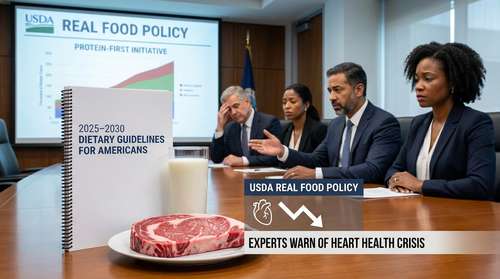
A growing coalition of nutrition scientists and cardiologists has launched a fierce counteroffensive against the Trump administration’s newly implemented 2025-2030 Dietary Guidelines for Americans. Just yesterday, a stinging report published in The Lancet described the new federal policy—which prioritizes red meat and full-fat dairy while sideline whole grains—as a 'recipe for poorer health.' This unprecedented backlash comes barely six weeks after Health Secretary Robert F. Kennedy Jr. and USDA Secretary Brooke Rollins unveiled the controversial 'Real Food' framework, essentially flipping the traditional food pyramid on its head.
The 'Real Food' Revolution vs. Scientific Consensus
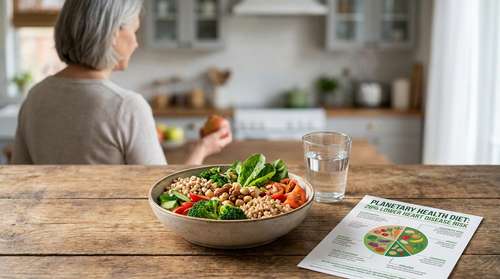
The core of the controversy lies in a radical departure from established nutritional science. While the 2025 Scientific Report originally advised a shift toward plant-based proteins to mitigate chronic disease risks, the official guidelines released in January rejected these findings. Instead, the new policy doubles down on animal proteins, recommending 1.2 to 1.6 grams of protein per kilogram of body weight—nearly twice the previous standard.
Critics argue this 'protein-first' approach ignores decades of research linking high red meat consumption to cardiovascular disease. 'By encouraging Americans to prioritize steak and whole milk under the guise of eating real food, we are inviting a public health disaster,' noted Dr. Sarah Jenkins, a lead author of the recent Lancet critique. The guidelines explicitly endorse beef tallow and butter as 'healthy fats' for cooking, a move that has left the American Heart Association reeling.
Contradictory Advice on Saturated Fats
One of the most confusing aspects of the new USDA nutrition update 2026 is the mathematical impossibility it presents to consumers. The document retains the longstanding recommendation to limit saturated fat to 10% of daily calories. However, nutritionists point out that following the new advice—consuming three servings of full-fat dairy and multiple servings of red meat daily—would almost certainly push an average adult’s saturated fat intake well above 15% or 20%.
School Lunch Nutrition Standards in the Crosshairs
The impact of these federal food policy changes is already trickling down to the National School Lunch Program, which serves nearly 30 million children daily. Schools, legally mandated to align meals with federal guidelines, are now facing pressure to reintroduce whole milk and increase meat portion sizes while reducing grain-based offerings.
This shift has sparked panic among school nutrition directors who fear losing progress on childhood obesity. Under the new 'Make America Healthy Again' (MAHA) framework, the definition of a balanced meal has shifted. 'We are being told to serve more expensive animal proteins and cut back on cost-effective, fiber-rich grains,' explained a district director from Ohio. 'It’s a budget nightmare that could paradoxically make school meals less healthy for heart-vulnerable kids.'
The War on 'Highly Processed' Foods
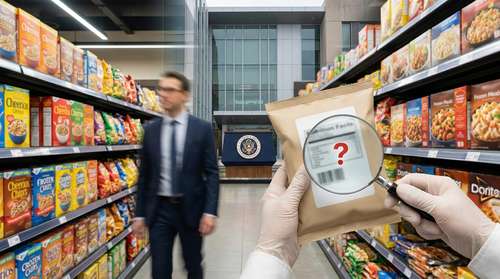
Despite the uproar over meat, one aspect of the guidelines has found bipartisan support: the aggressive stance against ultra-processed foods. The new policy explicitly demonizes 'highly processed' items like chips, cookies, and sugary cereals, advising a strict limit of 10 grams of added sugar per meal. This aligns with RFK Jr.’s long-standing crusade against industrial food additives and seed oils, framing them—rather than animal fats—as the true drivers of America’s chronic disease epidemic.
Supporters of the administration view the backlash as a defense of the status quo by entrenched industry interests. 'We are ending the war on protein and the war on saturated fats,' Secretary Kennedy stated during the initial rollout. For his supporters, the return to butter, eggs, and raw milk represents a liberation from what they view as failed, low-fat dogma.
What This Means for Your Grocery Cart
For the average consumer, the 2025-2030 Dietary Guidelines for Americans offer a mix of liberation and confusion. You now have federal backing to choose whole milk over skim and enjoy eggs without guilt. However, the de-emphasis on whole grains and the removal of specific alcohol limits (replaced with a vague 'less is better' suggestion) places the burden of moderation squarely on the individual.
As the debate rages in medical journals and school cafeterias, the message to consumers remains polarized. While the government says 'Eat Real Food,' the medical establishment is screaming 'Proceed with Caution.' For now, your best bet may be to focus on the one area of agreement: cut the processed junk, regardless of whether you swap it for a ribeye or a lentil stew.