PORTLAND, Ore. — In a paradigm-shifting announcement that promises to reshape geriatric oncology, a multidisciplinary panel of experts has released the first-ever national consensus guidelines declaring physical activity a mandatory component of care for older cancer survivors. Released today, February 19, 2026, the ACES cancer guidelines 2026 (Advancing Capacity to Integrate Exercise into the Care of Older Cancer Survivors) dispel the long-held myth that seniors undergoing treatment should prioritizing rest over movement.
Led by researchers at OHSU medical research centers, the panel advises that exercise for cancer survivors is not just safe but "essential" for preserving independence and improving clinical outcomes. The guidelines, published in the journal Cancer, specifically prescribe a regimen of 150 minutes of weekly aerobic activity combined with resistance training, marking a turning point in cancer recovery fitness for the nation’s largest survivor demographic.
The New Standard: ‘Start Low, Go Slow,’ But Don’t Stop
For decades, well-meaning advice to older patients was often "take it easy." The ACES panel, chaired by Dr. Kerri Winters-Stone of the OHSU Knight Cancer Institute, explicitly rejects this approach. The new consensus emphasizes that inactivity is a greater risk than activity, even for those with complex health histories.
The guidelines recommend a tiered approach to geriatric oncology fitness that considers the unique physiological needs of adults over 65:
- Aerobic Activity: Strive toward 150 minutes of moderate-intensity movement per week (e.g., brisk walking).
- Strength Training: Engage in senior strength training at least twice a week to combat muscle loss.
- Balance Training: Perform balance exercises 3 days a week to prevent falls—a critical addition specific to older adults.
- Flexibility: Stretch major muscle groups 2-7 days per week.
"We want to put that myth to bed, that older people can’t tolerate exercise during cancer treatment," said Dr. Winters-Stone in a statement accompanying the release. "If exercise was a pill, it would be the number-one prescribed medication in the world because it has so many benefits."
Why Exercise is Vital for Seniors Fighting Cancer
The release of the ACES cancer guidelines 2026 comes as the population of older cancer survivors is projected to skyrocket. Unlike younger patients, seniors face the dual challenge of cancer treatment and age-related physical decline, such as sarcopenia (muscle loss) and reduced bone density.
Research supporting the guidelines indicates that physical activity for seniors during treatment can mitigate chemotherapy toxicity, reduce fatigue, and, most importantly, preserve autonomy. For many older adults, the goal isn't just extending survival but maintaining the ability to live independently—to drive, grocery shop, and age in place.
Tailored for Complexity
The panel acknowledges that older survivors often have comorbidities like heart disease or arthritis. The guidelines introduce a "functional first" approach: for patients with significant mobility deficits, the focus should be on building strength and balance before attempting to increase aerobic capacity. This ensures safety and builds the confidence necessary for long-term adherence.
Breaking Down Barriers to Physical Activity
One of the most significant hurdles addressed by the panel is the hesitation of healthcare providers to prescribe exercise due to safety concerns. The consensus statement clarifies that extensive medical clearance—often a barrier to starting a program—is not always necessary for light-to-moderate activity. Instead, it encourages a symptom-monitoring approach.
"Monitoring for signs of poor tolerance, such as dizziness or extreme fatigue, allows us to adjust the 'dosage' of exercise rather than stopping it completely," notes the report. This shift empowers oncologists to treat exercise as a flexible, modifiable prescription rather than a binary "safe/unsafe" decision.
Implementing the Guidelines: What Survivors Can Do Today
If you or a loved one are navigating cancer recovery over the age of 65, the new ACES recommendations offer a clear roadmap. Experts suggest the following steps to integrate physical activity for seniors into daily life safely:
1. Consult Your Care Team: Ask your oncologist about a referral to a cancer exercise specialist or physical therapist who understands geriatric oncology fitness.
2. Focus on Function: If walking is difficult, start with chair stands or seated leg lifts to build base strength.
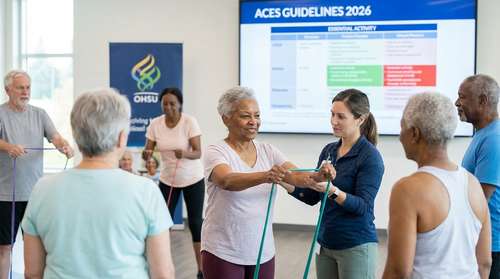
3. Find a Community: Look for group programs at local senior centers or hospitals, which can provide social support and motivation.
With these landmark guidelines, the medical community has sent a unified message: The era of bed rest is over. Movement is medicine, and for older cancer survivors, it is now an essential part of the prescription for a longer, healthier life.