For years, smartwatches have been excellent at delivering bad news. They could perfectly map a restless night of sleep or chart a spiking heart rate in the middle of a stressful morning commute. But this March, the narrative around digital health is undergoing a profound transformation. We are officially entering the era of the "Regulated Self," driven by the rapid mainstream adoption of neurowellness tech 2026. A new generation of AI-powered wearables has arrived on the market, and they aren't just logging your stress—they are actively intercepting it.
For the millions of Americans navigating severe anxiety, these devices offer something entirely unprecedented: the ability to predict and stop a panic attack minutes before the first physical symptoms even manifest. This critical shift from passive biological tracking to active physiological regulation is poised to change the face of modern psychiatric medicine.
The Dawn of Proactive Mental Healthcare
The wellness industry has long been obsessed with the "Quantified Self"—the endless tracking of biometrics that frequently led to more anxiety rather than less, a phenomenon clinicians have dubbed "data vigilance". People would wake up, check their wrist, see a poor sleep score, and instantly feel stressed about their impending fatigue. Industry experts at recent global wellness summits have officially declared this passive approach outdated.
Today, the focus has shifted toward proactive mental healthcare. Rather than simply acting as rearview mirrors that tell you what already happened to your nervous system, the latest wearable mental health devices function as predictive bodyguards.
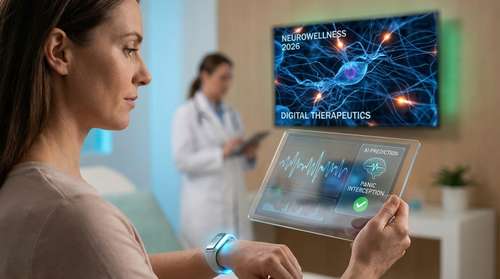
These devices monitor the autonomic nervous system in real-time, looking for the invisible physiological precursors to a panic episode. By continuously analyzing micro-variations in heart rhythm, skin temperature, and respiration patterns, machine learning algorithms establish a highly personalized baseline. When your metrics begin to quietly drift toward a panic state, the software recognizes the pattern—often up to ten minutes before you consciously feel the familiar tightness in your chest or shortness of breath.
The Mechanics of AI Panic Attack Prevention
Detecting an incoming anxiety spike requires immense processing power and high-fidelity sensors. Modern wearables utilize edge computing to process thousands of data points per second directly on your wrist or finger, ensuring absolute privacy and zero latency. This localized processing is the invisible engine powering reliable AI panic attack prevention.
The technology relies on advanced photoplethysmography (PPG) sensors and galvanic skin response monitors. Crucially, the artificial intelligence is trained to understand context. It can instantly differentiate between a healthy heart rate spike from walking up a flight of stairs and an anxiety-induced spike characterized by physical stillness paired with plummeting heart rate variability (HRV).
Enter the Nervous System Regulation Wearable
When the algorithm detects a dangerous escalation in your allostatic load, it doesn't just send a generic push notification. It initiates an immediate, closed-loop intervention. This might take the form of targeted haptic vibrations designed to mimic a slow, regulating heartbeat, subtly prompting your own cardiovascular system to match the slower rhythm through a biological process called entrainment.
The concept of a true nervous system regulation wearable represents a massive leap forward. It moves the burden of anxiety management off the individual's shoulders in the heat of the moment. Your device recognizes the physiological need and initiates the calming protocol for you before your brain enters a full fight-or-flight response.
Pioneering Digital Therapeutics for Anxiety
The medical community is embracing this non-pharmacological approach with remarkable speed. These intelligent devices fall under the rapidly expanding umbrella of digital therapeutics for anxiety—clinically validated software and hardware combinations designed to treat or manage medical conditions. While traditional medications and cognitive behavioral therapy (CBT) remain the gold standards of psychiatric care, digital therapeutics offer an accessible, always-on adjunct.
Regulatory bodies have increasingly cleared these predictive interventions under the Software as a Medical Device (SaMD) designation. Consequently, psychiatrists are beginning to prescribe these wearables alongside traditional treatments. Recent clinical data indicates that consistent use of these predictive devices actually trains the brain over time. Users begin to implicitly recognize their own subtle anxiety triggers and physiological shifts, permanently improving their baseline resilience.
It beautifully bridges the gap between weekly clinical appointments, offering real-time, evidence-based support exactly when a patient needs it most. Furthermore, it provides patients with a profound sense of agency. Knowing you have a safeguard actively monitoring your nervous system often reduces the secondary anxiety—the fear of having a panic attack—which is historically a major hurdle for those with panic disorders.
Shaping the Future of Anxiety Treatment
As we navigate the spring of 2026, the neurowellness boom is fundamentally rewriting the rules of psychiatric support. The stigma once surrounding mental health tech is dissolving, replaced by a widespread embrace of objective, actionable data that actively improves daily quality of life. Innovators are already looking toward the next horizon, exploring how these wearables might seamlessly integrate with smart environments—automatically dimming office lights, adjusting room temperature, or silencing notifications when your nervous system signals distress.
The future of anxiety treatment is undeniably digital, highly personalized, and deeply proactive. By transforming invisible internal struggles into manageable, preventable data points, this technology is doing far more than just calming nerves. It is giving people their lives back, proving that the most powerful thing our devices can do is help us reclaim our peace of mind.