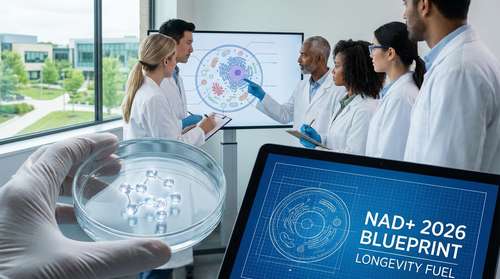
For decades, the pursuit of extended human healthspan felt closer to science fiction than rigorous clinical medicine. That narrative officially shifted on March 24, 2026, when an international coalition of over 25 leading scientists published a landmark consensus paper in Nature Aging. The researchers established a definitive blueprint for how a single molecule—nicotinamide adenine dinucleotide (NAD+)—acts as the master "fuel regulator" for the human body.
This comprehensive Nature Aging longevity review moves the conversation past isolated animal trials and theoretical models, synthesizing years of data to confirm the immense NAD+ benefits for longevity. If you are keeping up with recent healthy aging breakthroughs, this publication represents a pivotal moment. The experts outline precisely how maintaining optimal cellular energy can delay physiological decline and shield the brain against neurodegenerative diseases.
The Science of Cellular Energy: Your Biological Fuel Regulator
To understand why researchers are so focused on this molecule, you have to look at how your cells produce energy. NAD+ is a critical coenzyme found in all living cells, responsible for converting the nutrients you consume into adenosine triphosphate (ATP)—the base energy currency of your body. Beyond mere energy production, it dictates how well your DNA repairs itself after taking hits from environmental toxins and normal metabolic stress.
When NAD+ is abundant, it activates a family of proteins known as sirtuins—often dubbed the "guardians of the genome". Sirtuins require NAD+ to function, and when they are fully powered, they work tirelessly to regulate aging-related genes and reduce systemic inflammation. Without sufficient fuel, these critical maintenance systems simply shut down.
The core problem is that your biological battery drains over time. By the time you reach middle age, your natural NAD+ reservoirs drop significantly. This depletion isn't just a symptom of getting older; scientists now view it as a primary driver of the aging process itself. As these levels plummet, your cells lose their ability to communicate, mitochondria become dysfunctional, and the physiological deterioration we accept as "normal aging" sets in.
Dr. Jianying Zhang, one of the lead authors of the 2026 review, explicitly stated that fine-tuning this metabolic pathway holds serious promise for delaying age-related decline and mitigating premature aging diseases. By treating NAD+ as a fuel regulator, researchers are identifying how to keep our cellular engines running cleanly well into our later decades.
NMN and NR: The Frontline of Anti-Aging Scientific Breakthroughs
You cannot simply take an NAD+ pill and expect your cells to absorb it efficiently. The molecule is too large to pass through cell membranes. Instead, the scientific community has turned its attention to precursors—smaller building blocks that your body naturally converts into NAD+ through a cellular salvage pathway.
Among the most promising of these compounds are nicotinamide mononucleotide (NMN) and nicotinamide riboside (NR). The latest NMN supplements 2026 research evaluated in the review highlights a growing wave of clinical trials showing that these precursors can successfully elevate systemic NAD+ levels in humans. These anti-aging scientific breakthroughs are moving rapidly from the laboratory to human application, with early trial data hinting at tangible improvements in muscle recovery, metabolic efficiency, and physical endurance.
However, the international consensus urges calculated optimism. While the short-term safety profiles of NMN and NR look highly encouraging, the authors emphasize the need for larger, longitudinal studies to establish exact dosing protocols and understand the interindividual variability in how different people respond to precursor therapies.
Protecting the Brain: Neuroprotection and Aging
Perhaps the most urgent application of this research lies in neurology. There is a deeply established link between neuroprotection and aging, and the human brain requires a massive amount of metabolic energy to function properly. When cellular fuel drops, neurons become highly vulnerable to cumulative damage.
The experts point out that patients suffering from Alzheimer's and Parkinson's diseases consistently exhibit critically low levels of NAD+ in their brain tissue. By restoring these levels, the brain can better execute cellular cleanup processes, clearing out damaged proteins before they form the toxic plaques associated with severe cognitive decline. This makes NAD+ augmentation one of the most exciting potential strategies for preserving memory and cognitive sharpness as we age.
Actionable Steps: How to Boost NAD+ Levels
With the science firmly validating the importance of this coenzyme, the obvious question becomes how to boost NAD+ levels safely and effectively today. While precursor supplementation dominates the headlines, the 2026 blueprint also aligns with fundamental lifestyle interventions that naturally stimulate your body's innate production networks.
- Strategic Supplementation: High-quality NMN and NR supplements remain the most direct way to elevate your levels, though experts recommend looking for clinically validated, third-party-tested formulations to ensure stability and absorption.
- Physical Exercise: Consistent aerobic and resistance training naturally forces your mitochondria to work harder, increasing the enzymatic production of NAD+ in muscle tissue.
- Metabolic Stressors: Practices like caloric restriction and intermittent fasting trigger survival pathways in your body, activating longevity proteins that rely heavily on NAD+ to function.
- Dietary Building Blocks: Foods rich in vitamin B3 and tryptophan—such as turkey, salmon, and mushrooms—provide the raw materials your body needs for baseline cellular synthesis.
The era of viewing aging as an unavoidable, passive decline is ending. As the global experts made clear this March, understanding and optimizing our biological fuel reserves gives us an unprecedented level of control over our own healthspan. While we wait for perfectly refined clinical dosing guidelines, combining smart lifestyle choices with the latest metabolic science offers the best current strategy for adding vibrant, active years to our lives.