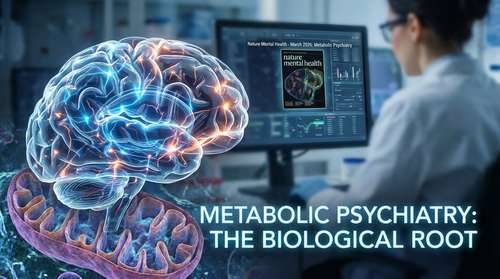
For decades, the medical community has treated psychiatric conditions and physical ailments like diabetes or insulin resistance as entirely separate issues that just happened to afflict the same patient. That fractured approach is officially obsolete. A groundbreaking Nature Mental Health study 2026, published on March 30, shatters the traditional firewall between brain and body. By demonstrating that impaired energy processing is a core driver of severe psychiatric conditions rather than a mere side effect, this research cements metabolic psychiatry as the frontier of modern medicine.
A New Paradigm: The Biological Root of Mental Illness
Led by experts spanning five countries, the comprehensive review analyzes 138 distinct studies to establish a clear, undeniable consensus: the inability to properly process food into energy directly alters brain function. Rather than viewing obesity or metabolic syndrome merely as unfortunate collateral damage of antipsychotic medications, the researchers present compelling evidence that systemic metabolic dysfunction is actually central to psychiatric disease.
Uncovering this biological root of mental illness provides a radical new lens for understanding why patients experience profound cognitive and emotional distress. According to Dr. Shebani Sethi, the study's lead author and a pioneer in the field, psychiatry has spent the last century heavily focused on neurotransmitter and receptor models. While those models hold value, they often eclipsed bioenergetics—the fundamental way our brain cells generate and utilize energy. When cellular power plants fail to do their job, the neurological consequences are severe and far-reaching.
Exploring the Bipolar Disorder Metabolic Link
The connection between systemic energy regulation and mood instability is impossible to ignore. Researchers have long noted that patients with severe mood disorders suffer from disproportionately high rates of metabolic syndrome. The newly published data explicitly details the bipolar disorder metabolic link, showing how fluctuating energy states and abnormal blood sugar regulation correlate directly with manic and depressive episodes.
When the brain experiences energy deficits, neuronal firing becomes erratic and unstable. This instability helps explain the dramatic, unpredictable shifts seen in bipolar patients. Consequently, addressing these underlying cellular energy gaps through targeted therapies offers massive potential. The scientific community is now actively evaluating metabolic interventions for depression and bipolar illness, studying how customized dietary changes—such as therapeutic ketogenic protocols—can stabilize neural networks, reduce neuroinflammation, and correct systemic energy imbalances.
The Crisis of Schizophrenia Energy Metabolism
The findings are equally striking for psychotic disorders. As early as the 1920s, medical records noted elevated lactate and diminished antioxidants in patients suffering from psychosis, but those critical observations were largely sidelined. Today's advanced neuroimaging and biochemical profiling confirm that schizophrenia energy metabolism is fundamentally broken.
Many patients exhibit cerebral glucose hypometabolism, a dangerous condition where the brain simply cannot extract enough energy from glucose to function correctly. This localized energy crisis directly impairs cognition, sensory processing, and emotional regulation. It also highlights exactly why traditional symptom-management drugs, which fail to address the brain's energy deficit, often leave patients struggling with chronic cognitive impairments.
Building on Stanford Metabolic Psychiatry Research
This landmark publication does not exist in a vacuum. It represents the culmination of years of rigorous Stanford metabolic psychiatry research. Dr. Sethi, who founded the first academic metabolic psychiatry clinical program at Stanford University, has been pioneering this exact intersection of physical and mental health for over a decade.
Her previous clinical trials provided the foundational proof of concept, demonstrating that low-carbohydrate, high-fat dietary interventions could successfully reverse metabolic syndrome while driving significant psychiatric improvement in patients with treatment-resistant conditions. Building on that academic success, the recent establishment of specialized virtual clinics is finally translating these peer-reviewed findings into direct patient care. By tracking blood markers, lipid panels, and metabolic health alongside standard mood monitoring, clinicians can treat the whole patient simultaneously.
Transforming Clinical Practice
The most urgent takeaway from the March 2026 paper is a direct call to action for front-line practitioners. The authors emphasize that psychiatrists must routinely screen for metabolic dysfunction as a fundamental component of psychiatric evaluations. Checking inflammatory markers, hemoglobin A1c, fasting insulin, and blood pressure should become as standard as asking a patient about their sleep patterns or mood fluctuations.
The era of separating the mind from the physical body is definitively ending. By targeting the underlying energetic vulnerabilities of the brain, the medical community is moving far beyond symptom management. We are finally stepping toward therapies that address the biological mechanics of human suffering, offering tangible, science-backed hope to millions living with severe mental illness.