For decades, millions of Americans have cycled through the same exhausting routine: try a new daily pill, wait six weeks, manage the side effects, and pray for relief. But for the roughly one-third of adults battling treatment-resistant depression, traditional selective serotonin reuptake inhibitors (SSRIs) often fall short. Today, the landscape is experiencing a seismic shift. Ketamine therapy for depression is no longer whispered about as a fringe, final-resort option. Driven by landmark regulatory approvals and exploding clinical demand in 2026, it has cemented its place as a mainstream, early-intervention lifeline.
The Paradigm Shift in Mental Health Care
The momentum behind this transition traces back to a pivotal regulatory milestone. In early 2025, the U.S. Food and Drug Administration (FDA) approved Johnson & Johnson's Spravato nasal spray (esketamine) as the first and only standalone treatment—or monotherapy—for adults with treatment-resistant depression. Previously, patients were strictly required to take Spravato alongside a daily oral antidepressant. Removing this barrier changed everything for individuals who simply could not tolerate standard pills.
Now, in March 2026, the medical community is witnessing the full impact of that decision. Treatment-resistant depression is incredibly challenging and is responsible for nearly half of the massive economic and societal costs associated with major depressive disorder. By targeting the estimated 21 million U.S. adults living with depression, clinicians are fundamentally altering how they prescribe care for patients who have failed to respond to two or more traditional medications.
How Rapid-Acting Antidepressants Rewire the Brain
To understand why this treatment is so revolutionary, you have to look at the underlying brain chemistry. Standard oral antidepressants primarily target neurotransmitters like serotonin or norepinephrine. This process is notoriously slow, often taking four to eight weeks to show meaningful clinical results, leaving severely depressed patients in a prolonged state of vulnerability.
Spravato works entirely differently. As one of the most significant rapid-acting antidepressants available, esketamine targets the brain's glutamate system. This unique mechanism prompts the brain to rapidly regrow and strengthen neural synapses, effectively bypassing the damaged circuits associated with severe depressive episodes. This neuroplasticity allows many patients to feel a profound lifting of their mental fog within just 24 hours of their first dose. In clinical trials leading up to its monotherapy approval, 22.5% of patients taking Spravato achieved full remission by week four, scoring below a 12 on the Montgomery-Asberg Depression Rating Scale (MADRS), compared to just 7.6% on a placebo.
From Ketamine Infusion Clinics to Dedicated Care Rooms
The delivery method has also evolved dramatically. Just a few years ago, patients seeking these therapies generally had to visit specialized ketamine infusion clinics for off-label, intravenous (IV) treatments. While highly effective—some recent studies showed IV ketamine reducing depression scores by up to 49%—the infusions are rarely covered by insurance and require complex, costly administration.
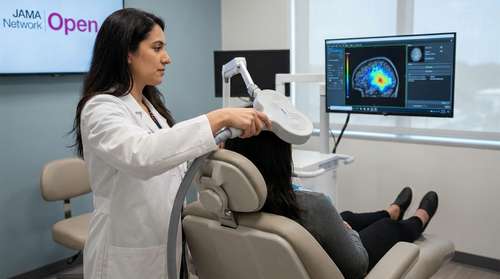
Today, the clinical infrastructure has adapted to the FDA-approved nasal spray. Mental health facilities across the country are physically remodeling their spaces to accommodate soaring patient demand, building specialized treatment rooms equipped with dim lighting, soundscapes, and comfortable seating to ensure a calm environment. Because the nasal spray is covered almost ubiquitously by major insurance providers and is far easier to administer, many psychiatric professionals are phasing out their IV operations entirely. Patients simply self-administer the spray under medical supervision and relax during a required two-hour monitoring period.
Unpacking the Esketamine Treatment Benefits
The practical advantages of this shift cannot be overstated. The core esketamine treatment benefits extend far beyond its fast-acting nature. Patients appreciate the liberation from daily medication compliance and the chronic side effects—like weight gain or emotional blunting—often associated with long-term SSRI use. Furthermore, long-term clinical data indicates that sustained use of the nasal spray significantly reduces the risk of depressive relapse compared to traditional oral regimens.
Leading the Mental Health Breakthroughs 2026
The financial and clinical data reflect a treatment that has officially crossed into the medical mainstream. The manufacturer recently reported that the drug surpassed $1 billion in annual sales, with overall usage growing by more than 50% year-over-year through 2024 and 2025. As we navigate the most critical mental health breakthroughs 2026 has to offer, the narrative around stubborn depression is undeniably changing.
If you or a loved one are caught in the exhausting cycle of ineffective medications, this evolution offers genuine, scientifically backed hope. Ketamine-derived therapies have successfully shed their outdated stigmas, proving that relief does not always have to take months. For millions of patients, a clearer, brighter mindset is now an accessible reality.