For years, intermittent fasting (IF) has reigned as the undisputed king of weight loss trends, endorsed by influencers and tech moguls alike for its promised ability to hack metabolism and melt fat. But a massive new intermittent fasting review 2026 from the prestigious Cochrane Collaboration suggests the emperor may have no clothes. Published this week, the gold-standard analysis concludes that despite the fervent social media following, intermittent fasting offers "little to no" additional benefit for weight loss compared to traditional calorie counting.
The Verdict: Fasting Fails to Outperform Calorie Restriction
The new Cochrane Review, which is considered the highest standard in evidence-based medicine, analyzed data from 22 randomized controlled trials involving 1,995 adults across North America, Europe, China, Australia, and South America. The researchers sought to answer a simple question: Does limiting when you eat matter as much as what you eat?
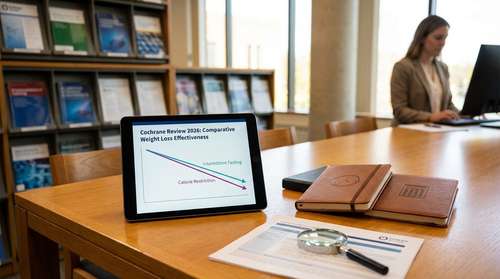
The answer, according to the findings, is a resounding no. The review found that for overweight and obese adults, intermittent fasting resulted in "little to no difference" in weight loss compared to standard dietary advice that emphasizes continuous calorie restriction. Furthermore, the study debunked the common claim that fasting improves quality of life or makes dieting easier, finding no significant advantage in participant well-being.
"Intermittent fasting just doesn't seem to work for overweight or obese adults trying to lose weight," said Luis Garegnani, the study's lead author and director of the Cochrane Associate Centre at the Hospital Italiano de Buenos Aires. "Intermittent fasting may be a reasonable option for some people, but the current evidence doesn't justify the enthusiasm we see on social media."
Shattering the Myths of Time-Restricted Eating
This weight loss effectiveness 2026 analysis strikes a blow to the specific biological claims often made by fasting proponents. Enthusiasts have long argued that periods of fasting trigger "metabolic switching," forcing the body to burn fat stores more efficiently than simple dieting. However, the Cochrane data shows that over periods of up to 12 months, these theoretical mechanisms did not translate into superior clinical results.
The review examined various popular methods, including:
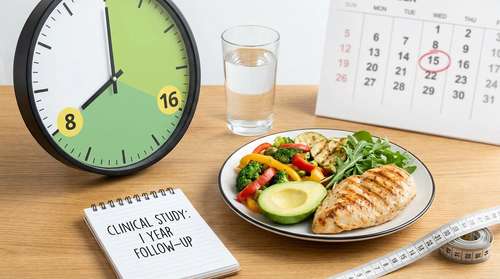
- Time-restricted eating (16:8): Fasting for 16 hours and eating within an 8-hour window.
- The 5:2 diet: Eating normally for five days and severely restricting calories for two days.
- Alternate-day fasting: Eating normally one day and fasting the next.
Across all these methods, the outcome remained consistent: when calories were equated, the timing of meals had a negligible impact on body weight. The study also noted that adverse side effects, such as headaches and fatigue, were inconsistently reported, making it difficult to declare IF completely risk-free.
Why This Cochrane Study is the 'Gold Standard'
In the world of nutritional science, a Cochrane Review is not just another study—it is a systematic evaluation of the best available evidence. By pooling data from 22 distinct trials, the researchers eliminated the noise and bias that often plague smaller, individual studies. This rigorous methodology provides a clearer picture of intermittent fasting vs calorie restriction than any single experiment could.
The review highlighted a critical flaw in previous fasting research: the short-term nature of most trials. Because obesity is a chronic condition, short-term success (often seen in the first few weeks of any diet) rarely predicts long-term health outcomes. By focusing on robust clinical data, this review exposes the gap between the marketing of IF and its actual medical utility.
The 'Late' Michael Mosley's Legacy
The 5:2 diet was famously popularized by the late TV doctor Michael Mosley, whose advocacy helped bring fasting into the mainstream. While his work sparked a global conversation about metabolic health, this new evidence suggests that the success of his methods likely stemmed from the resulting calorie deficit rather than the fasting window itself.
Practical Takeaways for Weight Loss in 2026
If you are looking for the best diet for weight loss 2026, the message from scientists is to go back to basics. The "magic" of intermittent fasting appears to be a behavioral trick—skipping breakfast or closing the kitchen early simply helps some people eat less. If that works for your lifestyle, experts say there is no harm in continuing. However, forcing yourself to endure hunger pangs under the false belief that it is metabolically superior is unnecessary.
Key recommendations based on the new findings:
- Focus on adherence: The best diet is the one you can stick to long-term.
- Calories still count: Whether you eat in a 6-hour window or a 12-hour window, total energy intake drives weight loss.
- Ignore the hype: Be skeptical of influencers promising rapid results from "bio-hacking" your meal times.
Ultimately, this nutritional evidence debunked the idea of a one-size-fits-all solution. As Garegnani noted, "Obesity is a chronic condition," and sustainable management requires more than just watching the clock.