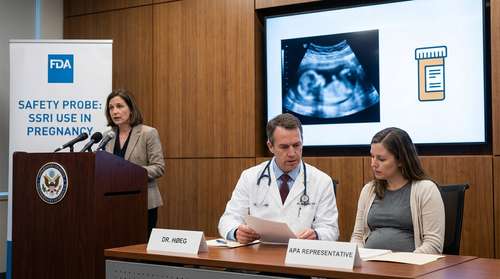
In a move that has sent shockwaves through the medical community, the U.S. Food and Drug Administration (FDA) has launched a comprehensive safety probe into the use of selective serotonin reuptake inhibitors (SSRIs) during pregnancy. The investigation, announced late this week by the agency's new leadership, aims to re-evaluate the potential risks of antidepressants on fetal development, including birth defects and long-term neurodevelopmental issues.
The FDA SSRI safety probe marks a significant shift in regulatory priorities under the current administration. Dr. Tracy Beth Høeg, the newly appointed Acting Director of the FDA’s Center for Drug Evaluation and Research (CDER), disclosed the initiative during her first address to agency staff on February 20, 2026. Citing a lack of "thorough safety monitoring" in the past, Dr. Høeg emphasized the need for rigorous new scrutiny of psychiatric drugs that have been standard care for expectant mothers for decades.
New FDA Leadership Challenges Established Norms
The announcement represents the latest escalation in a growing conflict between federal regulators and major medical societies. According to a recording of the internal address obtained by STAT News, Dr. Høeg expressed concern that the agency has historically underplayed potential adverse outcomes associated with prenatal exposure to antidepressants. "I've been interested to learn we really haven't been doing sort of thorough safety monitoring of these products during pregnancy, and so I think we could do a better job," Høeg told staffers.
This inquiry aligns with the broader agenda of FDA Commissioner Dr. Marty Makary, who has frequently called for greater transparency regarding pharmaceutical side effects. The psychiatric drug safety review is expected to focus on data suggesting links between in-utero SSRI exposure and congenital heart defects, as well as controversial studies suggesting a potential association with autism spectrum disorders—links that have been largely dismissed by mainstream psychiatry as inconclusive or outweighed by the benefits of treatment.
The July 2025 Panel: A Precursor to Conflict
The groundwork for this investigation was laid in July 2025, when an FDA expert panel led by Makary and Høeg first outlined these concerns. That panel was heavily criticized by observers for being "alarmingly unbalanced," with critics noting that it relied heavily on researchers skeptical of pharmacotherapy while minimizing the voices of perinatal psychiatrists. The revival of this scrutiny in 2026 confirms that the agency intends to pursue these questions aggressively, regardless of previous pushback.
Medical Community Warns of Dangerous Stigma
The reaction from the medical establishment has been swift and severe. Leading organizations, including the American Psychiatric Association (APA) and the American College of Obstetricians and Gynecologists (ACOG), have issued urgent statements warning that the probe could stigmatize necessary maternal mental health treatment. They argue that casting doubt on the safety of antidepressants during pregnancy 2026 without new, definitive evidence is irresponsible and dangerous.
Dr. Kay Roussos-Ross, a vocal defender of evidence-based mental health care during pregnancy, has previously highlighted that untreated depression poses profound risks to both mother and child. These risks include poor prenatal care, substance abuse, preeclampsia, preterm birth, and, most tragically, maternal suicide—which remains a leading cause of maternal mortality in the United States.
"The suggestion that these medications are inherently unsafe ignores the devastation of untreated mental illness," noted a joint statement released by maternal health advocates. "Women terrified by regulatory warnings may stop their medication suddenly, precipitating relapses that endanger their lives and their pregnancies."
Investigating SSRIs and Pregnancy Risks
The FDA's investigation will reportedly examine a wide range of outcomes. Beyond physical birth defects, the agency is looking into the "long-term developmental impacts" of serotonin exposure on the fetal brain. Dr. Høeg has indicated a desire for more randomized controlled trials (RCTs) in this population—a proposal that ethical experts say is fraught with difficulty, as it involves knowingly withholding effective treatment from depressed pregnant women to observe outcomes.
Currently, the consensus among perinatal psychiatrists is that while no medication is completely risk-free, the absolute risk of SSRI birth defects investigation targets (such as persistent pulmonary hypertension of the newborn) remains extremely low. Conversely, the recurrence rate of depression for women who discontinue medication during pregnancy is estimated to be nearly 70%.
What This Means for Patients
For millions of American women, this medical controversy creates an agonizing dilemma. The clash between the Dr. Høeg FDA regulator agenda and clinical guidelines leaves patients caught in the middle. Experts strongly advise that no patient should discontinue SSRIs and pregnancy risks management without consulting their healthcare provider.
As the FDA moves forward with this probe, the debate over maternal mental health treatment is likely to intensify. The coming months will determine whether this investigation leads to safer prescribing practices or if it merely restricts access to essential care for one of the most vulnerable patient populations.