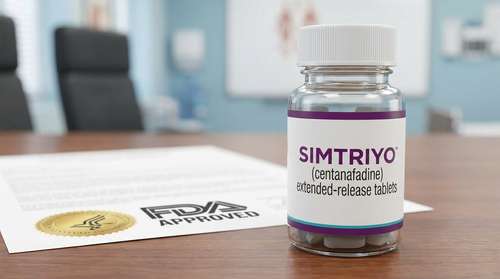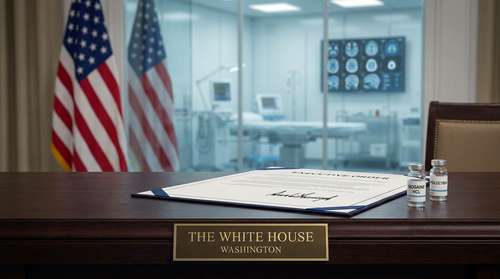
On April 18, 2026, the White House announced a seismic shift in federal drug policy. President Donald Trump signed a landmark executive order directing the government to drastically accelerate the research and review of mind-altering compounds for medical use. This sweeping mandate ensures the FDA fast-track psychedelics initiative is officially underway, propelled by a $50 million federal investment targeted at solving the nation's escalating psychological and opioid crises. Flanked by military veterans, podcaster Joe Rogan, and Health and Human Services Secretary Robert F. Kennedy Jr., the president framed the move as an urgent medical necessity.
A Historic Shift in Mental Health Policy
For decades, substances derived from the African iboga shrub or certain fungi have been relegated to Schedule I of the Controlled Substances Act, severely restricting clinical research. The new Trump executive order mental health directive fundamentally changes this landscape. It allocates $50 million specifically to support state-level programs and clinical trials exploring ibogaine for PTSD treatment, traumatic brain injuries, and severe addiction.
'If these turn out to be as good as people are saying, it's going to have a tremendous impact on this country,' Trump remarked during the Oval Office signing ceremony, drawing attention to the millions of Americans suffering from diagnosable emotional disorders. This policy pivot reflects a growing bipartisan consensus that traditional pharmaceuticals have failed to adequately address the scale of the crisis. The federal funding aligns with early state-level pioneers like Texas, where former Governor Rick Perry previously successfully lobbied for a dedicated $50 million state research fund.
Regulatory Shake-Up: Vouchers and 'Right to Try'
The core of the executive action lies in dismantling bureaucratic hurdles at the Food and Drug Administration. FDA Commissioner Marty Makary announced that the agency will immediately issue national priority vouchers for three distinct psychedelic compounds. These vouchers are designed to compress standard review timelines from several months or years down to just weeks, an unprecedented move for serotonin agonists.
This regulatory flexibility arrives as a beacon of hope in the realm of treatment-resistant depression news. Under the new directive, federal agencies will explicitly expand the 'Right to Try' framework. Originally signed into law by Trump in 2018, the Right to Try Act allows patients with life-threatening conditions to access experimental treatments, though the Drug Enforcement Administration historically blocked access to Schedule I psychedelics. Now, eligible patients will be able to pursue these therapies under medical supervision before full market approval. The administration is also laying the groundwork for psilocybin therapy 2026 access, coordinating with the DEA to streamline the potential rescheduling of these drugs following successful Phase 3 trials.
Navigating the Safety Risks
Despite the optimism, federal officials acknowledge the complex pharmacology involved. Ibogaine, while showing remarkable promise in interrupting opioid addiction and mitigating trauma, carries known cardiovascular toxicity risks, including fatal heart rhythm disturbances. Recent studies, such as a Stanford Medicine trial involving 30 veterans, have demonstrated that pairing ibogaine with intravenous magnesium can safely reduce symptoms of PTSD and depression. The $50 million funding will establish strict, standardized clinical protocols to evaluate whether the drug can be administered safely at scale across a wider demographic.
A Lifeline for Military Veterans
The push to destigmatize and research psychedelic medicine has been overwhelmingly championed by the military veteran community. Conventional treatments often fall short for service members returning with complex trauma, leading many to seek underground or international retreats in countries like Mexico.
During the ceremony, former Navy SEALs and lawmakers, including Rep. Morgan Luttrell and Marcus Luttrell, shared personal testaments regarding how these unconventional treatments changed their lives. The integration of the Department of Veterans Affairs into this executive order marks one of the most significant veteran suicide prevention breakthroughs in modern medical history. The VA is currently participating in dozens of clinical trials at facilities across New York, California, and Oregon to gather real-world evidence on clinical efficacy.
The Influence of RFK Jr.'s Psychedelic Policy
The fast-tracking of these compounds heavily reflects the health priorities of HHS Secretary Robert F. Kennedy Jr. Known for his unorthodox approach to federal health regulations, Kennedy has been a vocal proponent of exploring alternative therapeutics since his independent presidential run.
The RFK Jr psychedelic policy framework emphasizes clinical safety alongside rapid access. 'We're expanding the use of Right to Try, so that eligible patients with treatment-resistant conditions can access these therapies under medical supervision,' Kennedy stated. He highlighted the tragic irony that thousands of veterans have historically been forced to abandon domestic healthcare systems to find relief overseas.
With advocates like W. Bryan Hubbard, CEO of Americans for Ibogaine, pressing for expanded clinical access, this executive order signifies the end of a decades-long research freeze. As the FDA issues its priority vouchers and federal funding begins to flow, the robust FDA fast-track psychedelics framework ensures the medical community is bracing for what could be a defining era in psychiatric care.