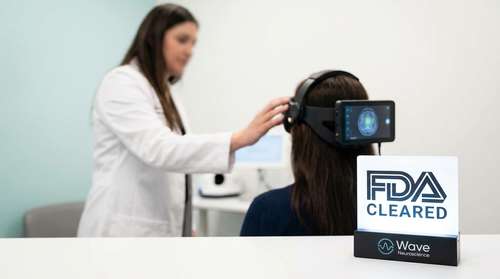
Millions of Americans living with the debilitating effects of post-traumatic stress disorder finally have a highly tailored, non-pharmacological treatment path forward. On June 11, 2026, the mental health landscape shifted dramatically when the FDA clears MeRT for PTSD, officially endorsing Wave Neuroscience's pioneering medical technology. This regulatory milestone establishes a new category in medicine: precision neuromodulation therapy. Unlike generalized brain stimulation protocols of the past, this Wave Neuroscience PTSD treatment leverages advanced artificial intelligence and individual brainwave mapping to target specific neural networks, offering immediate hope to veterans, first responders, and civilians who have found little relief from traditional medications.
Understanding Magnetic EEG-Guided Resonance Therapy
At the heart of this clinical breakthrough is Magnetic EEG guided Resonance Therapy, a proprietary non-invasive system developed by Wave Neuroscience. Historically, brain stimulation therapies utilized a generalized approach, applying fixed magnetic frequencies to wide patient populations. The MeRT system completely rewrites this standard by capturing a highly detailed map of individual neural activity through quantitative electroencephalogram (qEEG) data.
Traditional Transcranial Magnetic Stimulation (TMS) typically applies a standard frequency to the same region of the brain for every patient. Post-traumatic stress disorder, however, presents with highly variable neurological patterns depending on the individual's trauma history. The MeRT system adapts to this complexity. By utilizing an artificial intelligence algorithm to process the qEEG data, the technology identifies the exact intrinsic alpha frequency of the patient. This means the magnetic pulses are synchronized perfectly with the patient's natural brain rhythms.
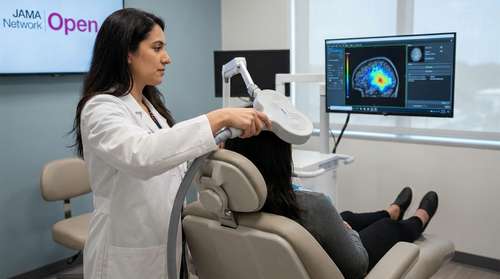
Based on these biometric insights, custom-tailored transcranial magnetic stimulation is delivered to the exact areas requiring therapeutic intervention. This shift toward personalized brain stimulation PTSD protocols aims to restore stable, balanced brain activity, effectively targeting the root physiological mechanics of trauma.
The Path to Clearance: Efficacy and Clinical Trials
This regulatory authorization stems from rigorous, multi-site clinical evaluation. Wave Neuroscience partnered with the Texas A&M Health Institute of Biosciences and Technology to conduct a comprehensive double-blind, randomized, controlled trial. Researchers sought to measure the direct safety and effectiveness of precision mental healthcare neuromodulation on adult patients facing severe trauma responses.
The results verified what many in the neurotechnology sector had anticipated. Patients undergoing the MeRT protocol demonstrated significant and clinically meaningful reductions in their trauma symptom severity. For individuals suffering from chronic hypervigilance, insomnia, emotional numbness, and intrusive flashbacks, the ability to predictably reduce symptom burdens without systemic drug side effects marks a profound shift in clinical care options. Fred Walke, CEO of Wave Neuroscience, described the clearance as a major inflection point for the broader evolution of mental healthcare.
From Breakthrough Designation to Market Availability
The journey to this June 2026 clearance accelerated after the technology earned an FDA Breakthrough Device Designation in late 2024. Regulators recognized the urgent public health need to address severe trauma-related conditions, especially given that conventional psychiatric therapies fail to produce lasting remission for a substantial portion of the population.
A Vital Non-Invasive PTSD Therapy
According to recent clinical estimates, approximately 13 million Americans experience post-traumatic stress symptoms in a given year. The psychological toll disproportionately affects military service members and healthcare workers, though trauma remains a universal risk across all demographics. Delivering effective neuromodulation for PTSD symptoms without requiring systemic pharmaceuticals expands the treatment menu for physicians who previously relied heavily on cognitive behavioral therapies or SSRIs.
Current clinical guidelines for trauma disorders rely heavily on medications and prolonged exposure therapies. While effective for some, a significant subset of patients either experiences severe side effects from daily pharmaceuticals or finds the process of continuously reliving traumatic memories emotionally intolerable. This technology provides an alternative pathway that bypasses the digestive system and directly addresses the biological markers of trauma in the brain.
Patients seeking a non invasive PTSD therapy can soon access this technology through expanding clinical networks. The treatment is conducted in an outpatient setting and involves no surgical intervention, anesthesia, or prolonged recovery downtime. Participants undergo brain mapping, followed by tailored sessions where a specialized magnetic coil delivers gentle, personalized pulses designed to guide neural pathways back to a healthy state of oscillation.
What's Next for Precision Mental Healthcare?
The introduction of a biomarker-guided neuromodulation platform changes the calculus for behavioral health interventions. Clinicians can now point to hard biological data—the individual's localized brainwave frequencies—to drive personalized therapeutic decisions.
As Wave Neuroscience prepares for broader commercial and institutional rollouts, expanding payer engagement and increasing healthcare provider adoption will be the next primary objectives. However, the foundational evidence is now established. We are witnessing the rapid maturation of clinical neurotechnology, moving away from symptom-masking drugs toward targeted, restorative brain stimulation. For the millions of individuals whose lives have been severely impacted by trauma, the FDA's clearance of the MeRT system represents far more than a regulatory milestone—it offers a tangible, scientifically validated path back to neurological balance.