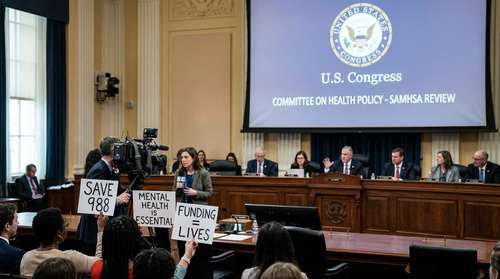
The U.S. mental health landscape faces its most polarizing transformation in decades. As lawmakers gather on Capitol Hill today, April 15, 2026, a fierce debate is unfolding over a controversial proposal to dismantle the Substance Abuse and Mental Health Services Administration. The sweeping reorganization plan, spearheaded by the Department of Health and Human Services, would execute a complete SAMHSA dissolution 2026, folding its core functions into a newly proposed umbrella agency. The move has ignited immediate backlash from medical professionals, state leaders, and patient advocacy groups who warn the restructuring will paralyze the nation's behavioral health infrastructure.
The Push for an "Administration for a Healthy America"
Under the blueprint championed by HHS Secretary Robert F. Kennedy Jr., federal public health operations are undergoing a massive consolidation driven by the "Department of Government Efficiency" workforce optimization initiative. The plan seeks to combine SAMHSA, alongside the Health Resources and Services Administration (HRSA) and parts of the CDC, into the Administration for a Healthy America AHA. Proponents argue the centralization will eliminate administrative redundancy, lower taxpayer costs, and harmonize resources for low-income Americans. However, critics counter that erasing a dedicated national behavioral health authority during an ongoing addiction and suicide crisis will fracture an already fragile system.
The Ripple Effects of Federal Mental Health Budget Cuts
The reorganization extends far beyond shifting organizational charts. It arrives paired with aggressive federal mental health budget cuts designed to shrink the federal footprint in local healthcare delivery. Previous appropriations battles saw bipartisan committees reject similar maneuvers by a staggering 26-3 margin, yet the current administration is pushing forward despite the lack of congressional enthusiasm.
The proposed budget aggressively targets vital community lifelines, including the Substance Abuse Prevention and Treatment Block Grant. By merging specialized funds into generalized pools under the new AHA, specialized treatment centers face intense competition for fewer dollars. Lawmakers like Rep. Brittany Pettersen have publicly condemned the dismantling, noting that stripping away centralized expertise mid-epidemic is reckless and legally questionable without explicit Congressional authorization.
The Looming 988 Lifeline Funding Crisis
One of the most alarming vulnerabilities in the current proposal centers on emergency psychiatric response. Since its nationwide launch, the three-digit suicide hotline has relied heavily on federal grants to route callers to local counselors and dispatch mobile crisis teams. The shift in agency priorities and slashed operational budgets has triggered a severe 988 lifeline funding crisis.
The 988 lifeline was designed to be a safe, immediate alternative to law enforcement for those experiencing a psychiatric emergency. However, its effectiveness is deeply tied to SAMHSA's technical assistance and financial backing. Community organizations fear that if the AHA absorbs these responsibilities while simultaneously enduring deep staff reductions—projected to be as high as 10,000 to 20,000 employees across HHS—the logistical network keeping 988 afloat will buckle under the pressure. If these funds evaporate, wait times will inevitably surge, leaving individuals in acute distress without immediate support.
The Staggering Medicaid Mental Health Impact
The structural dismantling of SAMHSA is only one piece of a broader fiscal strategy that threatens vulnerable populations. The administration's budget outlines an estimated $1 trillion reduction in Medicaid spending. Because Medicaid remains the single largest payer for behavioral health services in the United States—accounting for roughly a quarter of all treatment spending—the Medicaid mental health impact cannot be overstated.
States are not federally mandated to cover comprehensive behavioral health services. When federal matching funds dry up, governors and state legislatures are often forced to tighten eligibility requirements or slash reimbursement rates for providers. Clinics that operate on razor-thin margins will be forced to turn away low-income patients, exacerbating emergency room overcrowding and pushing more individuals into the criminal justice system. Texas has already provided a grim preview of this reality, having recently been forced to shut down a 24/7 addiction support line due to strained state resources.
Rewriting U.S. Behavioral Health Policy
Established in 1992, SAMHSA has functioned as the definitive federal hub for addiction and psychiatric policy. Dissolving it fundamentally rewrites U.S. behavioral health policy. The agency does more than write checks; it collects critical epidemiological data, sets clinical standards for opioid treatment programs, and funds specialized initiatives for homeless populations, veterans, and rural communities.
Folding these highly specialized mandates into the broader, generalized focus of the Administration for a Healthy America risks diluting their impact. Health experts warn that mental health and substance use disorders will inevitably be deprioritized when forced to compete for resources against maternal health, environmental health, and primary care initiatives within the same agency.
What's Next for Mental Health Advocacy News
As the April 15 hearings continue, the mobilization against the reorganization is reaching a fever pitch. Stakeholders from the American Psychological Association to grassroots recovery coalitions are lobbying Congress to invoke statutory protections that prevent executive overreach. The latest mental health advocacy news highlights a unified front demanding that funding be decoupled from the restructuring plan entirely.
Lawmakers are closely watching how the public responds to the proposed shifts. Representatives from both sides of the aisle are receiving thousands of calls from concerned constituents who have personal ties to addiction recovery and suicide prevention programs. Advocacy groups are organizing swift campaigns to highlight the tangible human cost of these policy shifts, circulating petitions and sharing survivor stories to keep the issue front and center.
The coming days will determine whether Congress bends to the administration's push for rapid consolidation or holds the line to protect the independence of the nation's primary behavioral health apparatus. For the millions of Americans relying on federally supported clinics, hotlines, and recovery programs, the stakes have never been higher.