Post-traumatic stress disorder has long been categorized strictly as a condition of the mind, diagnosed primarily through clinical interviews, symptom checklists, and self-reported emotional distress. However, a major paradigm shift is underway in the medical community. This week, researchers unveiled unprecedented findings showing that profound psychological trauma leaves a distinct, measurable footprint throughout the entire human body. A specific set of PTSD blood biomarkers has been successfully identified, permanently transforming our understanding of how extreme stress alters human physiology.
The groundbreaking findings stem from the Harvard PTSD study 2026, conducted by an expert research team at the Harvard T.H. Chan School of Public Health, in close collaboration with Mass General Brigham and the Broad Trauma Initiative. Analyzing genomic samples and laboratory test results from nearly 24,000 adult participants in the Mass General Brigham Biobank, the scientists pinpointed 16 routine clinical laboratory markers. These markers strongly correlate with both a known genetic risk for the disorder and a documented clinical history found in electronic health records.
Decoding the Biological Markers for Mental Illness
For decades, psychiatry has relied heavily on subjective criteria to identify trauma-related conditions. The discovery of an objective framework represents a monumental leap toward precision medicine. Lead author Dr. Younga (Heather) Lee and her colleagues evaluated everyday laboratory measures to determine if the physiological toll of severe stress could be accurately mapped. By triangulating massive genomic datasets with extensive patient histories, they successfully isolated actionable biological markers for mental illness.
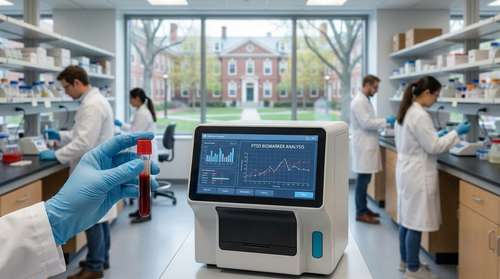
Instead of searching for rare or highly specialized proteins that require expensive equipment, the investigators found their answers in standard lab assays. The markers consistently associated with the disorder include:
- Metabolic indicators: Noticeably elevated cholesterol and glucose levels, pointing to a disruption in how the body processes energy.
- Hepatic function: Altered levels of albumin and bilirubin. These essential liver proteins reflect the body's ongoing response to systemic stress and cellular breakdown.
- Immune system metrics: Distinct shifts in red and white blood cell counts, which regulate the body's inflammatory response and defense mechanisms.
These metrics confirm that the damage sustained from severe psychological trauma extends far beyond altered brain chemistry or emotional regulation.
Tracking PTSD Physical Health Impacts
A critical and surprising revelation of this extensive research is the direction of causation. Through rigorous genetic analysis, the researchers determined that the psychiatric condition acts as an upstream contributor to systemic dysfunction. It actively drives the PTSD physical health impacts rather than merely coinciding with them.
Patients living with post-traumatic stress frequently suffer from elevated rates of cardiovascular disease, chronic inflammation, immune system vulnerabilities, and metabolic disorders. Previously, many clinicians viewed these physical ailments as secondary lifestyle complications resulting from poor sleep or stress-induced behaviors. The new data rewrites this narrative, establishing a direct biological pathway. The disorder actively triggers widespread physical changes affecting cardiometabolic health, immune defense, and hepatic function. By capturing these systemic alterations, doctors can finally explain why untreated trauma has such devastating, whole-body consequences over a patient's lifespan.
The Promise of a Blood Test for PTSD Diagnosis
Because the 16 identified markers rely entirely on conventional lab tests—the exact same blood panels ordered during a standard annual physical—the barrier to implementing this diagnostic tool is remarkably low. Using a blood test for PTSD diagnosis could seamlessly integrate into everyday medical care without burdening patients with prohibitive costs. It provides a highly scalable way to screen trauma-exposed individuals, monitor the progression of the disease over time, and objectively measure physiological responses to ongoing psychiatric treatment.
Understanding this multi-system footprint also validates the lived experiences of countless patients. For years, trauma survivors have reported debilitating physical exhaustion and unexplained bodily pain, only to have their symptoms dismissed as psychosomatic. This data provides undeniable biological proof of their suffering.
Shaping New Mental Health Research 2026
The successful integration of genomic evidence with real-world health records marks a definitive milestone for new mental health research 2026. This breakthrough directly challenges the broader medical community to treat psychiatric conditions holistically. If an emotional trauma initiates a measurable cascade of liver and metabolic dysfunction, the modern treatment model must evolve to address the entire organism.
Validating these biomarkers across broader, more diverse global populations remains the immediate next step for the Harvard T.H. Chan School of Public Health research team. Still, the clinical implications are immediate, profound, and actionable. Healthcare providers now possess a compelling biological framework to advocate for early, aggressive medical intervention following traumatic events. Timely treatment of the psychiatric symptoms could directly mitigate the risk of chronic disease, fundamentally improving long-term health outcomes and extending the life expectancy of millions of individuals living with the shadow of trauma.
By moving away from treating the mind in isolation, the medical field is officially entering an era where mental and physical health are recognized as an undivided, interconnected continuum. The blood coursing through a patient's veins tells the detailed story of their trauma, and finally, modern science has learned how to read it.