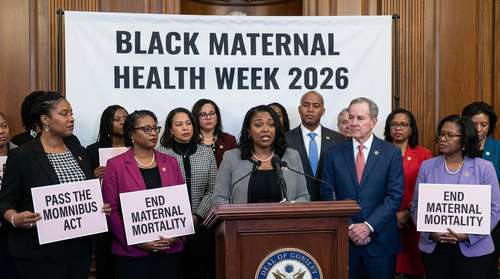
On Tuesday, April 14, national leaders gathered to sound the alarm on an enduring and devastating public health crisis. During a critical press briefing marking Black Maternal Health Week 2026, Senator Cory Booker and Representative Lauren Underwood issued an urgent call to pass the Momnibus Act legislation. The comprehensive 14-bill package aims to fundamentally overhaul how the United States supports birthing people of color, responding to systemic failures that leave Black families facing maternal mortality at more than triple the rate of white families,.
The Staggering Reality: Maternal Mortality Statistics in 2026
To understand the urgency behind today's legislative push, one only needs to look at the latest maternal mortality statistics. According to data released by the Centers for Disease Control and Prevention (CDC) in March 2026, the maternal mortality rate for non-Hispanic Black women stands at a tragic 44.8 deaths per 100,000 live births. In stark contrast, the rate for white women is 14.2 per 100,000. In 2024 alone, an estimated 649 women died of maternal causes in the United States.
These numbers represent real families shattered by preventable losses. The intersection of pregnancy complications and race cannot be ignored; the data demonstrates that implicit bias, lack of access to quality perinatal care, and deeply rooted systemic barriers directly contribute to this enduring disparity,. Furthermore, the risk multiplies with age, as the CDC reports that maternal mortality rates for women aged 40 and older are nearly five times higher than those for women under 25. Advocates argue that without sweeping structural changes, these numbers will remain tragically stagnant.
Decoding the Momnibus Act Legislation
What exactly is the proposed solution to this national emergency? The Momnibus represents the most sweeping maternal healthcare reform ever introduced in Congress. Comprising 14 distinct bills, the package looks well beyond the hospital room to address the multifaceted root causes of maternal health disparities. During today's briefing, lawmakers emphasized a critical and hopeful fact: roughly 80% of maternal deaths in America are entirely preventable.
The legislation is designed to stop these preventable deaths through a holistic approach. Key provisions within the package include:
- Social Determinants of Health: Making critical investments in housing, transportation, and nutrition, recognizing that environmental factors heavily influence birth outcomes.
- Nutrition Support: Extending WIC (Women, Infants, and Children) eligibility throughout the vital postpartum and breastfeeding periods.
- Workforce Diversification: Growing the perinatal health workforce to include more doulas and midwives, ensuring culturally competent care,.
- Mental Health Resources: Expanding access to maternal mental health and substance use care, creating a robust family wellness policy.
- Vulnerable Populations: Improving care and support for incarcerated mothers and expanding funding to enhance maternal healthcare for women veterans.
- Community Funding: Providing direct federal funding to local, community-based organizations that have proven track records in improving maternal health outcomes.
By investing in digital tools, telehealth solutions, and community-level interventions, the Momnibus aims to close the gaps that currently let too many Black mothers slip through the cracks.
Rooted in Justice and Joy: Black Mother Health Advocacy
This year's legislative push coincides with a major cultural milestone. Running from April 11 to April 17, the 2026 Black Maternal Health Week carries the theme "Rooted in Justice & Joy". This powerful theme celebrates the 10-year anniversary of the Black Mamas Matter Alliance (BMMA), an organization that has transformed Black mother health advocacy from a grassroots effort into a commanding national priority,.
Rather than focusing solely on the grim statistics and generational trauma, this year's events across the country emphasize the power of community care, equitable birth experiences, and joy. From the PA Momnibus initiatives taking place at the Pennsylvania State Capitol to birth justice summits in Virginia, advocates are working tirelessly to ensure the narrative shifts from trauma to triumph,. These events uplift the leadership and lived experiences of Black community-based organizations, positioning them as the essential foundation for advancing equity.
The Path Forward for Maternal Healthcare Reform
The United States still spends more on healthcare than any other high-income nation, yet it remains one of the most dangerous developed countries to give birth in—especially for Black women,. As former CMS Administrator Chiquita Brooks-LaSure highlighted during today's press call, rhetoric must quickly translate into funded, structural change.
While previous iterations of these bills have seen components passed through federal appropriations, advocates stress that piecemeal progress is no longer enough. The comprehensive nature of the 14-bill package is exactly what makes it effective; it treats the maternal health crisis not as a single medical failure, but as a complex web of social, economic, and institutional challenges.
Passing the Momnibus is not just an exercise in healthcare funding; it is a fundamental statement about valuing Black lives and prioritizing family wellness at the federal level. With leaders forcefully championing the cause today, the legislation currently waiting on Capitol Hill offers a concrete roadmap out of the crisis, promising a future where every mother has the safe, dignified, and joyous birthing experience she rightfully deserves.